
Last updated November 16, 2026
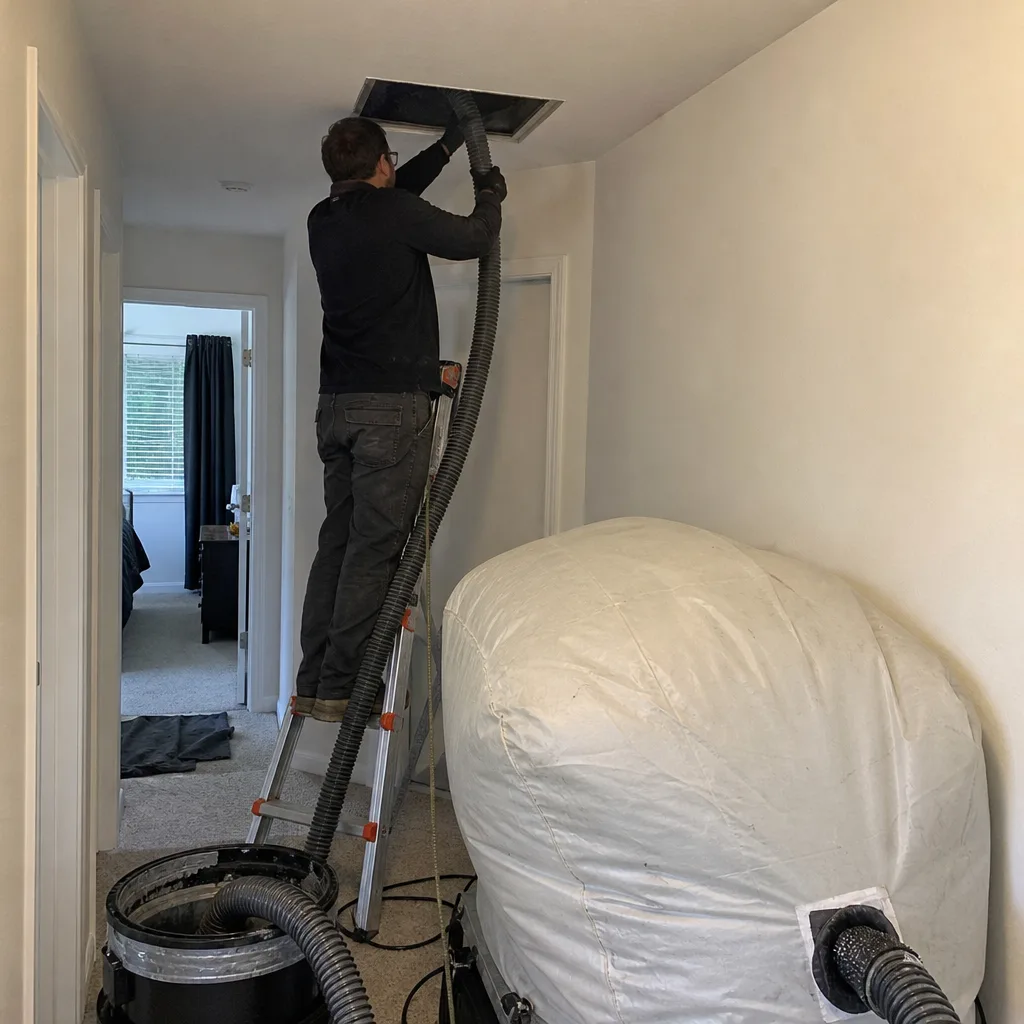
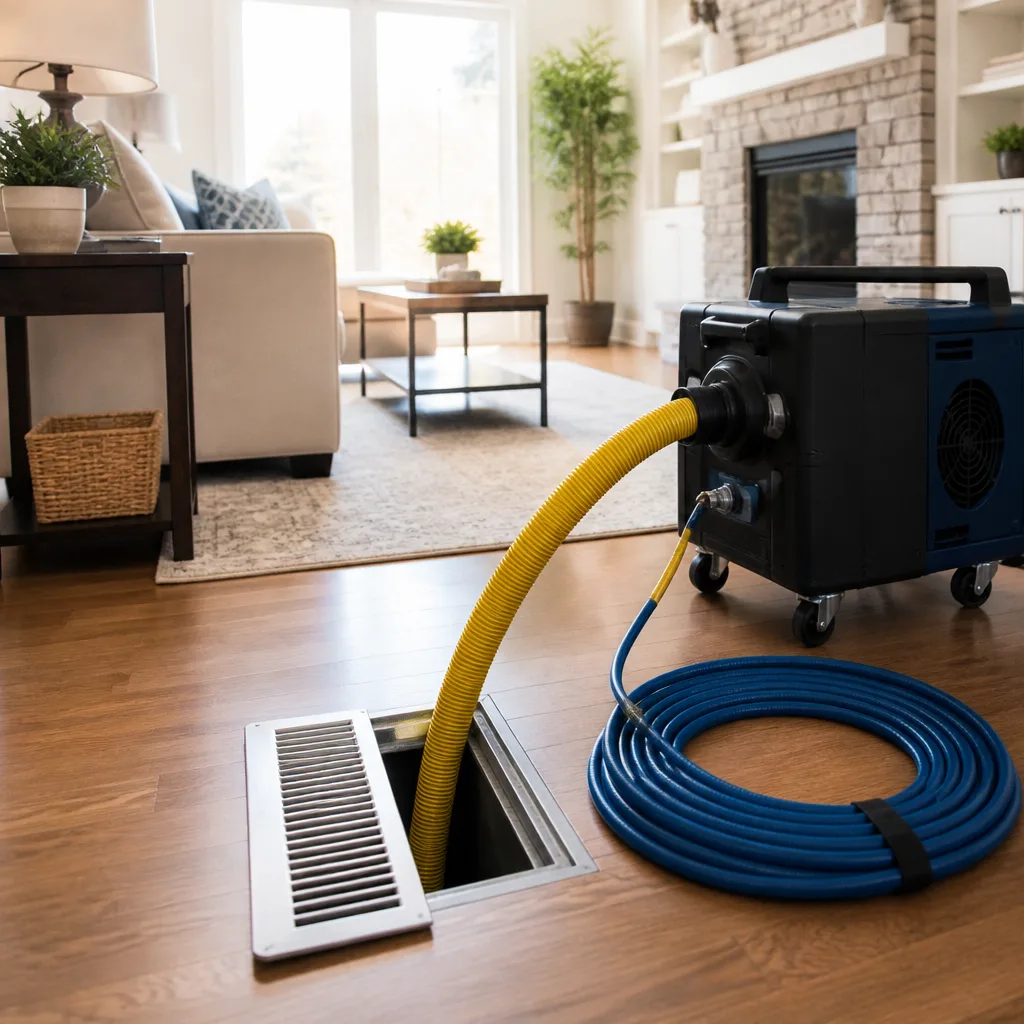 Whole-home duct cleaning
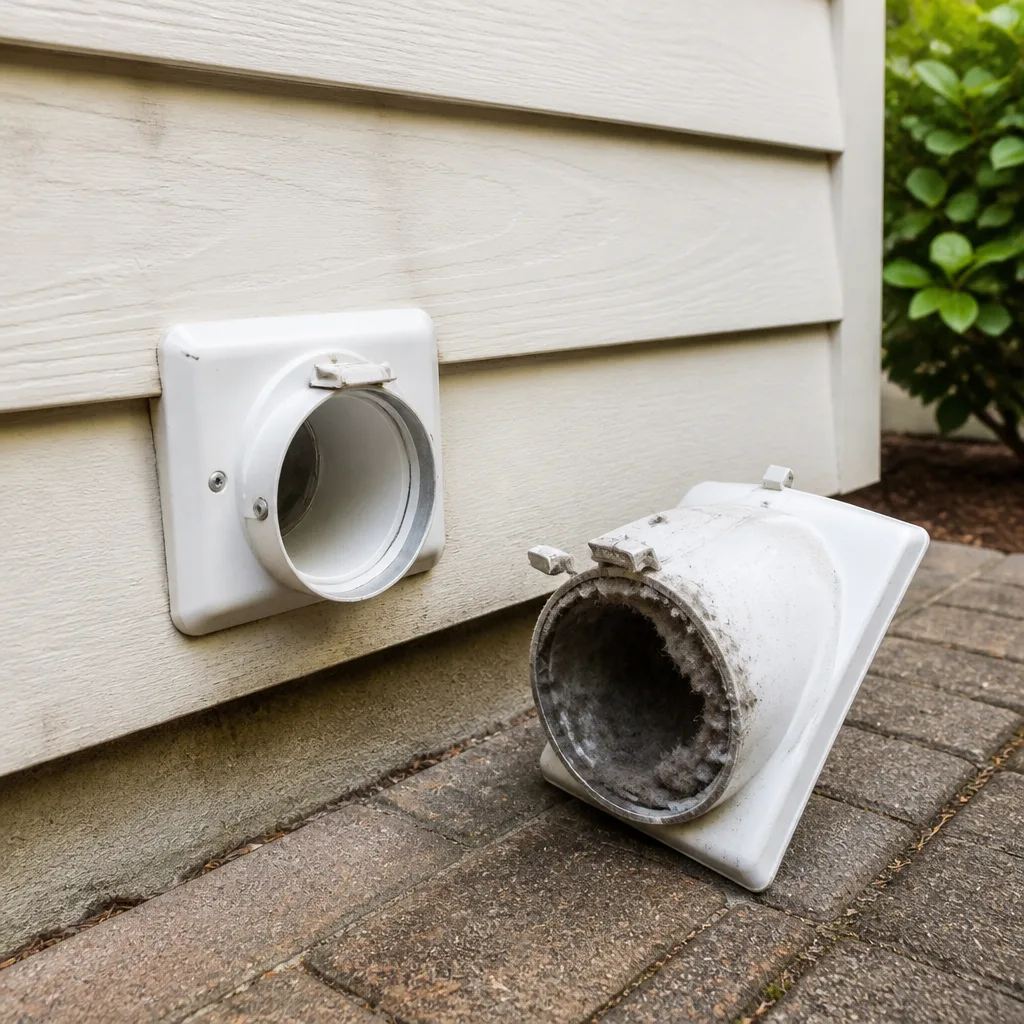 Dryer vent cleaning
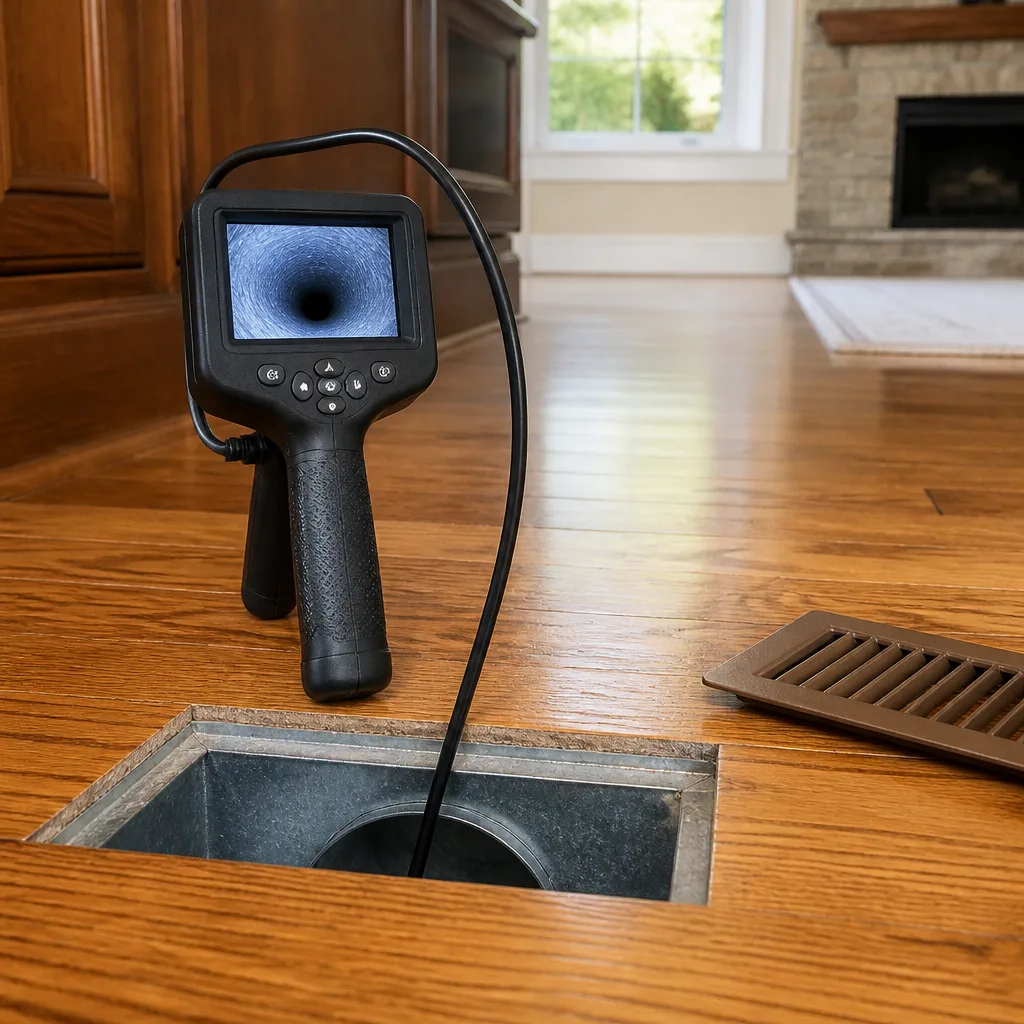 Camera inspection
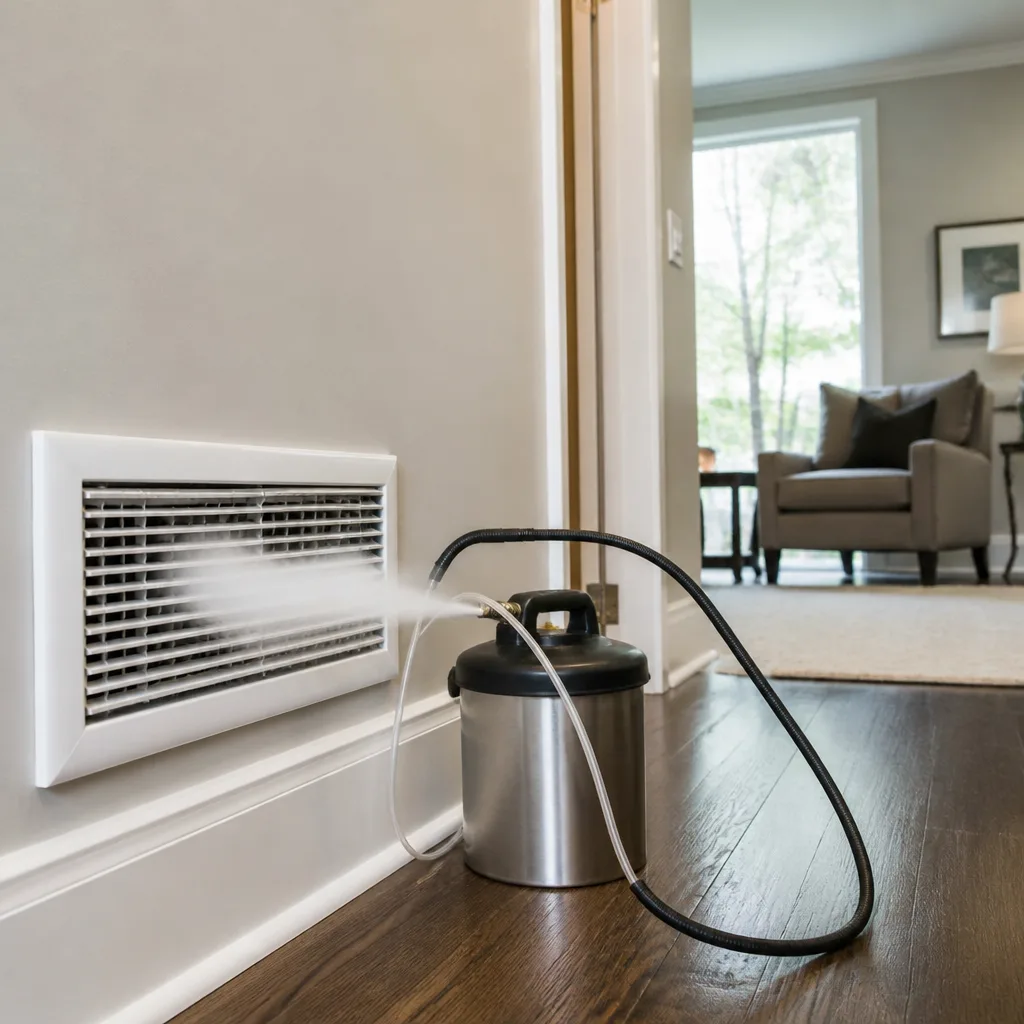 Sanitizing & deodorizing
Whole-system duct and dryer vent check with before-and-after photos - you see exactly what came out of your vents
That "$99 whole-house special" is a bait ad - the real number appears once they are in your hallway, or the "clean" is a shop-vac at the register. We photograph the inside of your ducts before and after instead.
How to Hire an Air Duct Cleaning Contractor in Kent: A Step-by-Step Guide
The duct cleaning industry has one of the highest rates of bait-and-switch pricing and equipment underperformance of any home service category. The EPA has warned consumers about duct cleaning scams for more than two decades, and the core tactics haven’t changed: a low door-hanger price, a residential shop-vac dressed up as commercial equipment, and an upsell to chemical treatments you don’t need. In Kent, where a lot of housing was built between the 1970s and the 1990s and much of the ductwork now has flexible runs that sag, collapse, or come apart at the joints, those tactics find easy targets. This guide walks through exactly which questions expose a weak operator before they touch your system, from equipment specs to quote structure to what a legitimate walkthrough looks like.
Quick Answer
To hire an air duct cleaning contractor in Kent, verify three things before you book: the equipment they run (professional rotary-brush systems and HEPA-grade vacuum collection, not shop-vacs), the scope of work in the written quote (source removal of debris throughout the system, not a “whole house” flat rate), and whether they walk your system with you before work starts. Ask for the equipment brand and brush type, ask whether they belong to NADCA, and ask whether they photo-document before and after. Any contractor who resists those questions is telling you something.
Styles & brands we work with
- Whole-home duct cleaning
- Dryer vent cleaning
- Camera inspection
- Sanitizing & deodorizing
Table of Contents
- The Equipment Questions That Separate Real Operators from Pretenders
- Why NADCA Membership Actually Matters
- How to Structure a Quote Request So You Compare Apples to Apples
- Red Flags in Phone and Online Estimates
- What a Legitimate Walkthrough Looks Like Before Work Begins
- Putting It Together in Kent: Climate, Housing, and Air Quality
- Cleaning vs. Repair: Knowing Which One You Actually Need
- Why Dryer Vent Cleaning Deserves Its Own Line Item
The Equipment Questions That Separate Real Operators from Pretenders
The single most useful screening question you can ask an air duct cleaning company is: what equipment do you use, and can you tell me the brand and the brush system type? A professional operator will answer in seconds because the answer is baked into how they work. A pretender will pivot to price or to how many years they’ve been doing this.
Here’s what acceptable answers sound like, and why.
Truck-mounted vs. portable vacuum
Ask whether the vacuum is truck-mounted or portable. Truck-mounted units pull far more air volume and create stronger negative pressure at the register, which is what actually removes settled debris from the duct walls rather than just loosening it into the room. Portable units can work in the right configuration, especially in tight crawlspaces and upstairs runs that a truck-mounted hose can’t reach, but the operator should be able to tell you how they maintain negative pressure throughout the job. If the answer is “we use a really strong shop-vac,” that’s a red flag. A shop-vac, even a large one, doesn’t move the air volume needed to evacuate a residential duct system, and it usually exhausts fine particulate back into the room.
Brush system type
Rotary brush systems are the industry standard for source removal. They use a spinning brush head on a flexible shaft to scrub the inside walls of the duct while the vacuum pulls debris out. Ask whether they use a rotary brush or a whip. Ask whether the brush is sized to the duct. A brush that’s too small won’t contact the walls, and a brush that’s too large can damage flex duct. Professional operators like us run Duct Cleaning Kent with Rotobrush rotary-brush systems and Nikro vacuum and collection equipment, which is the same class of hardware used by certified restoration contractors.
Air filtration on the job site
This is the question almost nobody asks and almost nobody expects. Ask whether they bring HEPA or negative-air filtration on site to control particulate during the cleaning process. Dust that gets stirred up during duct cleaning has to go somewhere. If the operator doesn’t run air scrubbers, some of it ends up in your living room. A professional operation runs Abatement Technologies air scrubbers or negative-air equipment to keep fine particulate contained during the job. Our team does, and we consider it part of the service, not an add-on.
CFM ratings and airflow
If you want to go deep, ask for the CFM (cubic feet per minute) rating of their vacuum equipment. Truck-mounted units typically move well over 10,000 CFM. Portable units run in the range of a few thousand. The operator should know the number. If they don’t, they’re either new, or they’re not the technical lead on the job. Neither is disqualifying on its own, but combined with vague answers on brush type and filtration, it’s a pattern.
- Acceptable: “We run Rotobrush rotary-brush systems with a truck-mounted vacuum, and we bring Abatement Technologies air scrubbers to contain particulate during the job.”
- Acceptable: “We use a high-CFM portable unit with a rotary brush for upstairs and crawlspace runs, and we run negative air throughout.”
- Warning sign: “We use a really powerful shop-vac.”
- Warning sign: “We don’t need a brush, the vacuum does all the work.”
- Warning sign: Any answer that pivots to price before answering the question.
Why NADCA Membership Actually Matters
NADCA, the National Air Duct Cleaners Association, is the trade body that publishes the accepted industry standard (ACR, the Assessment, Cleaning and Restoration standard) for how duct cleaning should be performed. Membership isn’t a rubber stamp. To be a member in good standing, a company has to commit to that standard, carry insurance, and keep up with continuing education through NADCA’s certification program. In practical terms, that means the company has agreed to a defined method for assessing the system, cleaning it, and verifying the result.
Why that matters to you in Kent specifically: the Puget Sound region has some of the highest concentrations of flexible ductwork installed during the 1980s and 1990s boom, and flex duct is easy to damage with the wrong brush or too much pressure. A NADCA-trained operator knows to assess the duct before cleaning, to use the right brush for the right material, and to avoid the shortcuts that turn a cleaning job into a repair job. If a contractor tells you NADCA doesn’t matter, ask them what standard they clean to instead. The answer will tell you a lot.
Other credentials worth checking
- State licensing: Washington requires contractors to be registered with the Department of Labor & Industries. Ask for the registration number and verify it on the L&I website.
- Insurance: Ask for a certificate of general liability insurance. Any legitimate operator carries it and will send it without hesitation.
- Continuing education: NADCA requires members to maintain their certification through ongoing training, so a current membership signals an operator who stays current on equipment and methods.
- Written scope of work: Not a credential exactly, but it functions like one. A company that puts scope in writing is a company that expects to be held to it.
None of these is a guarantee by itself. Together, they narrow the field fast. If a company can produce a valid L&I registration, a certificate of insurance, and a current NADCA membership card, you’ve already eliminated most of the operators you were worried about.
How to Structure a Quote Request So You Compare Apples to Apples
Most homeowners compare duct cleaning quotes by looking at the bottom-line number. That’s exactly the wrong move. Two quotes that look like they’re for the same thing can be $200 apart and cover completely different scopes of work. One might be a surface blow-out of the main trunk, the other a full source-removal cleaning of every supply and return run plus the air handler. The number on the page doesn’t tell you which one you’re buying.
Here’s how to structure the request so the quotes are actually comparable.
- State the number of supply registers and return grilles in the home. Count them yourself before you call. Any quote that starts with “how many square feet” instead of register count is already a warning sign.
- Ask whether the price includes cleaning the air handler and the blower compartment. Some quotes exclude the air handler and the coil, which are often the dirtiest parts of the system. If it’s excluded, ask how much it costs to add.
- Ask whether the price includes the supply runs, the return runs, or both. Some low quotes cover only supplies. Returns carry a lot of debris and are easy to skip.
- Ask for the written scope of work before you book. A reputable operator will send a written quote or a detailed email describing exactly what’s covered.
- Ask whether before-and-after photos are included. If they aren’t, ask why. A contractor who doesn’t photograph their work is either not proud of it or not set up to verify it.
- Ask what happens if the technician finds damaged ductwork. This is where the repair conversation happens, and you want it to happen before work starts, not after an upsell pressure pitch mid-job.
When you call, use the same list of questions for every company. Write down the answers. The variance will surprise you. Two quotes that look identical will often diverge sharply on air handler coverage, return runs, or filtration on site. For a closer look at what a full system clean actually covers, our air duct cleaning page walks through the job from the register inward.
Red Flags in Phone and Online Estimates
Most bad duct cleaning experiences are decided on the phone, before anyone gets in a truck. The tactics are consistent, and once you’ve seen the pattern you can spot it in thirty seconds.
Vague square-footage pricing
Any quote that prices by square footage (“$299 for up to 2,000 square feet”) is almost always a teaser number that grows once the technician is at the door and “discovers” extra runs, a dirty air handler, or a system that needs “treatment.” A real quote is based on the number of registers, the layout of the system, and the condition you’re starting from. Square footage tells you how big the house is. It tells you nothing about what’s inside the ducts.
“Whole house” flat rates
The words “whole house” are doing a lot of work in this industry. Ask exactly what’s included. If the answer is vague, that’s the answer. Flat rates are fine when they’re paired with a written scope. Without one, you don’t know whether the second-floor runs are covered or whether the return trunk is included or whether the technician will spend twenty minutes at each register or two.
Chemical add-on pressure
Some operators push antimicrobial fogging, sealants, or chemical deodorizers as standard. In most homes, none of these are necessary, and some chemical treatments can introduce irritants into the system rather than remove them. Ask whether the price includes any chemical treatment. If the answer is yes, ask what’s being applied and why. If they can’t name the product and the reason in plain language, decline. Cleaning with proper equipment is the job. Chemicals are usually a revenue line.
Phone estimates without a walkthrough
A duct cleaning quote issued over the phone without anyone seeing the system is an educated guess at best. Duct layouts vary wildly in Kent’s older housing stock. A 1970s split-level in Kent’s East Hill can have a return system that’s completely different from a 1990s build on the West Hill. Any operator willing to commit to a firm price without seeing the system is either planning to upsell on site or planning to do less than you think. Both are problems.
- Red flag: “We can do it for $99 today only.”
- Red flag: “We charge by square footage.”
- Red flag: “Everyone in Kent needs an antimicrobial fogging, it’s code.” (It isn’t.)
- Red flag: Refusal to provide a written scope before booking.
- Red flag: A price that changes when they walk in the door.
- Red flag: “We don’t need to look at the system, we do this all day.”
What a Legitimate Walkthrough Looks Like Before Work Begins
When a professional air duct cleaning company arrives, the first thing they should do is walk the system with you. Not set up the equipment, not ask where the thermostat is and get started – walk the system. This is the step that separates a professional operator from a technician following a script, and it’s the single most important predictor of whether you’ll get a good result.
What to expect during the walkthrough
- Register count. The technician should count supply registers and return grilles with you, on site, and confirm the count matches the quote.
- Air handler and coil inspection. They should look inside the air handler cabinet and note the condition of the blower and coil. This is where you find out whether the air handler is included or excluded.
- Duct inspection. Using a camera or a flashlight, they should look down at least a couple of runs to see what’s actually in the system. Yes, this means looking, not guessing.
- Return system review. Returns collect far more debris than supplies. Ask specifically how they’re handling the return trunk.
- Condition report. If the technician finds disconnected or crushed flex duct, they should tell you before cleaning starts, not after. Cleaning a damaged system without knowing it’s damaged can make things worse.
- Written confirmation. The technician should confirm scope in writing (email or printed estimate) before any equipment is set up. If the scope on site doesn’t match the quote, stop and clarify.
- Protection of the work area. Drop cloths under the equipment, filtration set up, and a clear explanation of how they’ll keep dust contained during the job.
Any contractor who skips this walkthrough is telling you something important. Either they don’t know the system well enough to assess it, or they don’t want to set expectations they’ll have to meet. Neither is what you want in your house. If a technician shows up, sets up a vacuum at the first register, and starts working without a walkthrough, you’re about to find out what “bait and switch” actually feels like.
Putting It Together in Kent: Climate, Housing, and Air Quality
Kent has some specific factors that make hiring the right duct cleaning contractor more important than it might be elsewhere. The city sits in the Green River valley south of Seattle, which means cool, wet winters and humid spring weather. That combination is hard on ductwork. Metal ducts in unheated crawlspaces can develop condensation during temperature swings, and flex duct runs that were installed tight twenty or thirty years ago can sag and separate as the material ages. When a flex run separates, the system pulls air from the crawlspace or garage instead of from the house, and that’s a direct path for dust, fiberglass particles, and moisture into your living space.
The housing stock in Kent tells the same story. A lot of the neighborhoods were built in the 1970s through the 1990s, including the East Hill, Panther Lake, and Kentridge areas, and much of that era’s flex duct is now past its design life. Homes in the Valley, closer to the Green River, sit in a wetter microclimate than homes up on the hill. If you’re in one of those lower-lying areas and you’ve noticed a musty smell when the heat kicks on, that’s worth investigating before you clean. Cleaning a duct system with a separated run just pushes debris around. Cleaning it after the run is repaired is a different job entirely.
The air quality side matters too. Spring pollen in the Green River Valley is significant, and for allergy-sensitive households, the filter is only part of the picture. We’re familiar with Honeywell and Aprilaire whole-home filtration systems, which many Kent homes have installed or are considering. If you already run one of those systems, ask any duct cleaning company whether they can advise on the filter cabinet and any media filter the system uses. If they can’t name the system, they’re not the right operator for your setup. Better air starts inside the system, not just at the filter, and the two need to be treated together. More on the local context lives on our Kent page.
Cleaning vs. Repair: Knowing Which One You Actually Need
Not every dirty duct problem is a cleaning problem. A meaningful share of the calls we get in Kent turn out to involve ductwork that’s disconnected, crushed, or leaking at the joints – and no amount of cleaning fixes that. If a flex run came off the trunk in the crawlspace, the system is drawing from the crawlspace, and the cleaning just redistributes the debris. Cleaning without repair is a wasted visit.
Here’s how to tell which one you’re facing.
- Signs you need cleaning: Visible dust buildup at the registers, musty smell when the HVAC runs, recent renovation or move-in, no known cleaning history, allergy symptoms that track with HVAC use.
- Signs you need repair: Reduced airflow from specific registers while others are fine, temperature differences between rooms that weren’t there before, visible tears or disconnections at joints in the attic or crawlspace, higher energy bills with no change in usage, dust blowing out of a register right after the system starts.
- Signs you need both: Cleaning history is unknown or overdue and there’s any of the above. In that case, the repair should happen first and the cleaning after.
This is where having one provider for both matters. If the cleaning company can’t repair, you’re either paying for a cleaning you’ll need to redo, or you’re getting handed off to a different contractor who has to inspect the whole system from scratch. Duct Cleaning Kent handles both – air duct cleaning and air duct repair – so the assessment, the fix, and the cleaning happen under one roof. When a technician finds a separation mid-job, they can fix it rather than leaving you with a note and a phone number.
Why Dryer Vent Cleaning Deserves Its Own Line Item
Dryer vents are a fire risk, not a nuisance task. Lint accumulates inside the vent run and is highly flammable. When airflow is restricted, the dryer runs hotter, and a hot dryer with a clogged vent is the setup for a residential structure fire. The U.S. Fire Administration has documented dryer vent fires as a leading cause of residential structure fires, and the leading cause within that category is failure to clean the vent.
Most duct cleaning companies treat dryer vent cleaning as an afterthought – a small extra they’ll do on the way out for a few dollars. That’s a mistake, both for the quality of the cleaning and for the safety margin. A proper dryer vent cleaning involves running a brush and vacuum the full length of the vent, checking the exterior termination, and confirming the run is intact with no crushed sections. It’s a job in itself, and it’s worth asking about separately when you’re getting quotes for duct cleaning.
When you’re screening a duct cleaning company in Kent, ask three things about dryer vents: whether they clean them, whether the cleaning includes the full run to the exterior termination, and whether they check the exterior vent flap afterward. If any of those answers is vague, put it in the “no” pile. A company that does dryer vent cleaning as a dedicated service will answer all three without hesitation.
Common Mistakes to Avoid
- Hiring on price alone. The lowest quote is almost always the one that changes when the technician gets inside. Ask for scope in writing and compare the number against the scope, not against the other numbers.
- Skipping the walkthrough. A quote without a walkthrough is a guess. Any technician who won’t walk the system with you before setting up equipment is either new or hiding something.
- Not asking about equipment by name. “Professional equipment” is meaningless. Ask for brand and brush type. If the operator can’t answer, they aren’t the operator you want.
- Accepting chemical add-ons as standard. Antimicrobial fogging, sealants, and deodorizers are rarely needed and often an upsell. Ask what’s being applied and why; if the answer isn’t specific, decline.
- Cleaning before you know the system is intact. In Kent’s older housing stock, disconnected flex runs in crawlspaces are common. Cleaning without repairing just redistributes the problem.
- Forgetting the dryer vent. It’s the highest-consequence item on the list and the most likely to be skimped. Ask specifically whether the cleaning covers the full run to the exterior flap.
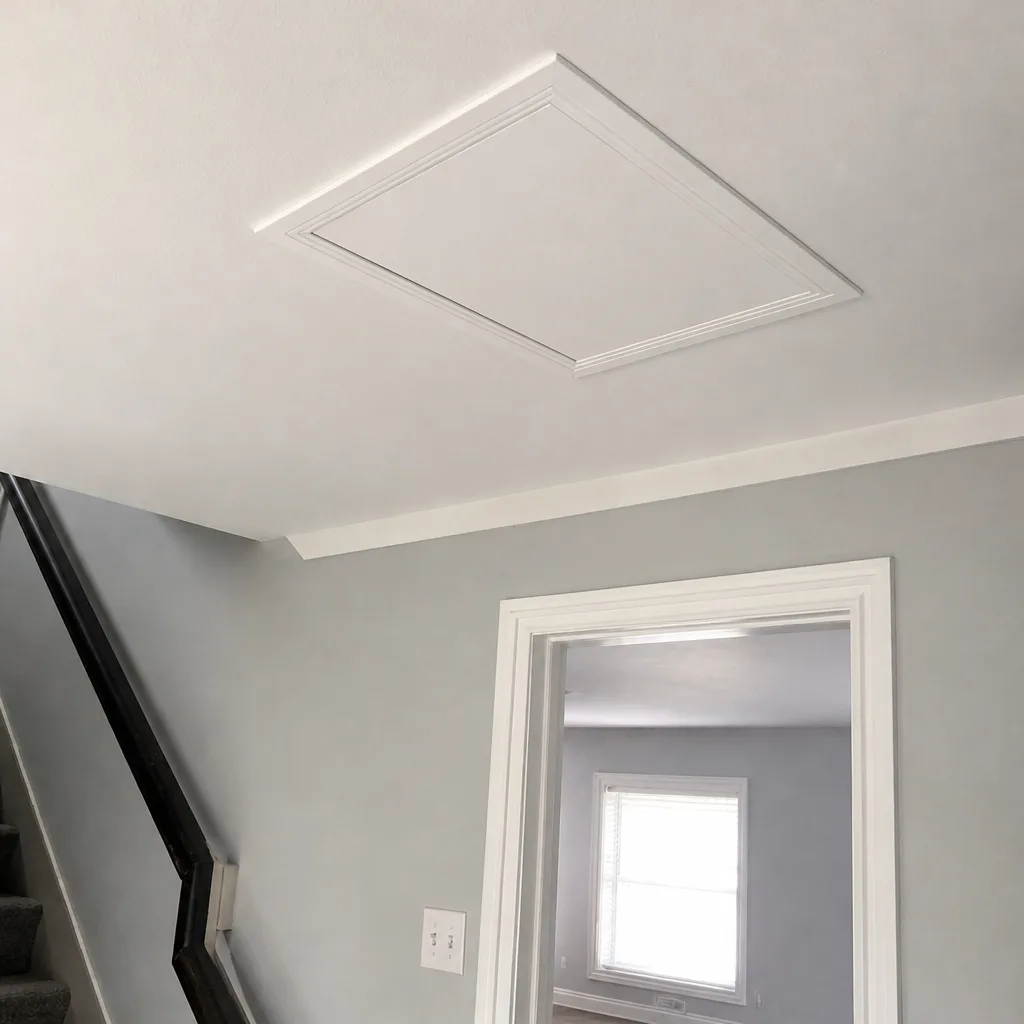
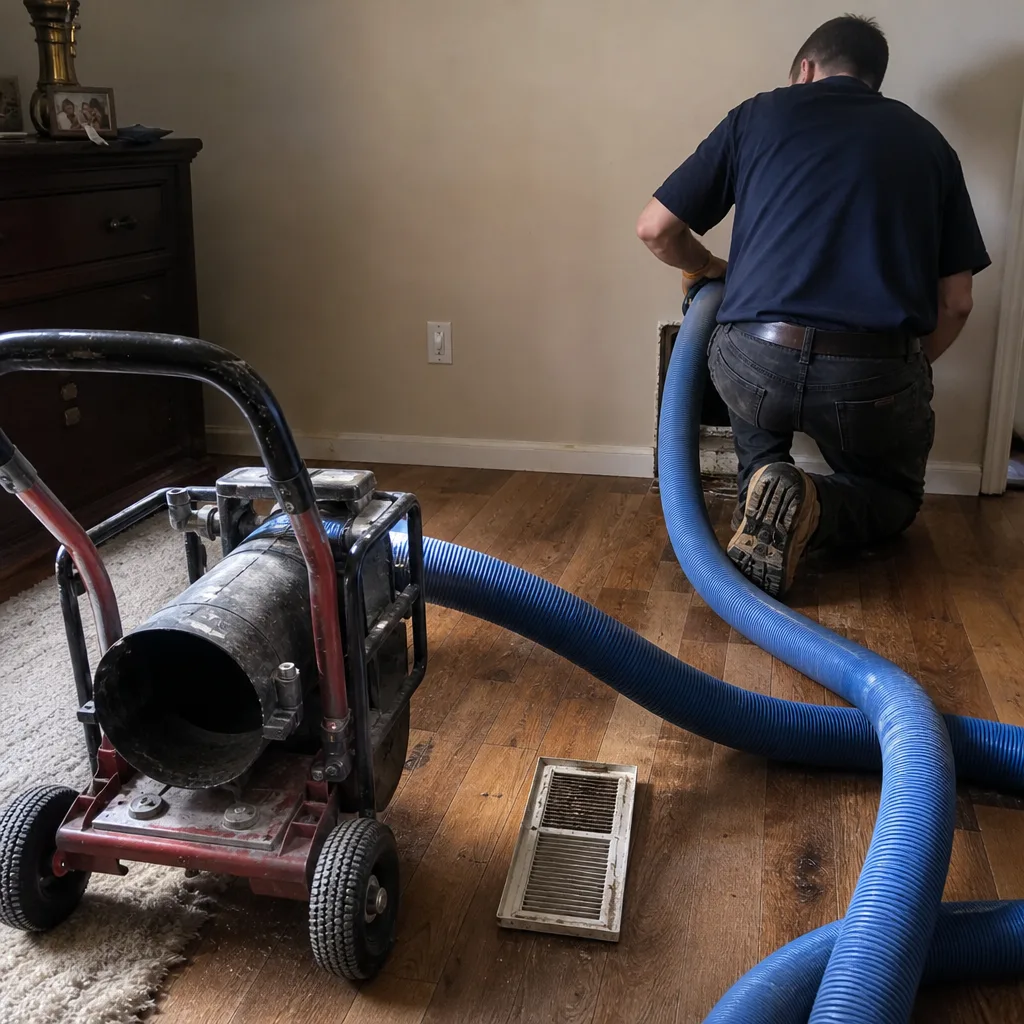
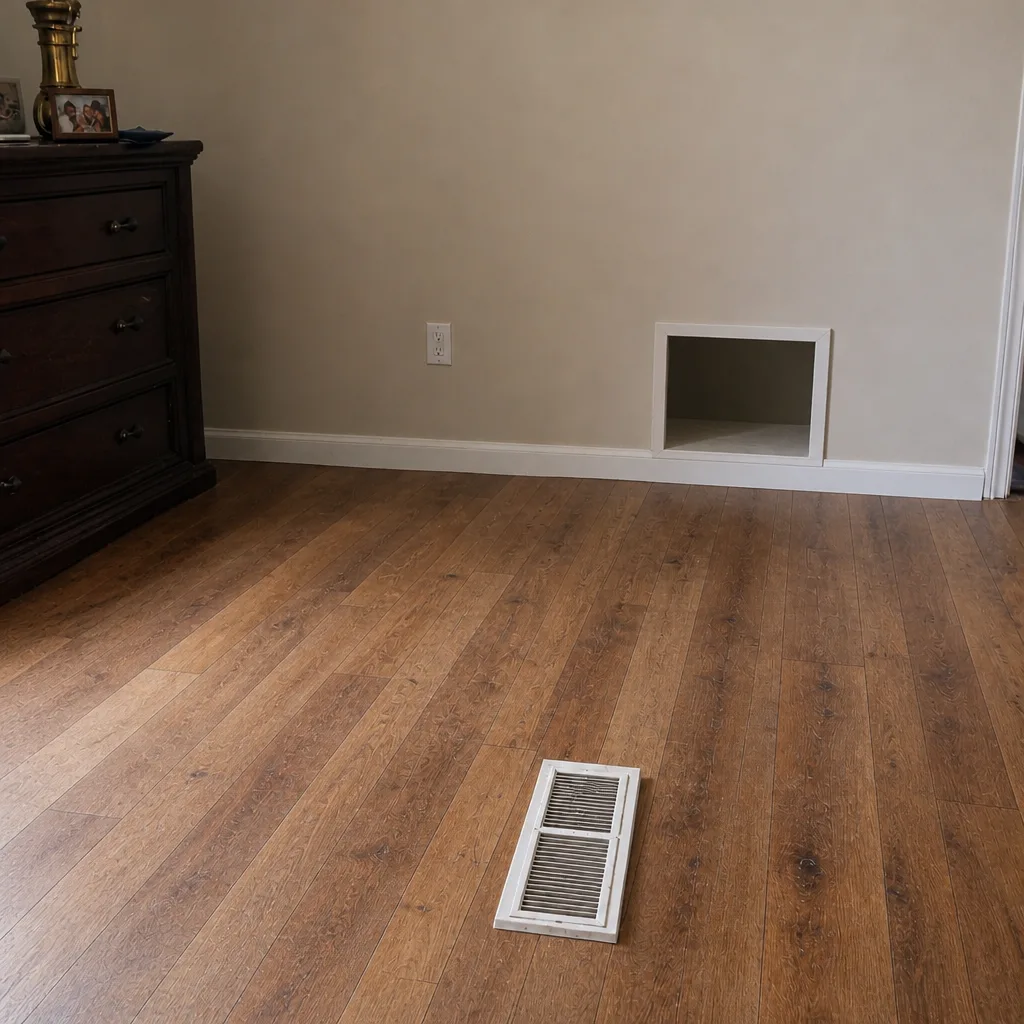
- Not asking for before-and-after photos. A contractor willing to show you what they pulled out of your ducts is a contractor who’s confident in the job. Photos of your own system also give you a baseline for the next time.
See the difference
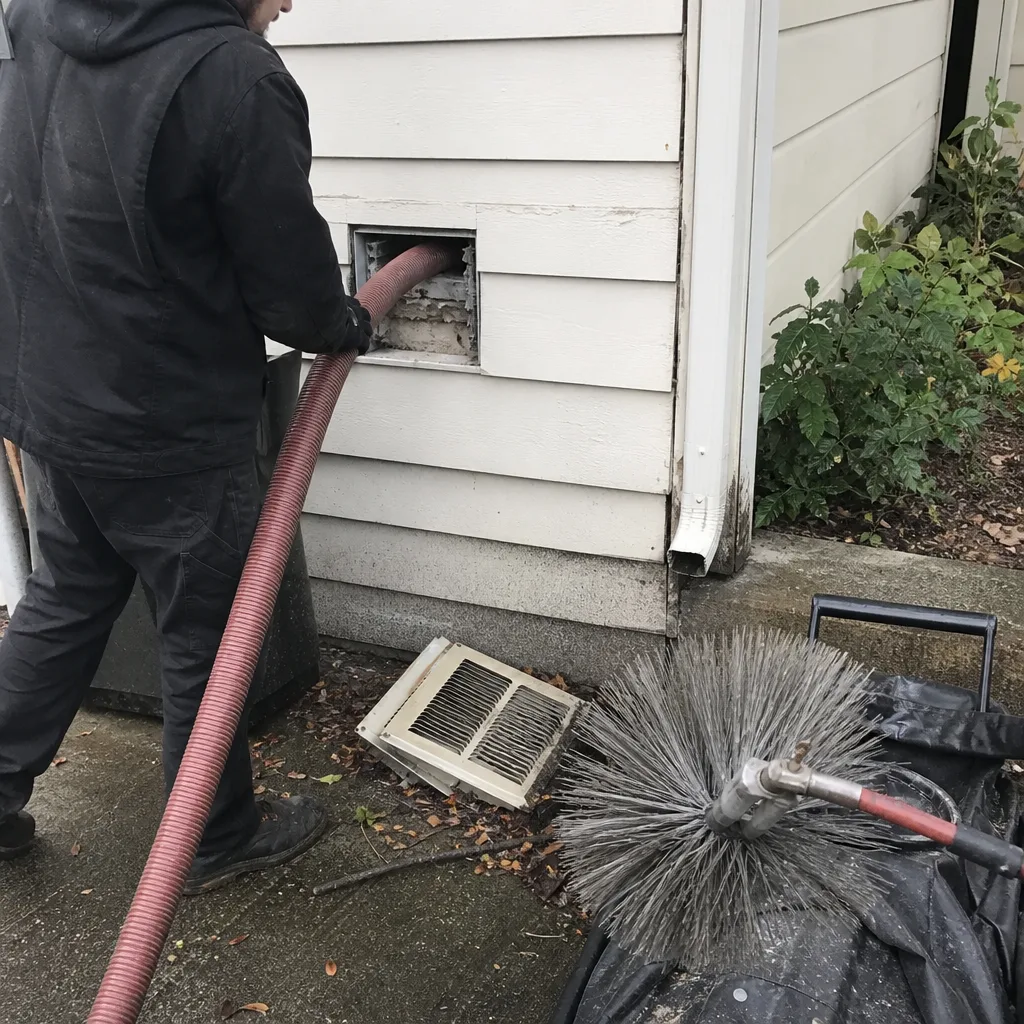 Before
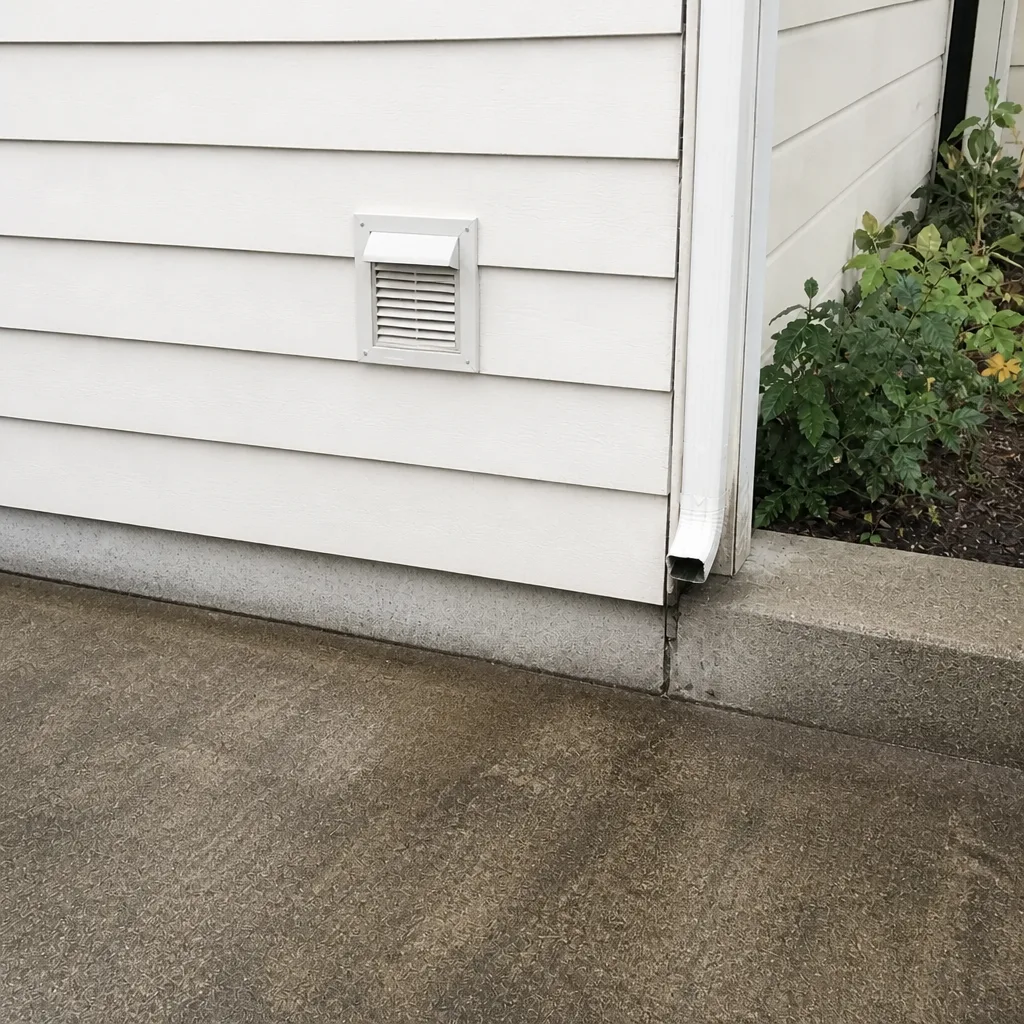 After
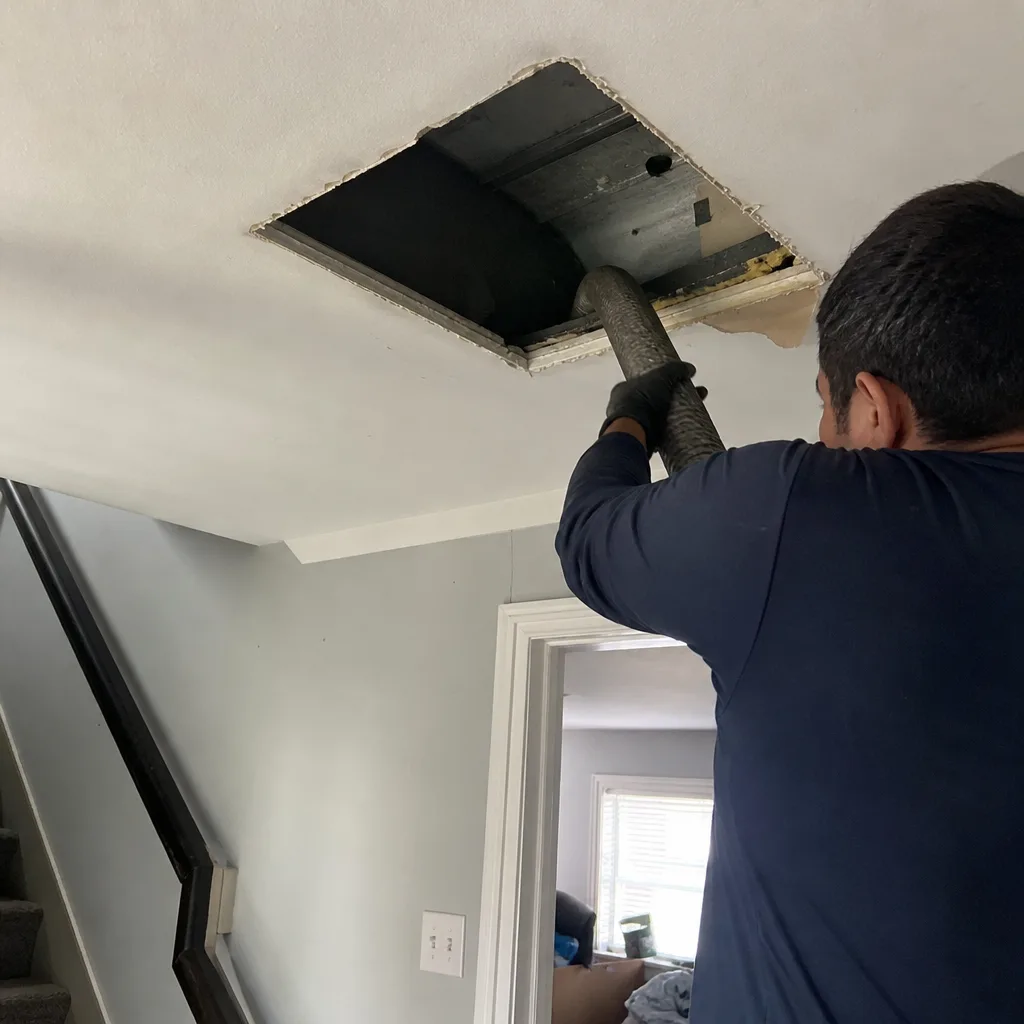 Before
 After
 Before
 After
When to Call a Professional
Call a professional when you can see visible dust buildup at the registers, when you smell a musty odor whenever the HVAC kicks on, when you’ve recently moved into a home with unknown duct cleaning history, or when you’ve finished a renovation and construction dust has worked its way into the system. Call if you notice uneven airflow between rooms, dust blowing out of a register right after the system starts, or a dryer that takes noticeably longer to dry a load than it used to. Call if anyone in the household has allergy symptoms that track with HVAC use. And call if you haven’t had the system looked at in more than a few years – in Kent’s older housing stock, a lot of problems start small and get expensive. Duct Cleaning Kent offers free estimates in Kent. Call (866) 761-6504. We answer 24/7. Fast dispatch from 7am to 7pm, Sunday through Friday.
Frequently Asked Questions
Residential duct cleaning in Kent typically depends on three things: the number of registers and returns, whether the air handler is included, and whether any duct repair is needed. A standard single-story home with fewer than ten registers and a straightforward layout usually costs less than a two-story home with a long return trunk and an air handler coil that needs cleaning. The written estimate sets the final price before work starts, and there’s only ever one flat price per system, not per-vent pricing. Call us for a free estimate – the scope is set in writing and the photos confirm the work. To understand exactly what’s included, visit our air duct cleaning page. Call (866) 761-6504 for an exact quote – estimates are free.
Cheap quotes are almost always cheap for a reason: they exclude the air handler, they skip the returns, they use equipment that doesn’t actually remove debris, or they plan to upsell the difference once they’re inside. A legitimately low-priced quote is possible for a small, straightforward system with no repair needed, and it’ll come with a written scope that spells out exactly what’s covered. The pattern to watch for is a low number with no scope – that’s a teaser that grows on site. Call (866) 761-6504 for an exact quote – estimates are free.
Ask for before-and-after photos of your own ducts. Not stock photos, not photos of other jobs – photos of your system, taken before cleaning starts and after cleaning finishes. A professional operator photographs the registers, the air handler, and at least one run on each floor. If a contractor can’t or won’t provide photos, treat that as a signal. Our technicians photograph every job and share the images with you before they leave. Call (866) 761-6504 for an exact quote – estimates are free.
Most homes in Kent benefit from a professional cleaning every three to five years, but that’s a starting point, not a rule. Homes with pets, recent renovations, allergy-sensitive residents, or a long history of no cleaning history may need it sooner. Homes with newer ductwork and good filtration can go longer. The honest answer depends on what’s actually in the system – which is why the walkthrough matters. If a contractor gives you a fixed “every year” answer without looking at your system, ask why. Call (866) 761-6504 for an exact quote – estimates are free.
It can help meaningfully if the system is actually dirty and the cleaning is done properly with source removal and contained filtration. In Kent’s wet winters and pollen-heavy springs, households with allergy-sensitive residents often notice less dust at the registers and fewer musty smells after a cleaning. It won’t fix a duct system that’s drawing from a damp crawlspace, and it won’t replace good filtration. The two work together. If you run a Honeywell or Aprilaire system already, ask the contractor whether they can advise on it. Call (866) 761-6504 for an exact quote – estimates are free.
We repair, not just clean. Disconnected, crushed, or leaking ductwork is a common finding in Kent homes, especially in older crawlspace and attic runs, and cleaning without repairing it just moves debris around. Bringing a technician who can assess the system, repair the problem, and clean it afterward is the right order of operations. Duct Cleaning Kent handles air duct cleaning, dryer vent cleaning, and air duct repair under one provider. Call (866) 761-6504 for an exact quote – estimates are free.
The Bottom Line
Hiring an air duct cleaning contractor in Kent comes down to a small set of questions most homeowners never ask: what equipment are you running, what’s the exact scope in writing, will you walk the system with me before you start, and can you show me before-and-after photos of my own ducts. The industry’s bait-and-switch reputation exists because too many operators answer those questions vaguely. The operators who answer them precisely – with equipment names, written scope, and photographic proof – are the ones worth hiring. Our technicians have up to 15 years of experience, we run professional Rotobrush and Nikro systems with Abatement Technologies filtration on site, and we put the price per system in writing before work begins. If your ducts need cleaning, repair, or both, it’s worth a conversation.
Call Duct Cleaning Kent at (866) 761-6504 for a free estimate. We answer 24/7. Fast dispatch from 7am to 7pm, Sunday through Friday.
Written by the team at Duct Cleaning Kent.