
Last updated November 16, 2026
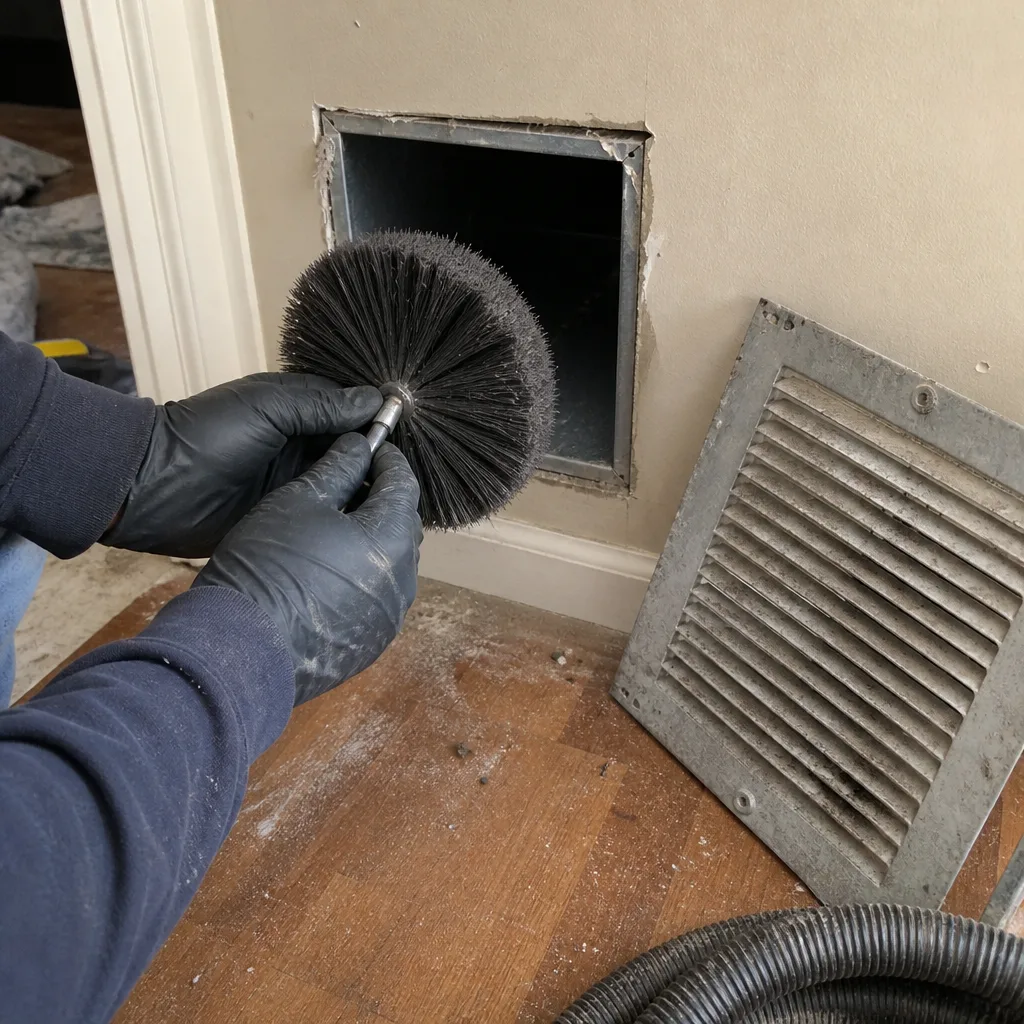
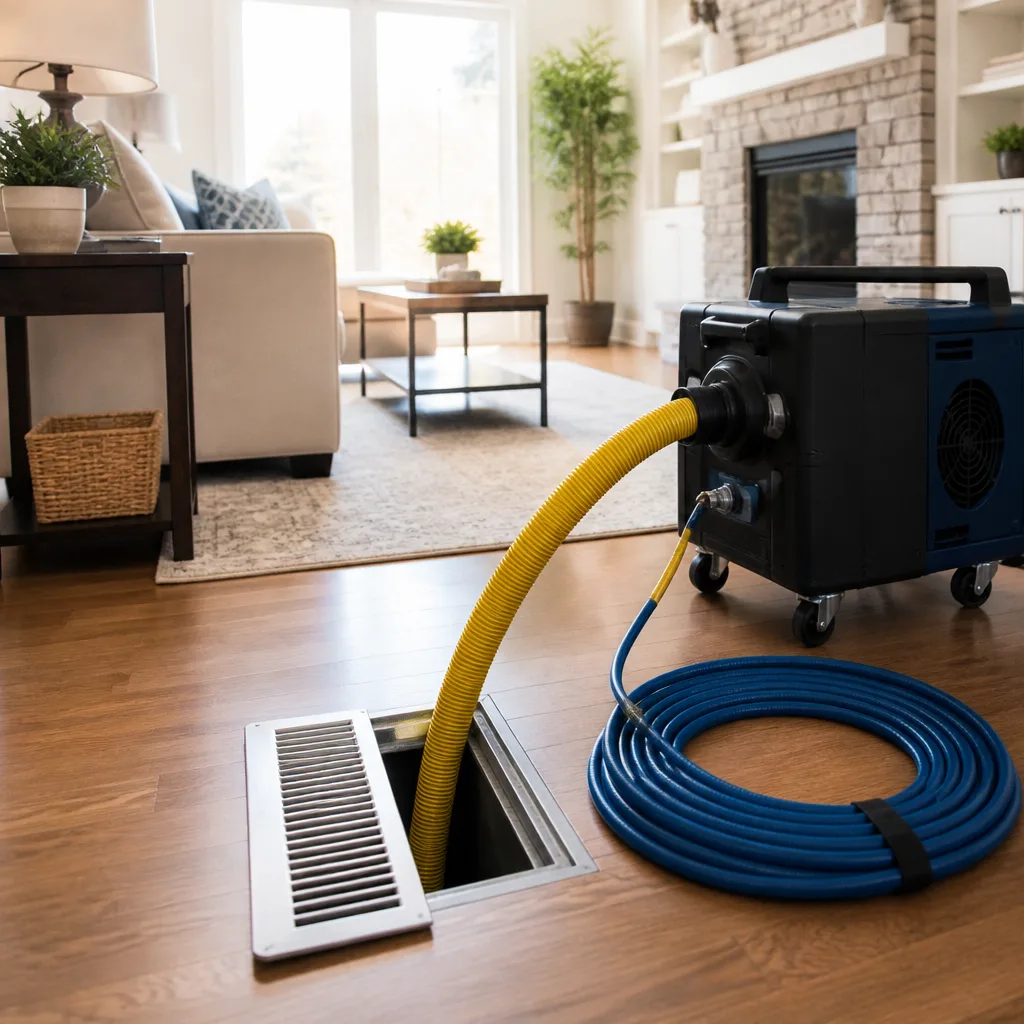 Whole-home duct cleaning
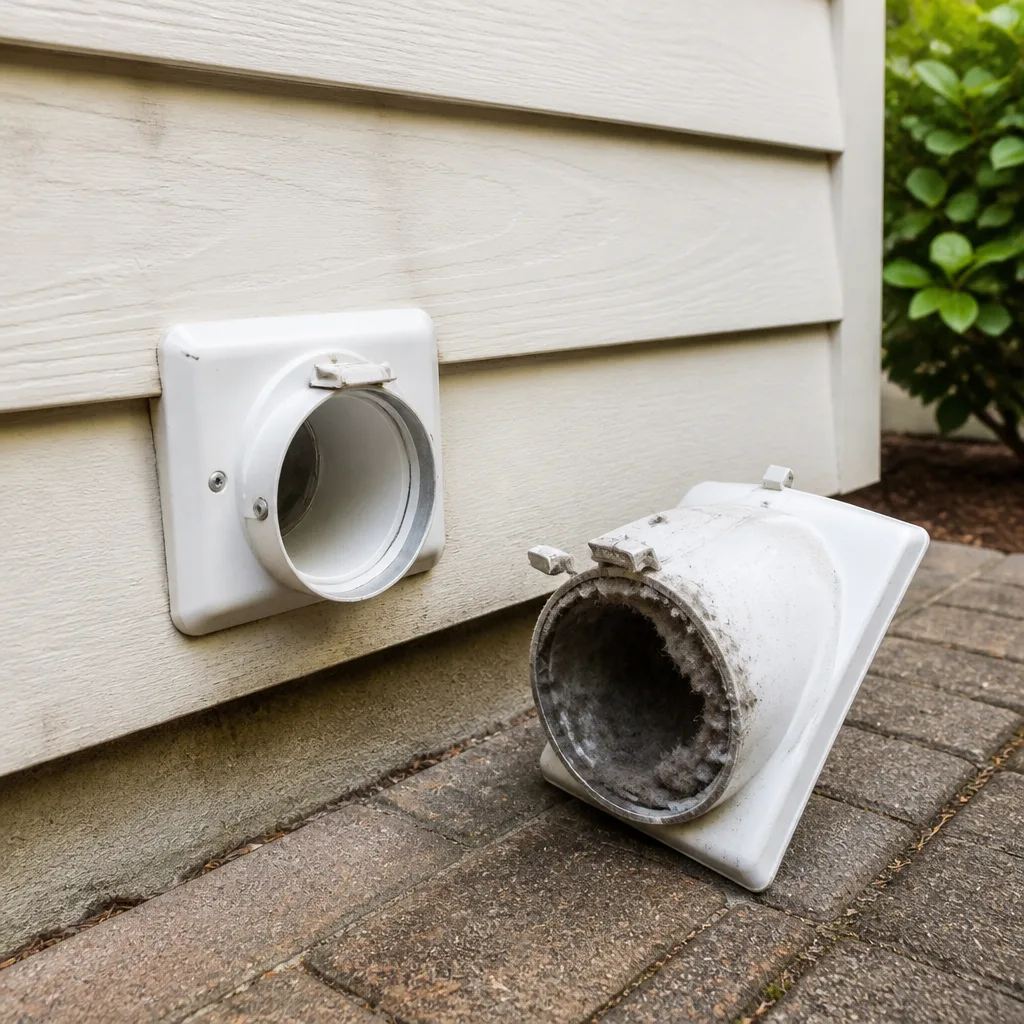 Dryer vent cleaning
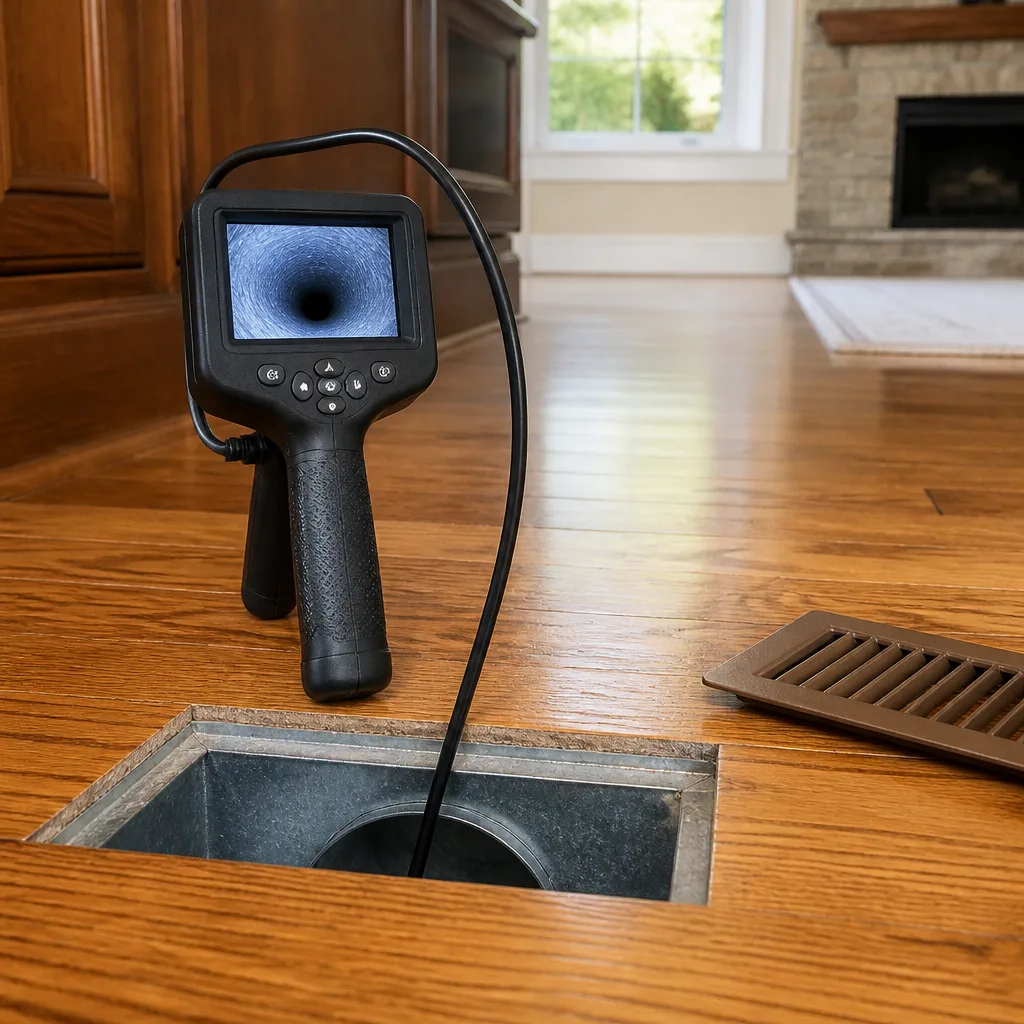 Camera inspection
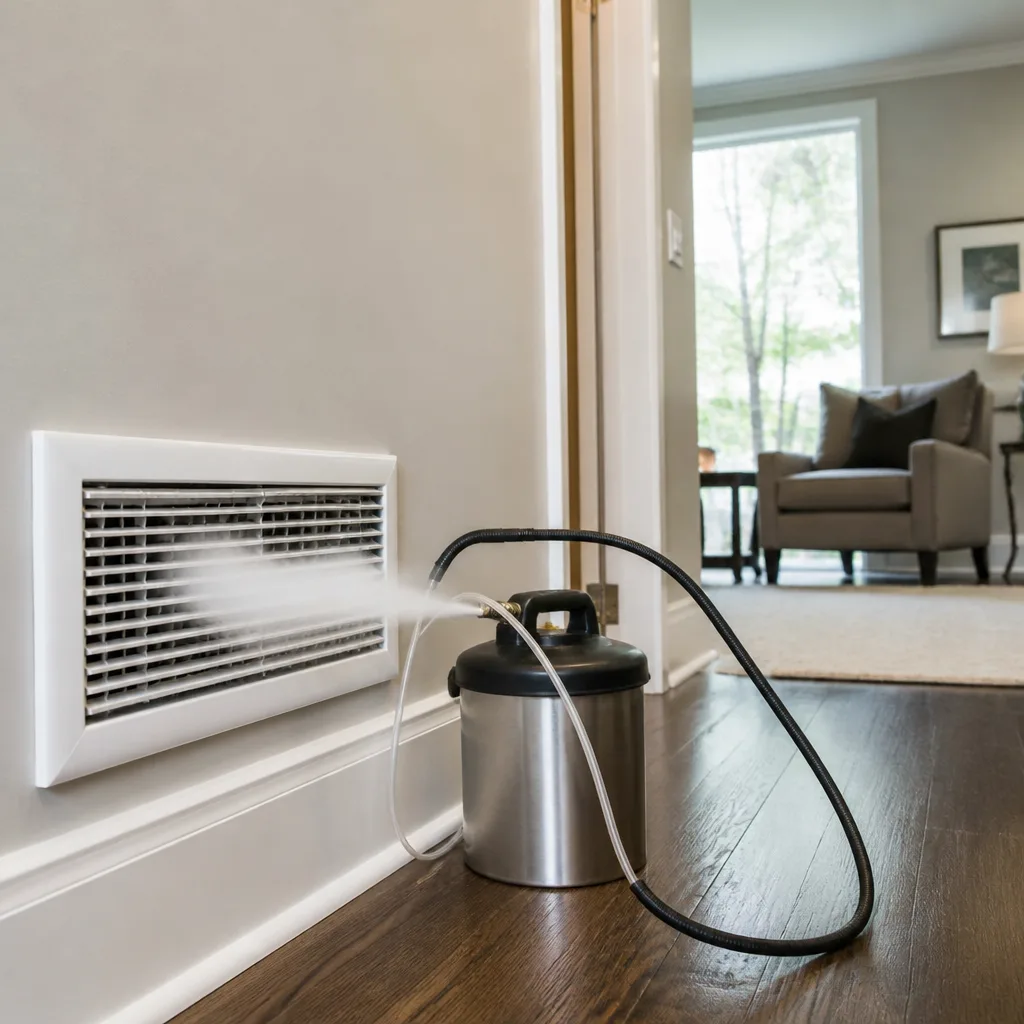 Sanitizing & deodorizing
Whole-system duct and dryer vent check with before-and-after photos - you see exactly what came out of your vents
That "$99 whole-house special" is a bait ad - the real number appears once they are in your hallway, or the "clean" is a shop-vac at the register. We photograph the inside of your ducts before and after instead.
Seasonal Air Duct Cleaning Care for Kent: Year-Round Homeowner’s Guide
Most homeowners think about duct cleaning once a year, if that, usually when someone in the house starts sneezing or the heating bill climbs. That’s the wrong calendar. In Kent, a duct system faces four separate contamination events between January and December, and each one hits differently: wildfire smoke in late summer, organic debris at exterior vents in fall, condensation inside poorly insulated runs in winter, then a heavy pollen load in spring that lands before most people have switched the thermostat over. This guide walks through what each season actually does inside your ducts, what to check and when, and how to build a service calendar specific to Kent’s climate so cleaning, filter changes and HVAC tune-ups land in the right order instead of all at once.
Quick Answer
The highest-value time to book an inspection in Kent is late spring, right after the rainy season ends, because that’s when winter condensation damage and spring pollen loading are both visible and before summer cooling season pushes air through the system at full volume. A full cleaning is usually best scheduled in early fall to clear summer wildfire smoke and pollen residue before the heating season starts. Homeowners in older Kent neighborhoods with crawlspace duct runs should add a mid-winter check for condensation and mold-friendly moisture.
Styles & brands we work with
- Whole-home duct cleaning
- Dryer vent cleaning
- Camera inspection
- Sanitizing & deodorizing
Table of Contents
- Why Seasonal Duct Care Matters More in Kent Than Most Places
- Late Summer: Wildfire Smoke and What Actually Gets Trapped
- Fall: Exterior Vent Terminations and the Gaps That Open Up
- Winter: Condensation in Crawlspace Flex Duct
- Spring: The Highest-Value Inspection Window
- Building a Kent-Specific Annual Service Calendar
- Signs Your Ducts Need Attention Now, Not Next Season
- What Professional Duct Cleaning Actually Involves
Why Seasonal Duct Care Matters More in Kent Than Most Places
The mistake most homeowners make is treating duct cleaning as a binary: either the ducts are clean or they’re dirty, and you find out which at some vague point in the future. That framing misses everything useful. A duct system in Kent is a passive collector that responds to whatever the outdoor air is doing. When the seasons shift, so does the type of debris, moisture and particulate your ducts are handling.
Kent sits in a climate with wet winters and dry, smoke-prone late summers, which means a residential duct system here cycles between two extremes. During the wet months, the system is dealing with humidity and condensation. During late summer and early fall, it’s pulling in smoke particulate and fine organic debris. Neither of those is dramatic on its own. Both together, season after season, is what produces the buildup that shows up as musty odors, dust on the registers and uneven room temperatures.
The other piece that’s easy to overlook: your duct configuration matters as much as the season. A home in Kent with a sealed, insulated attic system handles winter moisture very differently than a crawlspace system with long flex duct runs. Two houses on the same street can have completely different seasonal risk profiles. That’s why a generic “clean your ducts every X years” rule doesn’t hold up here. The useful question isn’t whether to clean, it’s which season’s aftermath your specific system handles worst and how to plan around it.
For a walkthrough of what a professional cleaning covers top to bottom, see our guide to air duct cleaning.
Late Summer: Wildfire Smoke and What Actually Gets Trapped
Wildfire smoke is the biggest seasonal wildcard in Kent’s duct calendar. When regional smoke settles in, the particulate that gets into your home doesn’t just land on surfaces. It gets pulled into the return-air system whenever the HVAC runs, and from there into the duct interior. The important detail most homeowners don’t know is that different particle sizes behave differently once they’re inside.
Larger smoke particles settle on duct walls and register grilles and are the easiest to remove with a proper cleaning. The finer fraction is the problem. Sub-micron particulate can penetrate into porous duct liner, settle into seams and joints, and cling to flex duct corrugation where a vacuum alone won’t lift it. That’s why a standard cleaning after a heavy smoke season often needs to be paired with a filtration upgrade, not just a more aggressive pass with the brush.
What to know after a smoke event in Kent:
- Particle size matters. Fine smoke particulate lodges in liner and seams; coarse particulate sits on surfaces. One cleaning pass handles the second, not always the first.
- Filtration is the other half of the job. A duct cleaning with no filter upgrade leaves the same weak point in place for the next smoke event.
- Whole-home filtration helps. We work with Honeywell and Aprilaire filtration systems, which is useful when a homeowner wants a permanent filtering layer instead of a seasonal band-aid.
- Don’t run the HVAC fan continuously during smoke days if you can avoid it. It pulls more outdoor particulate into the system.
Using Abatement Technologies air scrubbers and negative-air equipment on-site is part of how we prevent the cleaning itself from recirculating captured particulate back into the home. A cleaning that just knocks debris loose without controlling it is only half a cleaning.
Fall: Exterior Vent Terminations and the Gaps That Open Up
Fall is when inspection priorities shift from what’s inside the ducts to what’s happening at the exterior vent terminations. Leaves, twigs, seed pods and fine organic debris collect around exterior vent caps and grilles throughout autumn. A vent with a missing or damaged screen becomes a harbor for insects and, in some cases, larger animals looking for a sheltered spot before cold weather. Once they’re in the duct run, the debris they leave behind is a moisture and contamination source through the winter.
The other fall issue: seals and joints that worked fine all summer contract as temperatures drop. Small gaps at duct connections that you wouldn’t notice in July become the openings that pull in attic air, garage air or crawlspace air through the heating season. A duct system that’s leaking can look clean on a visual check and still be introducing outside contaminants into every room.
Fall inspection priorities worth checking:
- Exterior vent caps and screens: confirm the screen is intact and nothing has collected behind it.
- Duct joints at the air handler and main trunk: look for gaps, tape that’s failing, or disconnected sections.
- Any visible duct in the attic or crawlspace: check for condensation staining and insulation that’s been pulled loose.
- Return air grilles in the living space: remove and inspect behind them for debris accumulation that isn’t visible from the outside.
- Window and door weatherstripping: an envelope that leaks pulls more outside air through the ducts. It’s part of the seasonal picture.
If an inspection turns up damaged, disconnected or leaking ductwork, cleaning alone won’t fix it. We clean it. We fix it if it’s broken. That’s why we offer air duct repair alongside cleaning: a compromised duct run that’s cleaned but not repaired will just accumulate debris again next season. Repairs are what make the next cleaning stick.
Winter: Condensation in Crawlspace Flex Duct
Winter in Kent is wet and relatively mild, which is exactly the condition that creates condensation problems in poorly insulated duct runs. Warm air moving through a cold duct has to lose moisture somewhere. If the duct is in a crawlspace and the insulation has gaps or has compressed over time, condensation forms on the duct surface or inside the run where warm, moist air meets a cold section. Repeated condensation cycles over a winter create the conditions that mold needs: a food source (dust and debris on the duct surface), moisture and moderate temperature.
This is one of the most common winter issues we see in Kent homes with older crawlspace duct systems. Flex duct is especially vulnerable because the corrugated interior holds moisture at the low points rather than letting it drain. Twenty-plus years of flex duct in a crawlspace, combined with Kent’s wet winters, is a recipe for a duct system that smells musty every time the heat kicks on.
What to check during winter:
- Insulation integrity on any duct run passing through a crawlspace or attic, especially the unheated sections.
- Visible condensation or moisture staining on duct exteriors and on the crawlspace vapor barrier beneath them.
- Musty or damp smells at registers when the heat is running, particularly in rooms farthest from the air handler.
- Any low spots in flex duct runs where water can pool.
If mold has already formed inside the duct or on the liner, cleaning is only part of the answer. The underlying moisture source has to be addressed too, whether that’s insulation gaps, a disconnected joint, or a crawlspace that needs improved vapor control. A cleaning that doesn’t fix the moisture problem will be undone by the next wet winter.
Spring: The Highest-Value Inspection Window
Spring is the single best time to schedule a professional inspection in Kent, and it’s the point most homeowners miss. The reasoning is practical: the rainy season has just ended, so any winter condensation damage is fully visible and hasn’t yet been masked by summer heat. Spring pollen loading happens simultaneously, which means an inspection in April or May catches both the damage from the previous season and the new contamination before it’s pushed through the cooling system all summer.
The Pacific Northwest’s spring pollen peak also arrives earlier than most homeowners expect. Trees release pollen well before most people think about the HVAC. That pollen gets pulled into the return-air system the minute temperatures rise enough to run the system with any frequency, and it settles into the same duct surfaces that already carry winter moisture film. Pollen plus residual winter moisture is a good adhesion combination. That’s why a spring inspection combined with a cleaning often removes far more material than a fall cleaning of the same system would.
Why spring wins the scheduling question:
- Winter condensation damage is visible and diagnosable.
- Spring pollen peaks before most homeowners switch the system to cooling.
- A post-rainy-season cleaning removes both seasonal contaminants in one pass instead of two.
- It sets up the system clean for the summer cooling push, when air volumes are highest.
- Filtration upgrades made in spring carry through the inevitable late-summer smoke season.
In our experience, a spring inspection in Kent is where most duct cleaning decisions should actually be made. Fall cleanings are useful too, but a spring visit catches the cumulative load from the wet season before it matters. If you’re in Kent and haven’t had the system looked at since last year, April or May is the moment.
Building a Kent-Specific Annual Service Calendar
A workable annual calendar sequences duct cleaning, filter changes and HVAC tune-ups so each one supports the next instead of duplicating effort. The sequence matters: cleaning before tune-up, tune-up before peak season, filtration maintained between cleanings.
A calendar that fits Kent’s climate:
- Late winter (February or early March): Visual check of crawlspace and attic duct runs for condensation damage. This is the point where moisture problems are most visible and repairs can still be scheduled before the cooling season.
- Spring (April or May): Book the annual professional duct inspection and cleaning. This catches winter damage and spring pollen in one visit before summer cooling pushes the system into high-volume use.
- Late spring (May or June): HVAC tune-up and filter replacement. The tune-up should follow the cleaning, not precede it, because a tune-up performed on a system with heavy duct debris only measures the system in its dirtiest state.
- Mid-summer (July): Check the filter mid-season and replace if load is heavy. Wildfire smoke spikes happen fast and filter loading accelerates quickly during those weeks.
- Early fall (September or October): Exterior vent inspection and cleaning if late summer smoke has been heavy. This also catches fall organic debris before it works into the system.
- Late fall (November): Any duct repairs or seal work identified during the fall inspection get completed before the heating season load picks up.
Not every homeowner needs a cleaning every year. A well-sealed system with a properly maintained filtration setup and no pets or recent renovations might only need a professional inspection every 18 to 24 months, with the cleaning done reactively when the inspection finds something. The calendar adapts. What doesn’t change is the sequence: inspect, clean, repair if needed, then tune up. Get the order wrong and you’re paying for work that doesn’t hold.
Familiarity with Guardsman filtration components is useful here, since older whole-home filtration equipment often needs filter media replacements that depend on the specific unit installed. Knowing what’s actually in the duct system is part of what makes the annual service visit worth scheduling in advance.
Signs Your Ducts Need Attention Now, Not Next Season
Seasonal scheduling is the baseline, but there are signs that mean the next cleaning can’t wait for the ideal window. These are worth taking seriously regardless of where you are in the annual cycle.
- Visible dust on the registers within days of cleaning them: this usually means debris is being distributed from the ducts, not settling from the room air.
- Musty or damp smell when the heat or AC starts: moisture and microbial growth somewhere in the run. This one shouldn’t wait, especially in older Kent crawlspace systems.
- Uneven heating or cooling between rooms: sometimes it’s a balance issue, sometimes it’s a disconnected duct leaking conditioned air into a crawlspace. The second is worth finding quickly.
- New dust or debris after a renovation: drywall dust and construction particulate get pulled into the return system aggressively. Post-renovation cleaning is usually worth scheduling within weeks of finishing.
- Recent wildfire smoke exposure and no filtration upgrade in place: a cleaning plus filter assessment after a heavy smoke season is more effective than a cleaning alone.
- Dryer taking longer to dry clothes: different system, same category of problem. Dryer vents are a fire risk, not a nuisance task, and a vent that’s clogged enough to slow drying time is worth looking at now.
For the dryer vent side of the calendar, see our guide to dryer vent cleaning.
What Professional Duct Cleaning Actually Involves
Your ducts are only as clean as the process used to clean them. That sounds obvious, but the market has a lot of operators using shop-vac-style equipment with a wand attachment, and the results are not comparable to actual professional cleaning. What a proper service involves, in rough order:
- System inspection and access setup. All registers and returns get opened up, and the technician confirms the duct configuration before starting.
- Negative pressure and air scrubbing. Abatement Technologies air scrubbers and negative-air equipment are set up to capture particulate at the source so it doesn’t recirculate into the home.
- Agitation of duct surfaces. Professional Rotobrush rotary-brush systems break debris loose from duct walls, which a vacuum alone can’t do, especially on corrugated flex duct. This is the same equipment category used by certified restoration contractors for post-remediation work.
- High-efficiency extraction. Nikro vacuum and collection equipment pulls the agitated debris out of the system rather than leaving it in the run.
- Sanitizing or deodorizing where appropriate. Only where warranted by what the inspection finds, not as a routine upsell.
- Repair if needed. Disconnected joints, damaged flex runs, compromised liner, and poorly sealed connections get fixed. Cleaning without repair on a compromised system is a partial job.
- Filtration review. Filter condition, filtration equipment model and appropriate replacement get checked before the system goes back into service, including any whole-home filtration tied into the Honeywell or Aprilaire equipment already installed.
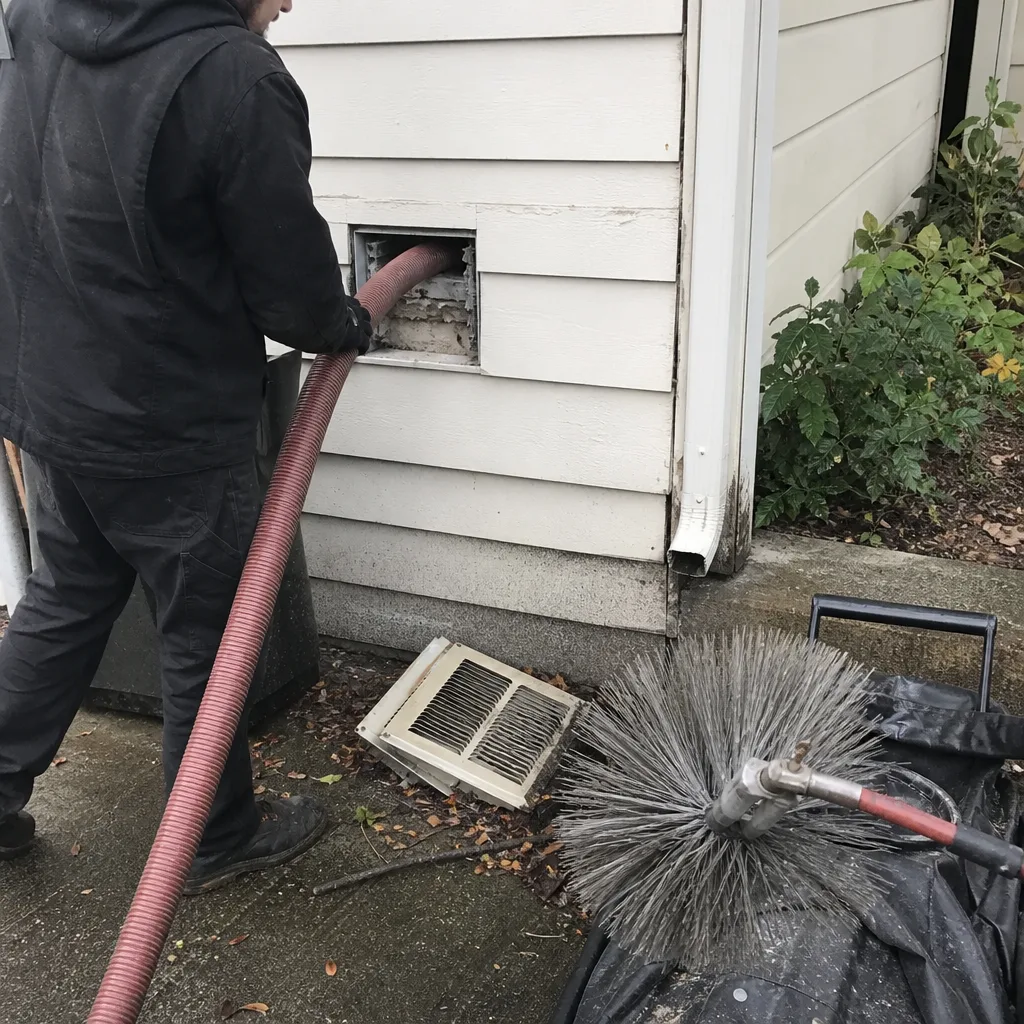
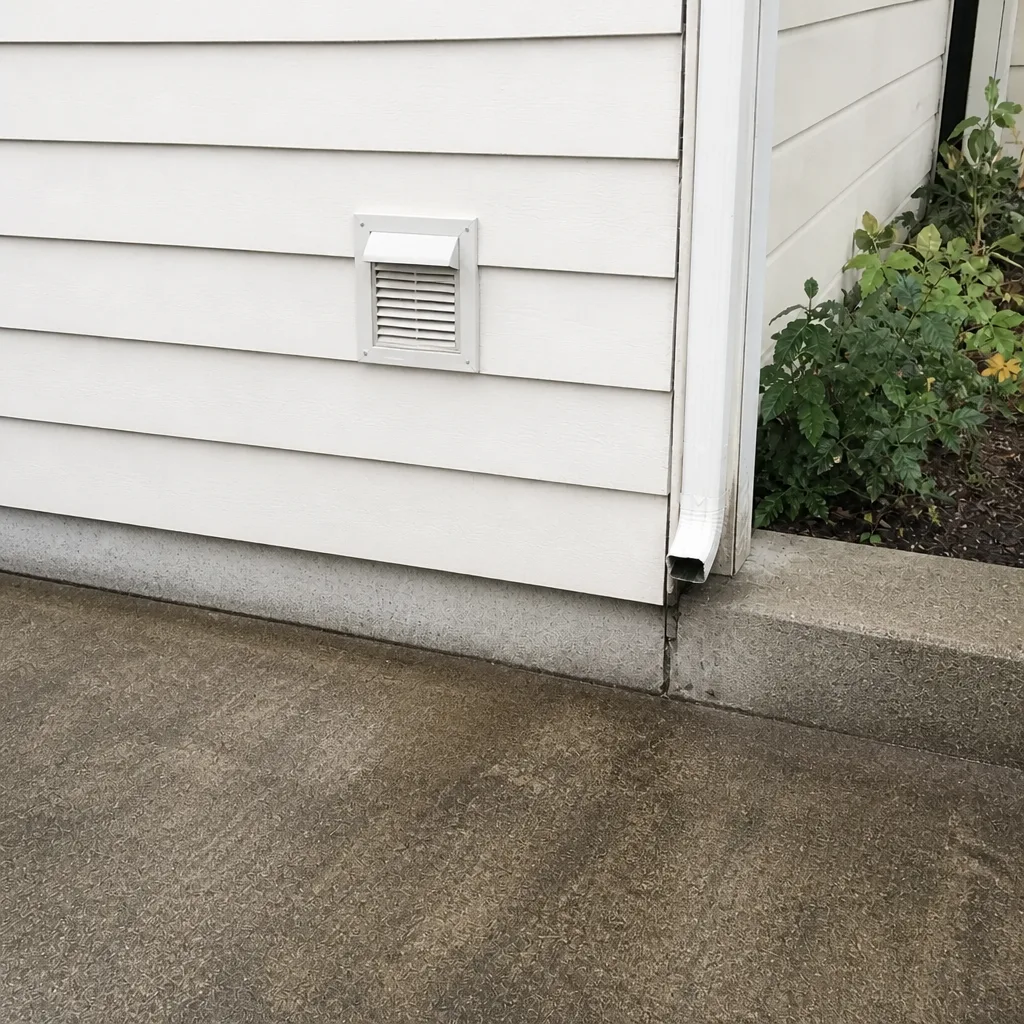
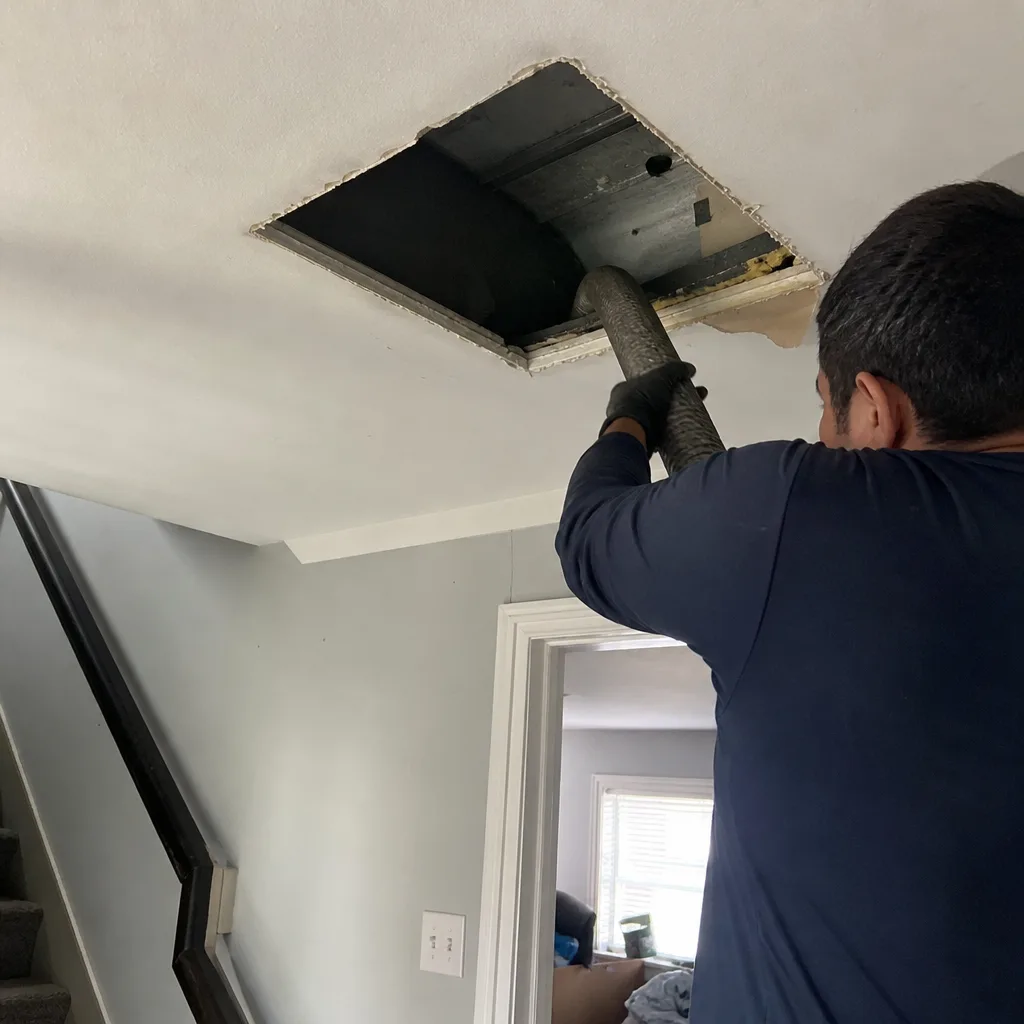
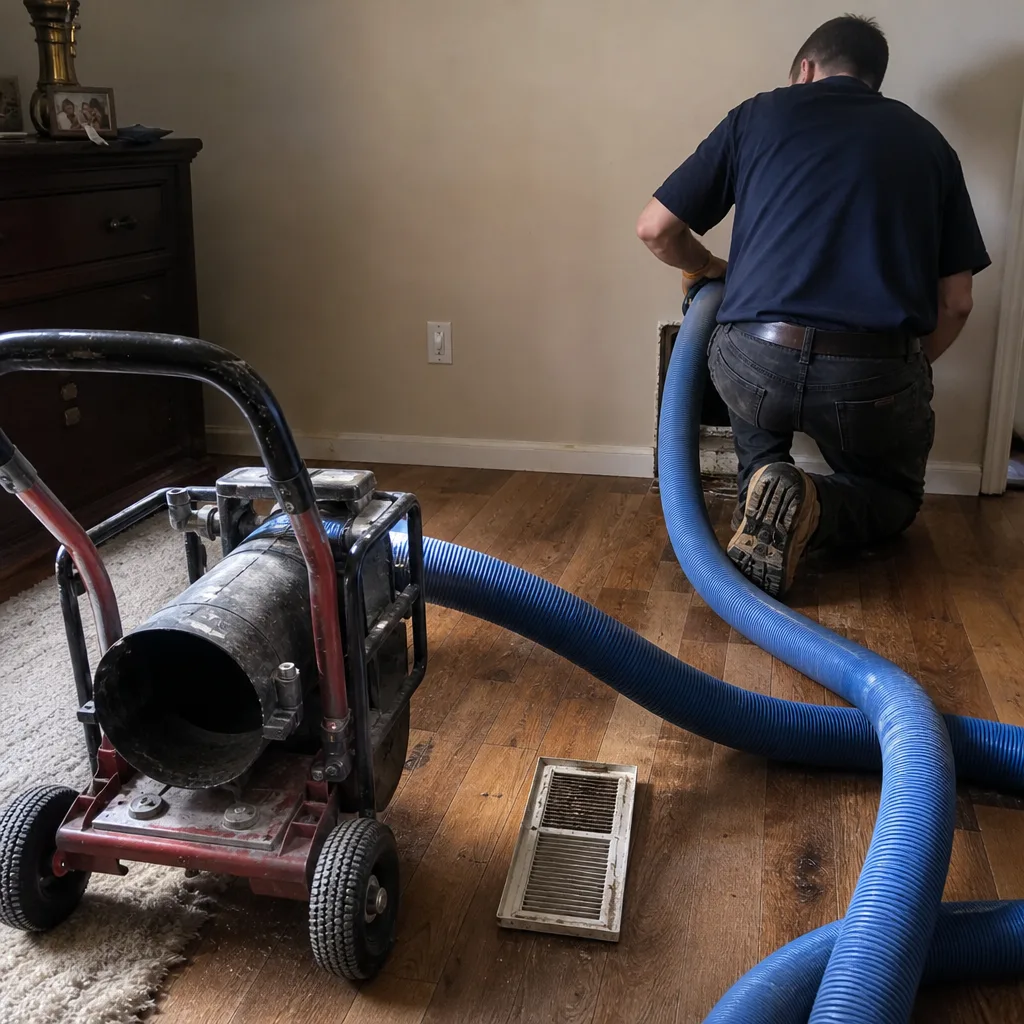
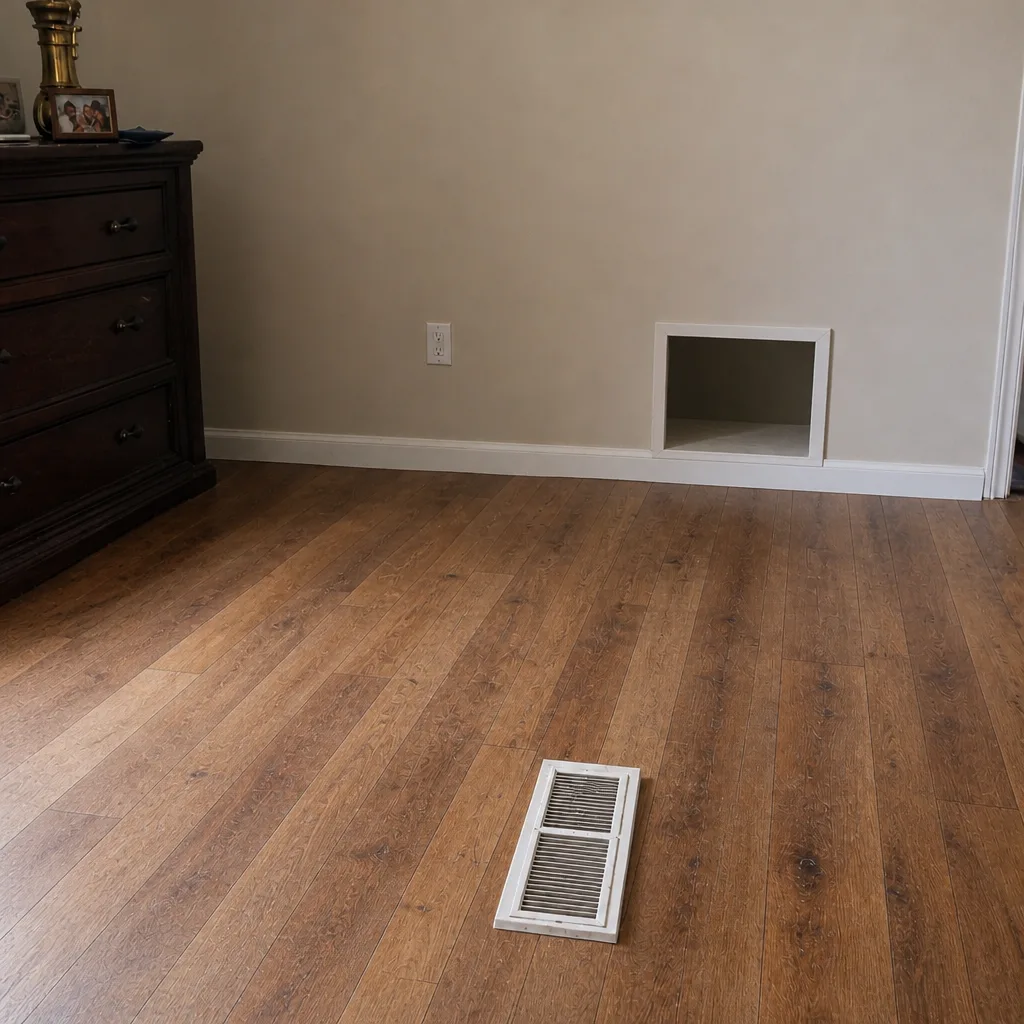
Professional-grade equipment, not improvised tools, is the standard that produces a result you can actually observe. Every job includes before-and-after photos of your own ductwork, which is a useful way to compare what was promised against what was delivered.
For a fuller overview of how we handle the core service, see Duct Cleaning Kent.
Common Mistakes to Avoid
- Cleaning the ducts but never upgrading filtration. A post-smoke cleaning without a filtration improvement just leaves the same weak point in place for next smoke season. The cleaning and the filter belong together.
- Booking a cleaning without an inspection. Cleaning a system that has a disconnected duct or a moisture problem wastes the cleaning. Inspection comes first, and any needed repairs happen before or alongside the cleaning, not after.
- Ignoring the crawlspace. In Kent’s wet winters, the crawlspace is where duct issues start. A homeowner who only checks the attic misses the moisture problem forming on the low side of the house.
- Replacing filters on a fixed calendar without checking load. Filter timing depends on outdoor conditions. Smoke season can load a filter in a matter of weeks. A set-it-and-forget-it replacement schedule misses that.
- Skipping the exterior vent check. A missing screen on an exterior vent termination is a small fix that prevents a much larger problem when leaves, insects or animals find their way into the run.
- Choosing the lowest bid without checking the equipment being used. A cleaning quote built around shop-vac-style equipment will produce a shop-vac result. Ask what equipment is actually going to be in the home.
- Treating dryer vent cleaning as a low-priority add-on. Dryer vents are a documented leading cause of residential structure fires. They belong on the annual calendar as a dedicated service, not a favor tacked onto a duct cleaning.
See the difference
 Before
 After
 Before
 After
 Before
 After
When to Call a Professional
Call a professional if you’ve never had the ducts cleaned and you’ve moved into a Kent home, renovated recently, or noticed musty odors or dust buildup that doesn’t clear with normal cleaning. Call if your ducts are visible in the crawlspace or attic and you’ve seen condensation, moisture staining or duct connections that have come apart. Call if you’ve got a dryer that’s taking longer to dry clothes or a dryer vent that hasn’t been inspected in years. And call if it’s spring and you haven’t had an annual inspection yet, because that’s the highest-value moment in the Kent calendar. Duct Cleaning Kent offers free estimates in Kent. Call (866) 761-6504. We answer 24/7. Fast dispatch from 7am to 7pm, Sunday through Friday.
Frequently Asked Questions
Most Kent homes do well on an annual spring inspection with cleaning performed when the inspection calls for it, which often ends up being every 12 to 24 months depending on pets, filtration, recent renovations and the duct configuration. Homes with older crawlspace flex duct runs should stay on the annual schedule because winter condensation cycles accumulate faster. Homes with well-sealed systems and good filtration can stretch to every other year. Call (866) 761-6504 for an exact quote. Estimates are free.
Late spring, right after the rainy season ends, is the highest-value window in Kent. Winter condensation damage is visible, spring pollen loading is actively happening, and a cleaning done then clears both before summer cooling pushes the system into high-volume use. Early fall is a useful second window after wildfire smoke season. Between those two, spring gets the edge because it catches the cumulative load before it matters.
The honest answer is that duct cleaning is priced per system, not per vent, and any quote that only holds if the technician is on-site is worth questioning. A whole-system estimate should be given in writing before work starts, priced against the actual duct configuration and what the inspection finds. Cheaper quotes often reflect shop-vac-style equipment and a pass that doesn’t agitate duct surfaces. Call (866) 761-6504 for an exact quote. Estimates are free.
Cheap duct cleaning quotes usually reflect one of three things: shop-vac-style equipment rather than rotary-brush systems, a per-vent price that turns into a large invoice once the technician is on-site, or a cleaning pass that doesn’t include air scrubbing or extraction. Professional equipment (Rotobrush rotary-brush systems, Nikro extraction equipment and on-site Abatement Technologies air scrubbers) costs more to run, and that’s reflected in an honest quote. A cheap number often precedes an expensive one. Call (866) 761-6504 for an exact quote. Estimates are free.
Before-and-after photos of your own ductwork are the practical answer. A cleaning job should include photo documentation so you can see the state of the duct interior before the technician starts and after the extraction is complete. If a service provider can’t show what changed inside your ducts, ask why. Call (866) 761-6504 for an exact quote on a documented cleaning. Estimates are free.
Usually yes, but only if the source of the moisture is addressed too. Musty odors in Kent crawlspace systems typically come from condensation that’s created a mold-favorable environment in an insulated duct run. Cleaning removes the accumulated biological material; repairing the insulation or disconnected joint that let moisture in prevents it from coming back. A cleaning on a duct system that still has a moisture source will be undone by the next wet winter. Call (866) 761-6504 for an exact quote. Estimates are free.
The Bottom Line
Kent’s duct systems face four distinct seasonal contaminant loads, not one annual cleaning event. Wildfire smoke in late summer needs a cleaning paired with a filtration upgrade. Fall needs exterior vent inspection and duct joint checks. Winter drives condensation inside poorly insulated crawlspace runs, and that’s where mold-favorable conditions form. Spring is the highest-value inspection window because it catches winter damage and pollen loading at once. Build the calendar around those seasons, sequence cleaning before tune-up and repair, keep the filtration maintained between visits. Your ducts are only as clean as the process used to clean them, and the process that holds up long-term is the one built around your specific system and the seasons in Kent.
Ready to get on the calendar? Call (866) 761-6504 for a free estimate. We answer 24/7. Fast dispatch from 7am to 7pm, Sunday through Friday.
Written by the team at Duct Cleaning Kent.