
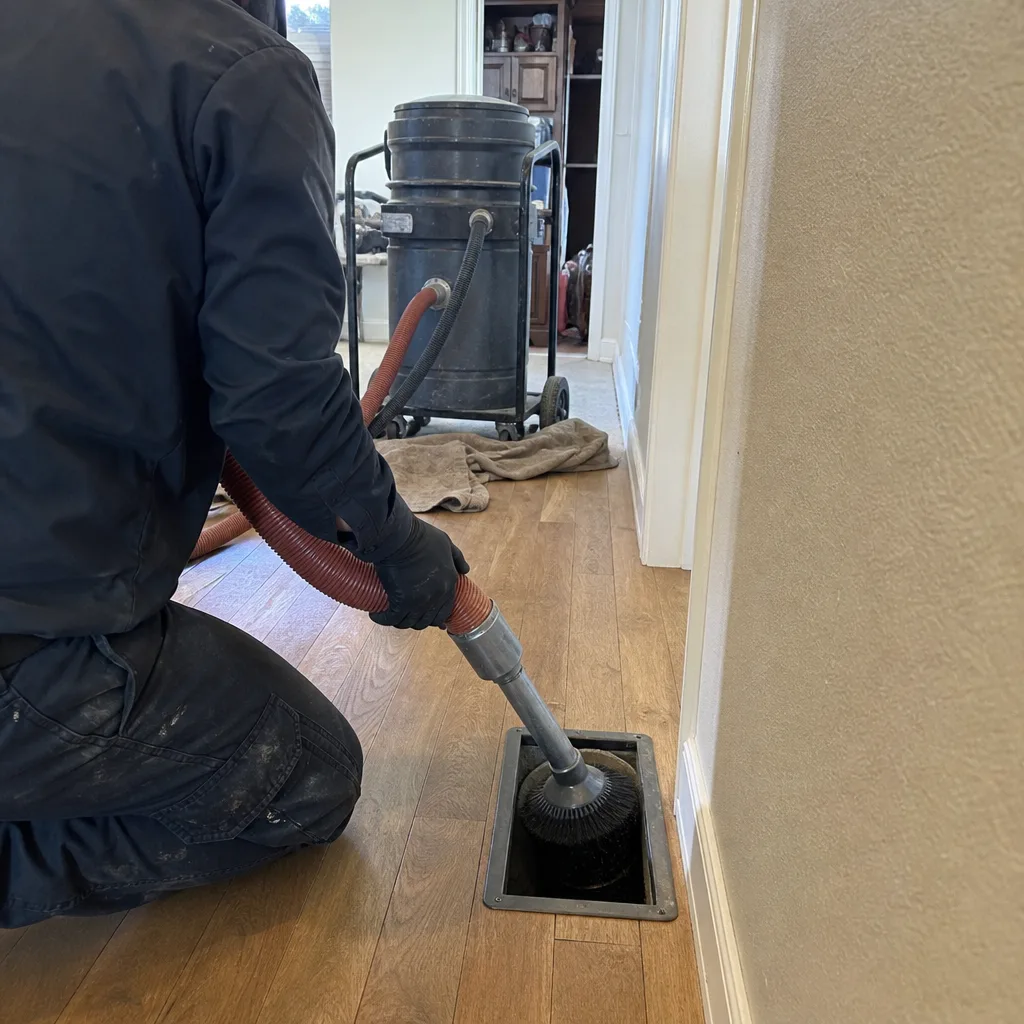
Last updated November 16, 2026
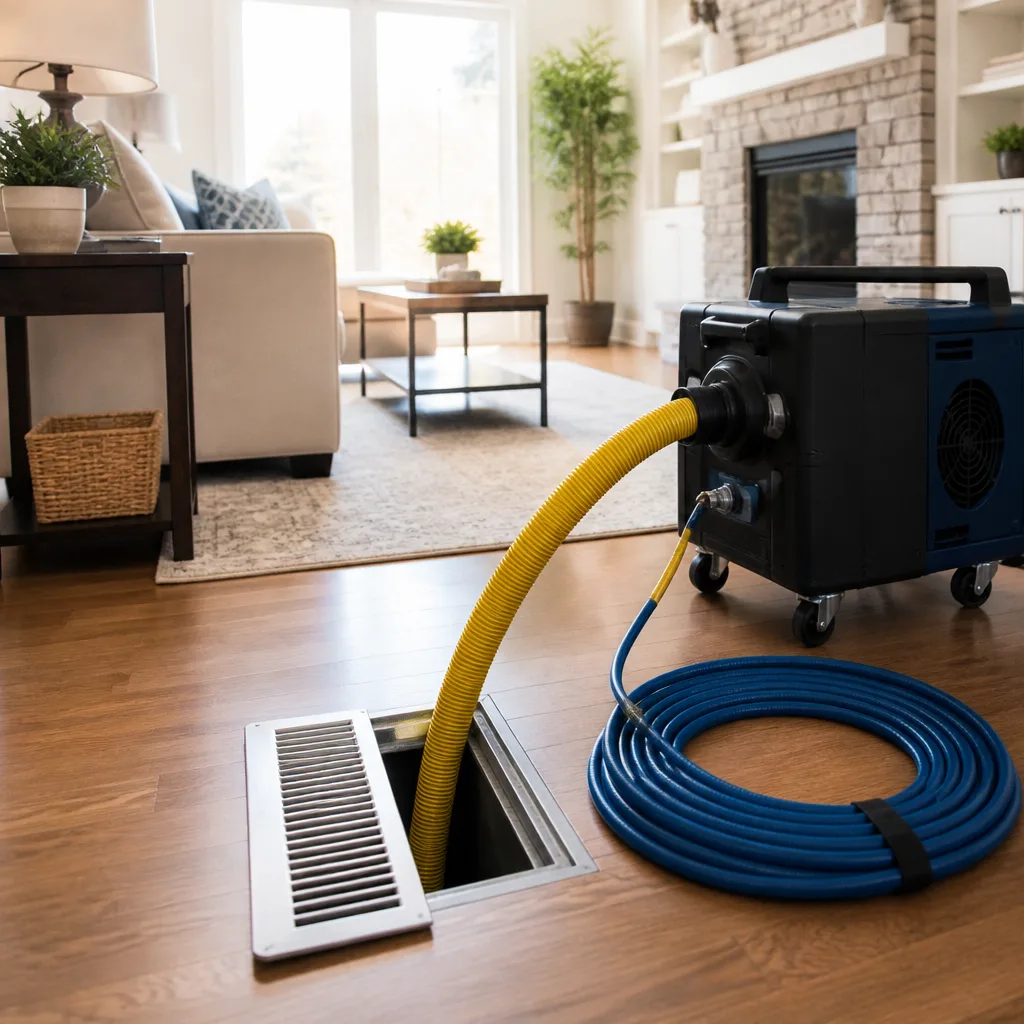 Whole-home duct cleaning
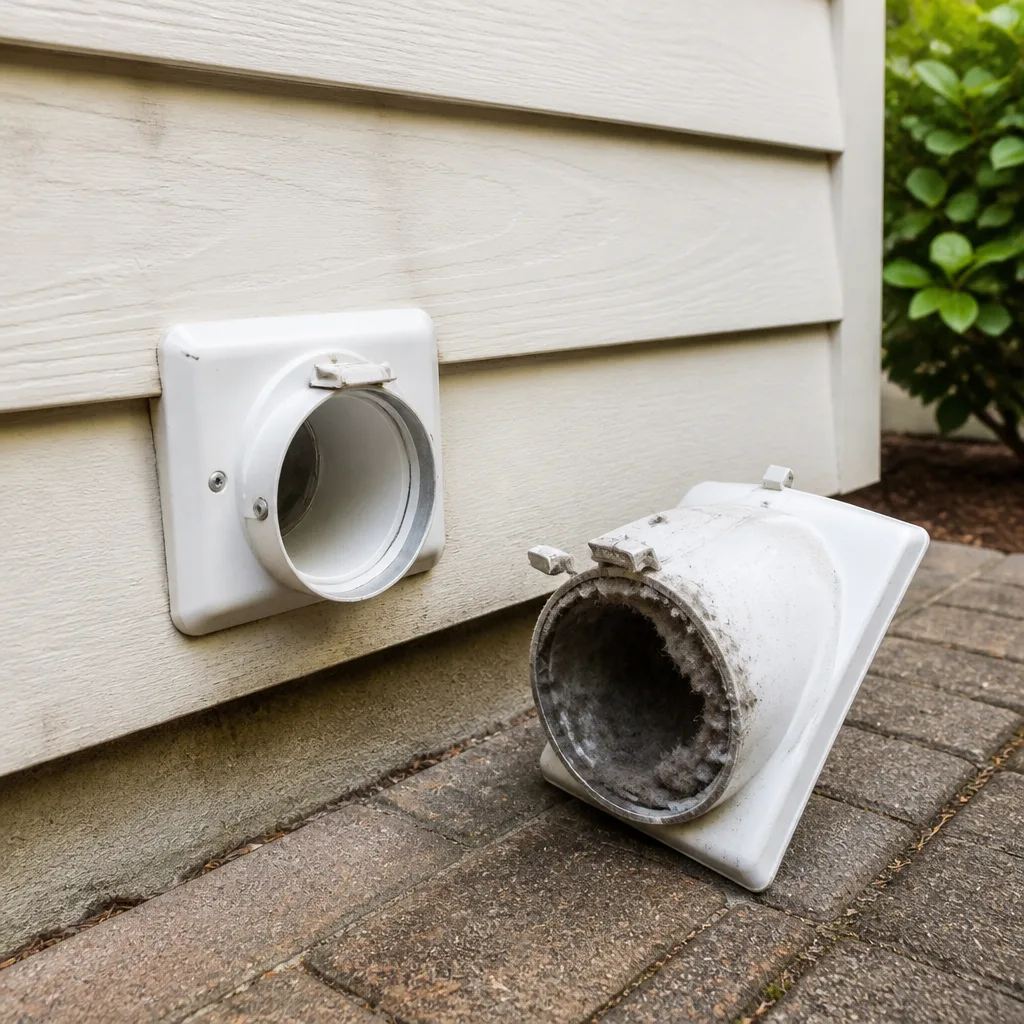 Dryer vent cleaning
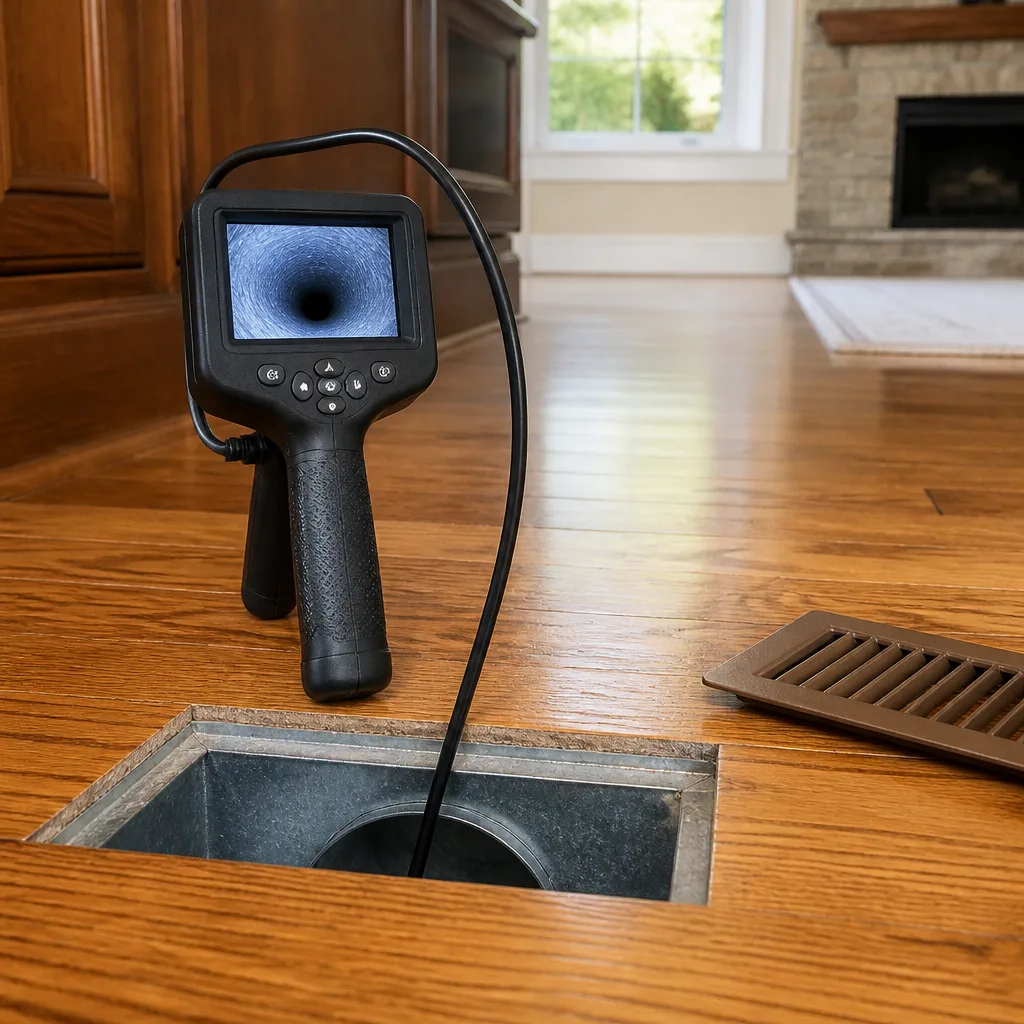 Camera inspection
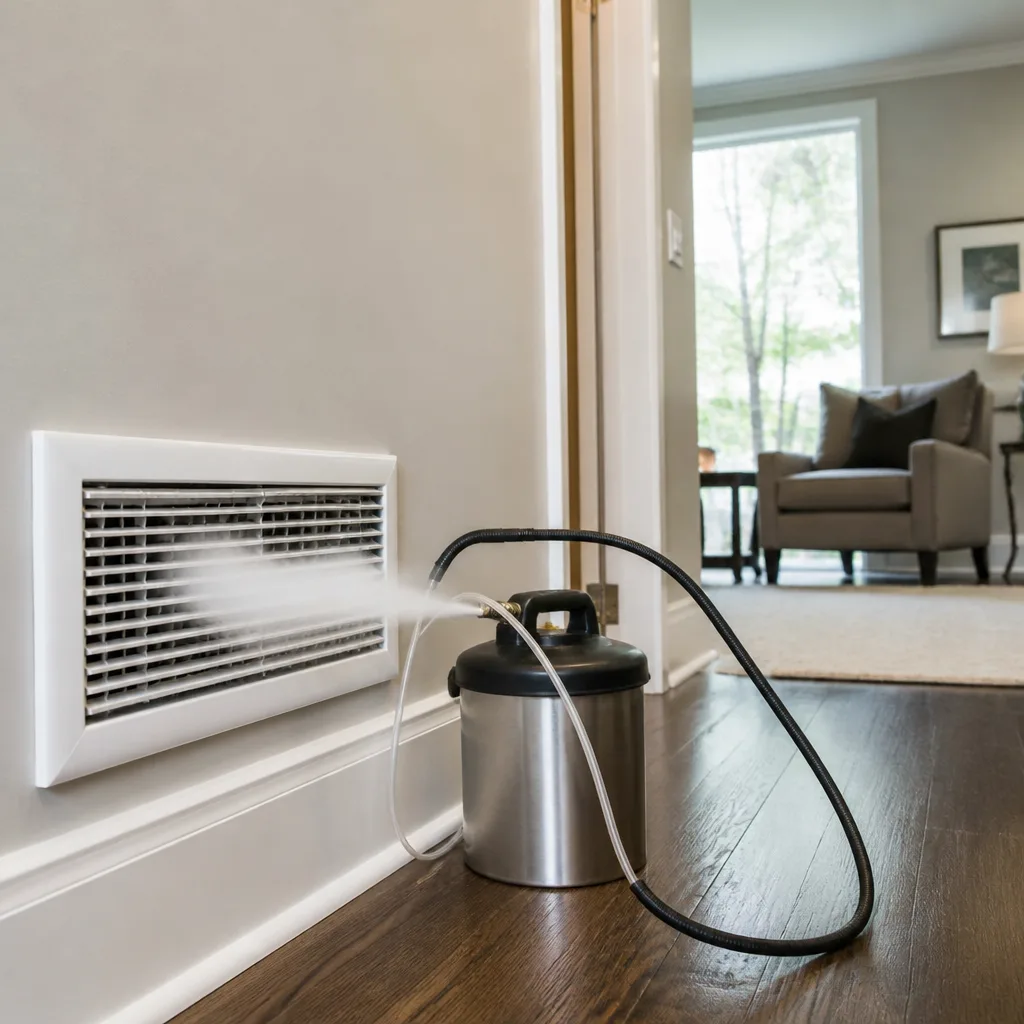 Sanitizing & deodorizing
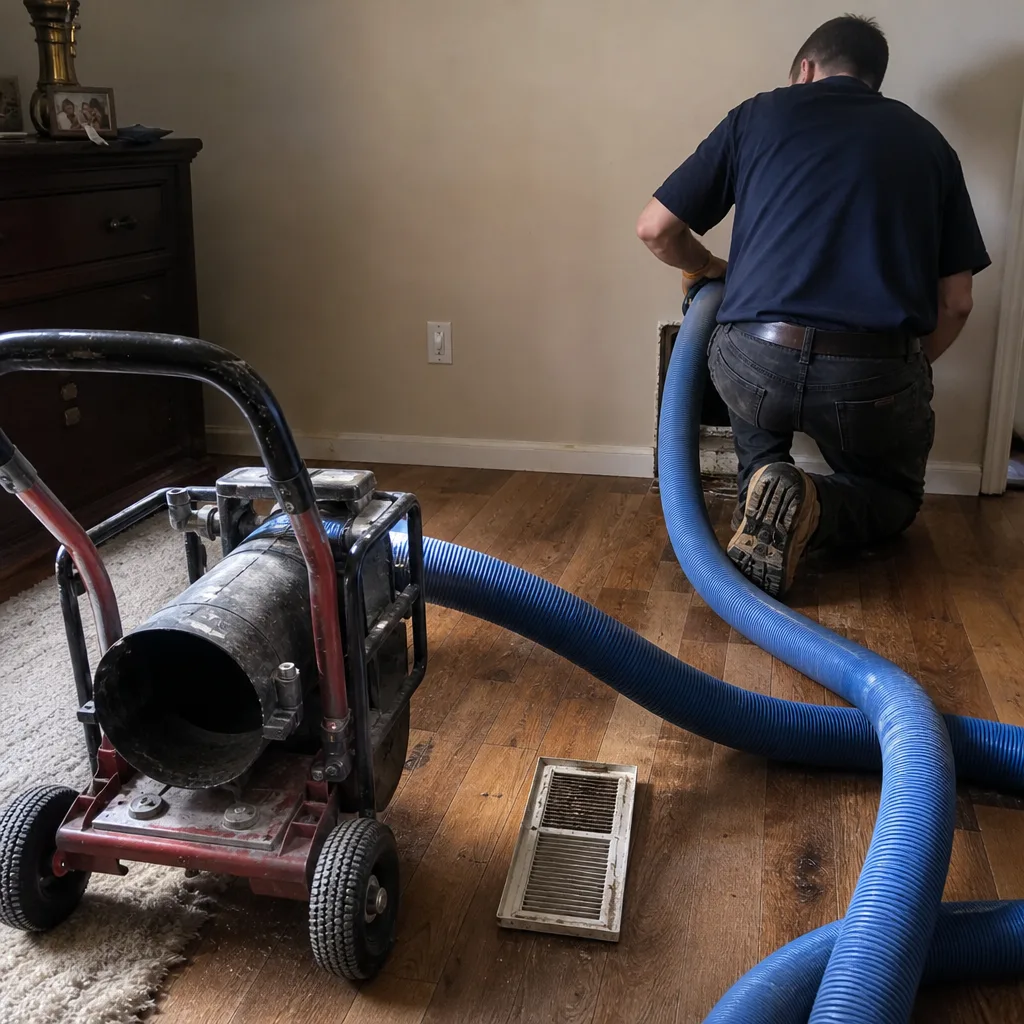
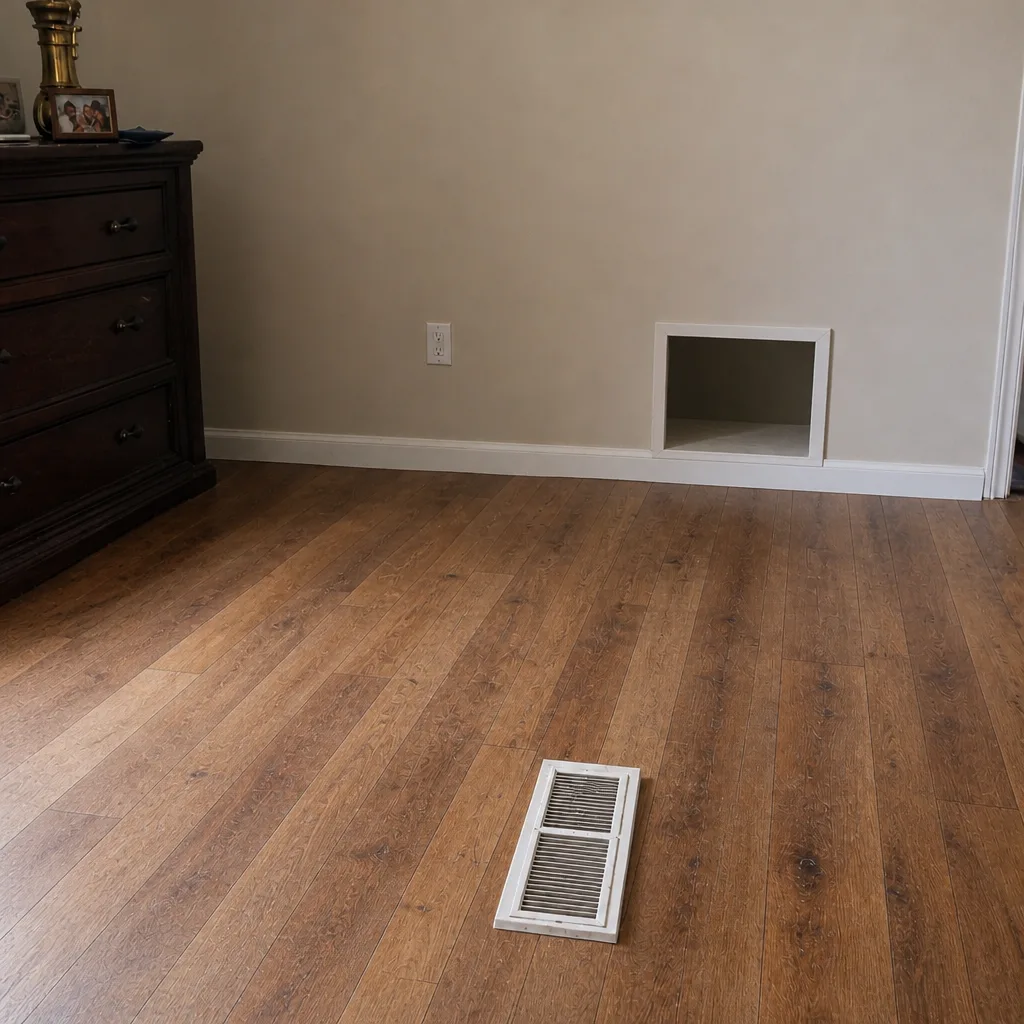
Whole-system duct and dryer vent check with before-and-after photos - you see exactly what came out of your vents
That "$99 whole-house special" is a bait ad - the real number appears once they are in your hallway, or the "clean" is a shop-vac at the register. We photograph the inside of your ducts before and after instead.
Air Duct Cleaning Maintenance Checklist for Kent Homeowners
Boxes tell you to change the filter every 90 days. That interval was written for a generic house with a generic furnace and a generic amount of dust, and it has never met your house. A Kent home with two shedding dogs, a return duct that runs close to the garage, or a crawlspace that stays damp into June is a different system with a different schedule. The checklist most homeowners follow was designed somewhere else. This guide rebuilds it for the houses we actually see around Kent: what to check every month, every quarter, and once a year, how to read what a register is telling you, and how to keep a record that makes every professional visit sharper.
Quick Answer
A working air duct maintenance routine has three checkpoints: a monthly filter and register check, a quarterly inspection of visible duct runs and airflow, and an annual deep assessment of the full system including the crawlspace, attic, and dryer vent. Kent homes should add specific inspections after wildfire smoke events and at the end of the wet season in spring. Your filter interval should be set by what your house produces, not by the calendar on the box.
Styles & brands we work with
- Whole-home duct cleaning
- Dryer vent cleaning
- Camera inspection
- Sanitizing & deodorizing
Table of Contents
- Why a Generic Checklist Fails a Kent Home
- The Monthly Check: 15 Minutes That Catch Most Problems
- The Quarterly Check: What Registers and Runs Reveal
- The Annual Check: The Full-System Assessment
- Kent Seasonal Triggers: Wildfire Smoke and the End of the Wet Season
- Crawlspace and Attic Duct Runs: A Different Protocol
- How to Read Discoloration at the Register
- Documenting Conditions So Your Technician Works Faster
Why a Generic Checklist Fails a Kent Home
Air duct cleaning gets discussed as a one-time event. Something you have done, or you haven’t. That framing is why so many systems in Kent sit somewhere on a slow decline without anyone noticing. Ducts don’t fail dramatically. They leak a little at a joint, gather a little dust at a boot, pull slightly away from a floor register, and the decline is gradual enough that the house adapts to it.
What makes a checklist useful is the same thing that makes a diagnostic tool useful: it tells you what normal looks like, so the abnormal stands out. If you’ve never looked inside a supply register, you have no baseline. The first time you do look, you can’t tell whether what you’re seeing has been there for a month or for a decade.
The other reason the generic checklist misses is climate. Kent sits in western Washington, where the wet season runs long and the air holds moisture for months. Duct runs in crawlspaces and attics here face conditions that a checklist written in Arizona never addresses: condensation on cold metal, insulation that stays damp, and dust that clumps rather than drifts. During wildfire season, smoke pushes particulate into return systems in ways that call for a specific response. Both of those get their own section below.
The framework that follows is built around three intervals and one habit. The intervals are monthly, quarterly, and annual. The habit is documentation. Everything else is detail.
The Monthly Check: 15 Minutes That Catch Most Problems
Most of what goes wrong in a duct system announces itself at the filter and the register before anything else. The monthly check is short because it’s catching the obvious signals early, not diagnosing the system.
- Look at the filter, don’t just replace it. Pull it out and hold it up to a light. A filter that’s uniformly grey across the surface is doing its job. A filter with one dark patch or a heavy dust shadow on one side is telling you something about airflow: air is being pulled unevenly, which usually means a return path is restricted or a duct run is partially blocked.
- Confirm the filter fits the slot. A filter that’s slightly undersized lets unfiltered air bypass it entirely. Look for dust trails around the edges of the filter frame. That dust is air going around the filter rather than through it.
- Check each supply register for airflow. Hold your hand near the vent and compare. A register that feels noticeably weaker than its neighbors is worth flagging. Weak flow at one register and strong flow at another usually points to a disconnected, crushed, or leaking run, not a furnace problem.
- Wipe the register face with a dry cloth and check what comes off. Light grey dust is normal. Black soot, sticky residue, or rust-colored staining goes in your notes.
- Open the return grille and look at the duct behind it. This is where you’ll see the first visible sign of buildup. Note what you see without reaching in.
None of this requires tools beyond a flashlight and a cloth. What it produces is a record. In a Kent home with a pet or two, a monthly filter check is the difference between changing the filter at 60 days and discovering it’s been clogged for four months. Our technicians have up to 15 years of experience, and the single most common preventable problem we see is a filter interval set by habit rather than by what the house produces.
The Quarterly Check: What Registers and Runs Reveal
The quarterly check is where you start to understand the system rather than just monitor it. Plan on an hour. You’ll need a flashlight, a screwdriver, and a notebook.
Start with the accessible duct runs. In most Kent homes that means the basement or garage where the trunk line is visible, plus whatever sections run along the ceiling in a finished space. Run your hand along the seams and joints. You’re feeling for air movement that shouldn’t be there. A joint that’s leaking pulls dust into the airstream and reduces the air reaching the rooms at the far end of the run.
Look at the duct surface itself. Sheet metal should be uniformly grey or silver. Taped joints manufactured from foil tape should be intact, not curling at the edges. Flex duct should be smooth along its length, with no sagging sections and no sharp bends. A flex run that sags collects dust along the low point and restricts flow.
Then check the registers themselves more carefully than you did the monthly check:
- Streaking at the register face means air is moving past the grille with enough velocity to carry dust, which points to an airflow imbalance.
- Visible dust accumulation on the inside of the grille means the supply is pulling dust rather than pushing clean air, or the duct behind it is compromised.
- Any gap around the register boot (the transition between the duct and the finished floor or wall) lets air bypass the duct entirely and pulls dust from the gap into the room.
- A musty or earthy smell near any register is a genuine flag worth writing down, particularly in Kent where crawlspace humidity runs high.
Close the check by turning the system on and walking the house. You’re listening for vibration, whistling, or rattling that wasn’t there last quarter. Those have airflow causes and catching them early saves repair work.
The Annual Check: The Full-System Assessment
The annual check is the one most homeowners never do. It’s the deep pass: the full system, including the sections homeowners can’t easily reach. If your house has never had an air duct cleaning, this is the interval that answers the question of whether it needs one.
Start with the blower compartment and the return-side plenum. They’re often accessible without tools. If the blower wheel has a visible coating of dust, that’s the sign of a system working harder than it should. Look at the evaporator coil if it’s visible through the access panel. A coil matted with dust can’t transfer heat, and that affects efficiency before it affects air quality.
Look at what’s feeding the system. If you have a whole-home filter or media cabinet, note what’s fitted. Homes running air duct cleaning servicing alongside a Honeywell or Aprilaire filtration unit have a maintenance schedule that depends on the filter media type; a thinner pleated filter clogs faster than a thicker media filter, and the interval should reflect that.
Walk the interior duct surfaces you can reach with a flashlight and camera. Photograph anything that looks unusual: build-up on the inside wall, a sagging flex run, a joint that’s come apart. Taken quarterly, this becomes a chronological record the technician can read through in minutes.
The annual check is also the moment to decide about professional service. A system that shows visible accumulation on the return side, a musty odor that comes and goes, or a coil that’s matted is due for professional cleaning. A system that shows only light dust and even airflow is probably fine for another year. It’s the diagnosis, not the calendar, that should drive the decision.
Kent Seasonal Triggers: Wildfire Smoke and the End of the Wet Season
Two events in a Kent year warrant a check outside the normal intervals. They’re specific to how this region’s climate interacts with a duct system.
Wildfire smoke events. When smoke pushes into the Puget Sound region, your return system pulls particulate indoors with every cycle. The critical detail most homeowners miss: smoke particles accumulate on the return side of the system and inside the filter, not on the supply side. After a major smoke event, check the filter within a week rather than waiting for the interval. If the filter has visibly loaded, change it. If the house has a whole-home filtration setup with a higher-MERV media filter, that filter is doing more work and needs a closer look. If you can smell smoke indoors while the system is running with windows closed, the return system is carrying it, and that’s the signal to get the ducts assessed.
The end of the wet season. Western Washington’s wet season runs long, and by the time it ends, crawlspace and attic duct sections have had months of high humidity. Spring is when you check for condensation-related issues:
- Rust or mineral staining on any metal duct surface indicates condensation has been running on it.
- Duct wrap or insulation that feels damp or compressed has lost some of its value.
- Visible mold or a persistent musty smell near any crawlspace-accessible run is a genuine concern.
- Pest evidence (droppings, nesting material, insect activity) near any duct penetration is worth a call.
In a Kent home, spring is when a crawlspace inspection protocol earns its keep. In our experience, this is the inspection window that catches problems before summer’s cooling season puts them under load.
Crawlspace and Attic Duct Runs: A Different Protocol
Interior duct runs on the main floor are straightforward. Crawlspace and attic runs are not, and they shouldn’t be checked with the same assumptions.
Crawlspace runs sit in high humidity, close to soil, and often where insect and rodent activity is part of the environment. The protocol:
- Check the vapor barrier first. A crawlspace with a compromised vapor barrier is letting moisture rise into the duct environment. If the barrier has tear-outs or settlement, note that before looking at the ducts.
- Look at the duct insulation from below. Compressed, damp, or missing insulation sections mean the duct is losing heat and moisture is condensing on the metal.
- Check the duct supports. Ducts sagging under their own weight are carrying air more slowly and often collecting condensation at the low points.
- Look at the soil surface directly under any duct joint. A rust trail or water stain on the soil below a joint is the clearest possible sign of a condensation drip.
- Don’t disturb anything sealed. If you see something that looks compromised and you’re not sure how to assess it, note it and let the technician handle it.
Attic runs face an inverted problem: extreme temperature swings and UV exposure. In Kent these runs see colder winters and hot summers, and the insulation on them can crack with age. Check for cracked or separated jacketing, any section lying loosely on ceiling joists, and anything punctured. Flex duct in attics is the most common place we find crushed or torn sections that go undetected for years.
Both of these are the sections where cleaning and repair capability matter together. A duct that’s leaking in a crawlspace isn’t fixed by cleaning alone, and a duct that’s packed with dust isn’t fixed by taping it shut. Our duct cleaning work and repair work are delivered as one assessment because the two problems usually appear in the same system.
How to Read Discoloration at the Register
Dust streaks and discoloration are diagnostic, but only if you can tell what’s normal from what’s telling you something. A few patterns are worth memorizing.
Uniform light grey inside the grille. This is fine. It’s dust that has settled from normal airflow. Worth documenting but not treating.
Black or soot-colored streaks on the grille face. This is the one pattern that most reliably points to a problem upstream. Soot-colored dust from a supply register usually means the return side is pulling particulate past the filter or from a duct breach. Have it assessed.
Streaking that fans outward from the register face. Air is moving faster here than at the rest of the system, which usually means the register is at the end of a restricted run. The velocity is pulling dust along the surface.
Rust-colored staining along the duct surface or at the grille edge. Condensation has been present at some point. The cause could be a cold crawlspace duct, a loose joint, or an insulation failure.
Concentric rings or spotting on the inside of the grille. Often a sign of moisture in the airstream, which in Kent homes most commonly comes from the crawlspace or a duct run that’s in direct contact with soil moisture.
What you’re doing here is noting what’s visible and matching it against what it might mean. You’re not diagnosing the cause. The cause is what a technician establishes during an assessment.
Documenting Conditions So Your Technician Works Faster
Documentation sounds like busywork, and it isn’t. When a technician arrives and you can hand over a stack of notes and photos covering six months of the system’s behavior, the assessment moves faster and gets more accurate. We can see when a register’s dust pattern changed, what the flow was like before and after a filter change, and whether a smell has been seasonal.
The simplest system:
- Keep a single notebook or phone note for the system. One record, not scattered reminders.
- Date every entry. Not “last week.” An actual date.
- Photograph every register at each quarterly check. Same angle, same lighting. The series is what matters.
- Note every filter change with date and what you found. The change interval is data the technician can use.
- Record any event that isn’t routine: a smoke event, a wet spring, a pest sighting, a smell that came and went.
- Record any HVAC work that happened. New furnace, new thermostat, filter cabinet replacement, anything that changes the system.
When you eventually book service, hand over the notes. The technician can then walk in knowing whether the report is going to be a light cleaning or a fuller assessment involving duct repair. Our technicians have up to 15 years of experience, and the assessments that go smoothly are almost always the ones where the homeowner has a record of what changed.
Common Mistakes to Avoid
- Trusting the filter interval printed on the box. That interval was written for a generic house. Kent homes with pets, high dust production, or a return near a garage need a shorter interval. Set yours by what you actually find on the filter.
- Waiting for a smell before looking at the system. By the time a musty odor is obvious, an accumulation has usually been present for a while. The monthly register check catches it earlier.
- Replacing a filter without checking whether it fits. A filter that lets air around its edges is roughly as useful as no filter at all. Confirm the fit before you consider it done.
- Assuming the crawlspace is “out of sight, out of mind.” Crawlspace duct runs in Kent are often the source of the humidity issues the rest of the house is showing, not just a place the ducts happen to be.
- Treating dryer vent cleaning as optional. Dryer vents are a fire risk, not a nuisance task. Lint accumulation in the vent is one of the leading causes of residential structure fires, and the vent isn’t part of the HVAC system’s filter loop, so it needs its own schedule. Get it inspected annually.
- Skipping the camera. Photographs taken from the same angle every quarter are worth more than any memory of what a register used to look like. Without them, you can’t tell whether a pattern has changed.
- Cleaning without fixing. Ducts that are leaking, disconnected, or crushed will re-accumulate quickly after cleaning. The system needs to be functional before it needs to be clean. We clean it. We fix it if it’s broken.
See the difference
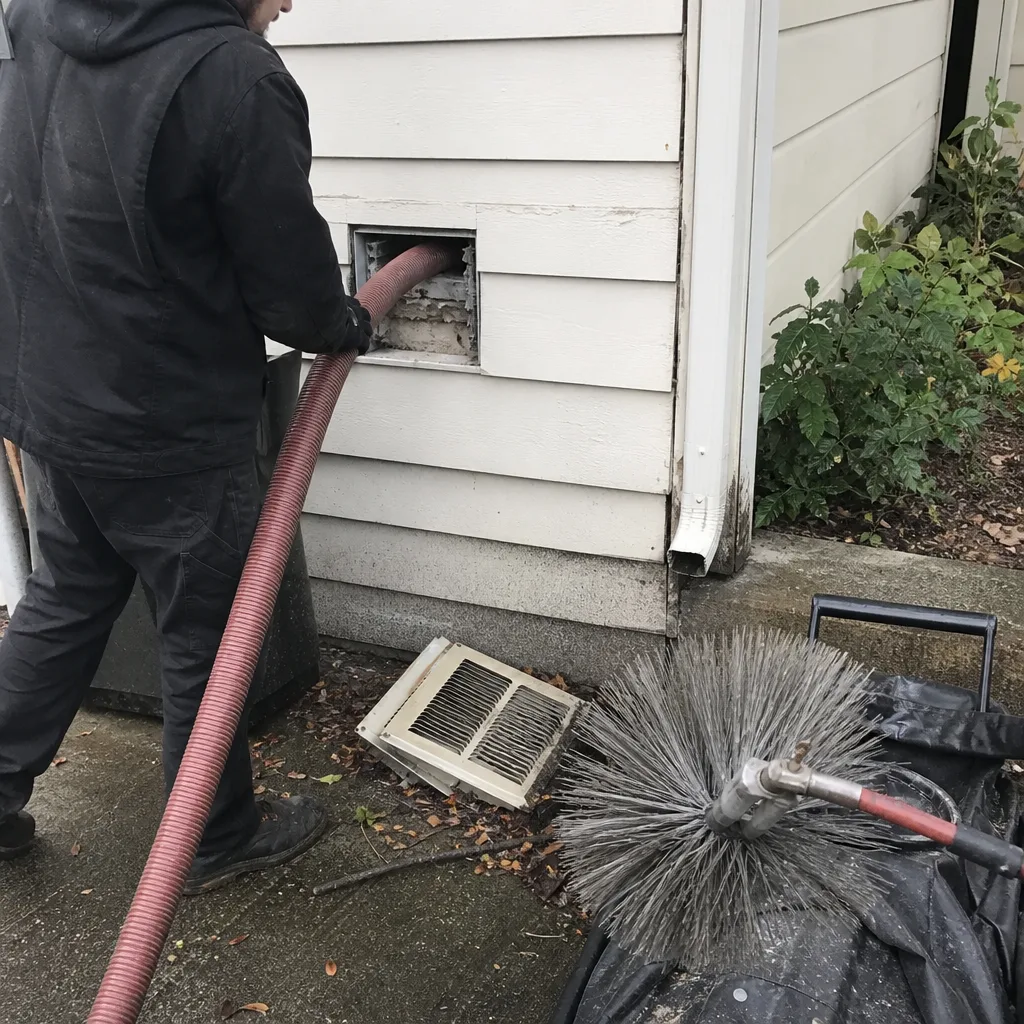 Before
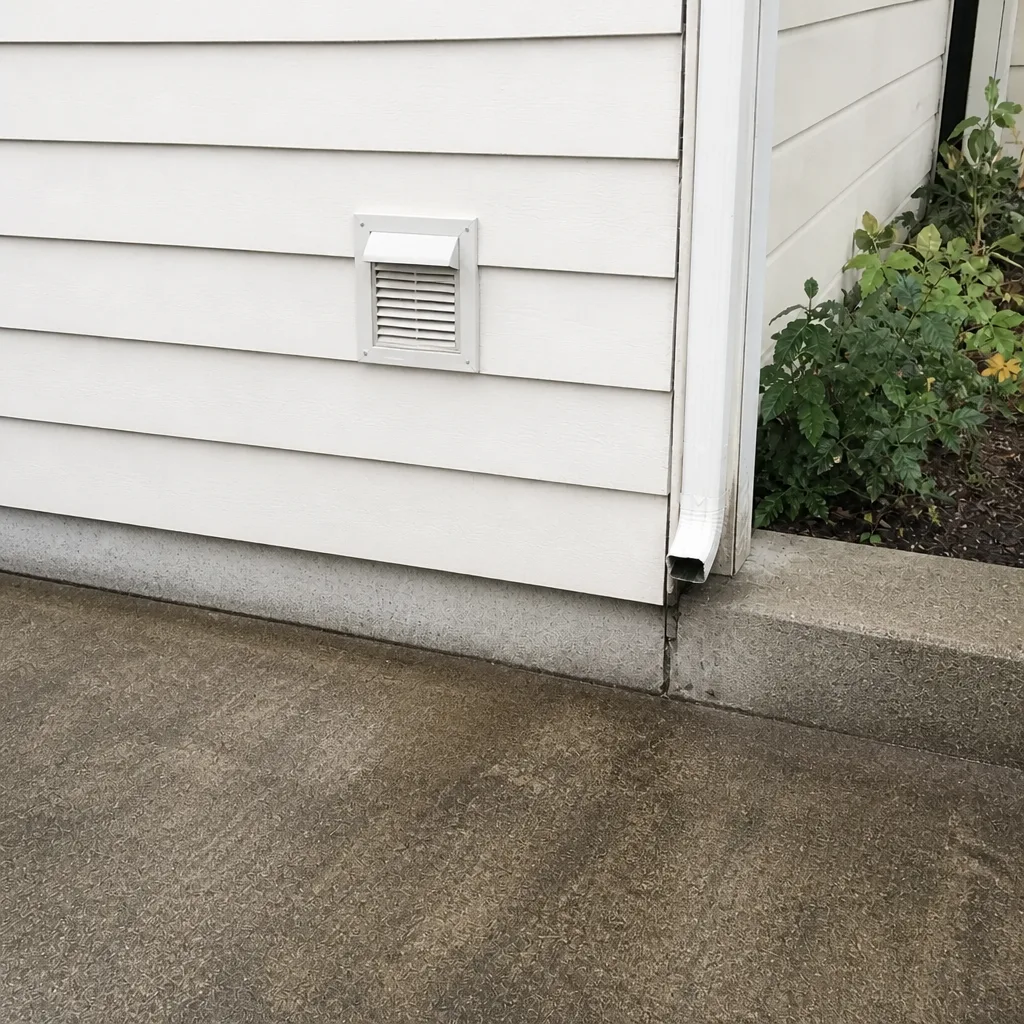 After
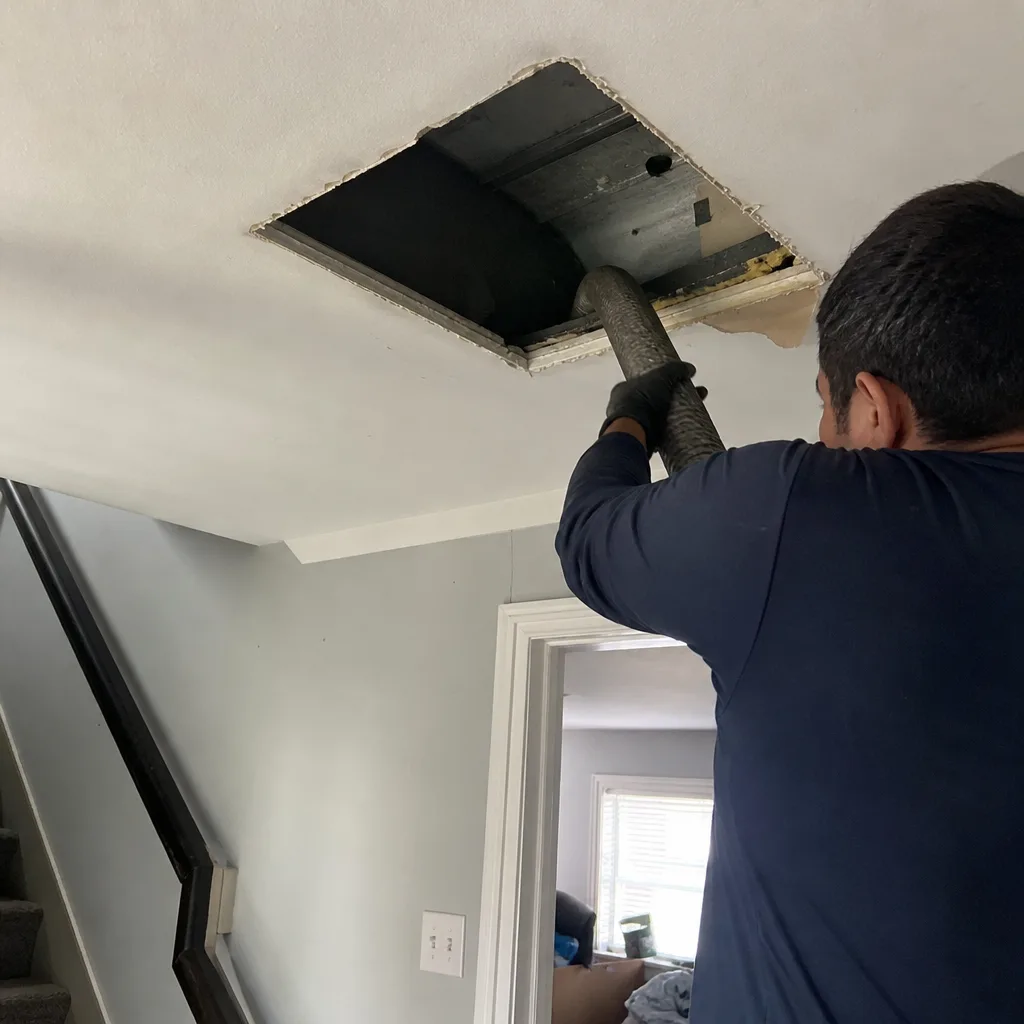 Before
 After
 Before
 After
When to Call a Professional
Most of the checklist above is designed to be done without a professional. These are the situations that call for one:
Any visible accumulation on the return side of the system, or a filter that darkens in weeks rather than months. A persistent musty smell with the system running. Soot-colored streaking at a register. A register that’s lost airflow relative to its neighbors. Rust stains on any duct surface. Visible damage: crushed, torn, or disconnected flex runs, particularly in the attic or crawlspace. A dryer vent that hasn’t been inspected in a year or more, or a dryer that takes noticeably longer to dry. Any sign of pest activity near duct penetrations.
For each of these, cleaning is sometimes the right answer and repair is sometimes the right answer. The two are linked for a reason. Our dryer vent cleaning service is dedicated rather than an add-on, and our air duct cleaning work is done with professional-grade equipment: our technicians use Rotobrush rotary-brush systems alongside Nikro vacuum equipment, and we run Abatement Technologies air filtration on site to keep particulate out of the indoor air while we work. Your ducts are only as clean as the process used to clean them.
Duct Cleaning Kent offers free estimates in Kent. Call (866) 761-6504. We answer 24/7. Fast dispatch from 7am to 7pm, Sunday through Friday.
Frequently Asked Questions
Most Kent homes fall on a 3-5 year professional cleaning cycle, but the schedule should be set by conditions, not the calendar. Homes with pets, recent renovations, a damp crawlspace, or a household member sensitive to dust and allergens often need it more frequently. If your register-level inspection shows visible return-side accumulation, that’s the signal to book. If it doesn’t, the system is likely fine for another year. Call (866) 761-6504 for an assessment.
The monthly check should cover the filter condition and fit, airflow at each supply register, the dust on each register face, and the visible duct surface behind the return grille. Hold the filter to a light: an uneven dust pattern indicates a restricted return path or a partially blocked run. Weak flow at one register while others are fine usually points to a damaged or disconnected run, not a furnace issue. Call (866) 761-6504 for an exact quote if anything looks off; estimates are free.
Yes, and the timing matters. After a significant smoke event in the Puget Sound region, check your filter within a week instead of waiting for your normal interval. Smoke particulate collects on the return side of the system, so the filter takes more of a load during those events. If the house smells smoky indoors with windows closed and the system running, that’s a stronger signal to get the ducts assessed. Call (866) 761-6504 to book an inspection; estimates are free.
Professional air duct cleaning in Kent is priced per system by a written estimate, not by the number of vents or by a teaser coupon. That’s because whole-system pricing is the only honest way to quote work that varies by square footage, duct length, accessibility of crawlspace and attic runs, and whether repair is needed alongside cleaning. A written estimate before work begins protects you from the bait-and-switch the industry is known for. Call (866) 761-6504 for a free written estimate.
In most cases the difference is method. A low quote usually reflects a reduced cleaning scope, less capable equipment, or add-on charges that appear once the technician is on site. Professional-grade rotary brush and vacuum systems, on-site air filtration, before-and-after photos of your own ducts, and a single flat price per system agreed before any work starts are the pieces that actually cost something to deliver. When comparing quotes, ask specifically what equipment is used, whether repair is included in scope, and whether the price is fixed before the technician arrives.
Ask for before-and-after photographs of your own ducts, taken at the same points in the system. Every job we do should be documented that way, and the photos should show the interior surfaces, not just the registers. A technician who can’t provide that is asking you to accept the work on faith. Call (866) 761-6504 for a free estimate and to ask what documentation we provide.
The Bottom Line
A useful maintenance checklist isn’t a calendar of reminders. It’s a set of observation points that tell you when your system has changed, plus a record you keep so a technician can walk in already knowing what the system has been doing. In a Kent home, that means a monthly filter and register check, a quarterly walk of the visible duct runs, an annual deep pass including the crawlspace and attic, and two extra inspection triggers specific to this region: wildfire smoke events and the end of the wet season. The one habit underneath all of it is documentation. Get that right, and every professional visit is faster and more accurate than the last.
Better air starts inside the system, not just at the filter. Call Duct Cleaning Kent at (866) 761-6504 for a free estimate on cleaning, repair, or dryer vent service. Licensed and insured. One flat price per system agreed before work starts. Before-and-after photos of your own ducts. And an honest assessment of what your system actually needs.
Are you a property manager or a homeowner in the Kent area with a duct system you’re not sure about? Our team can talk through what your checklist has shown and what the next step looks like.
Written by the team at Duct Cleaning Kent.