
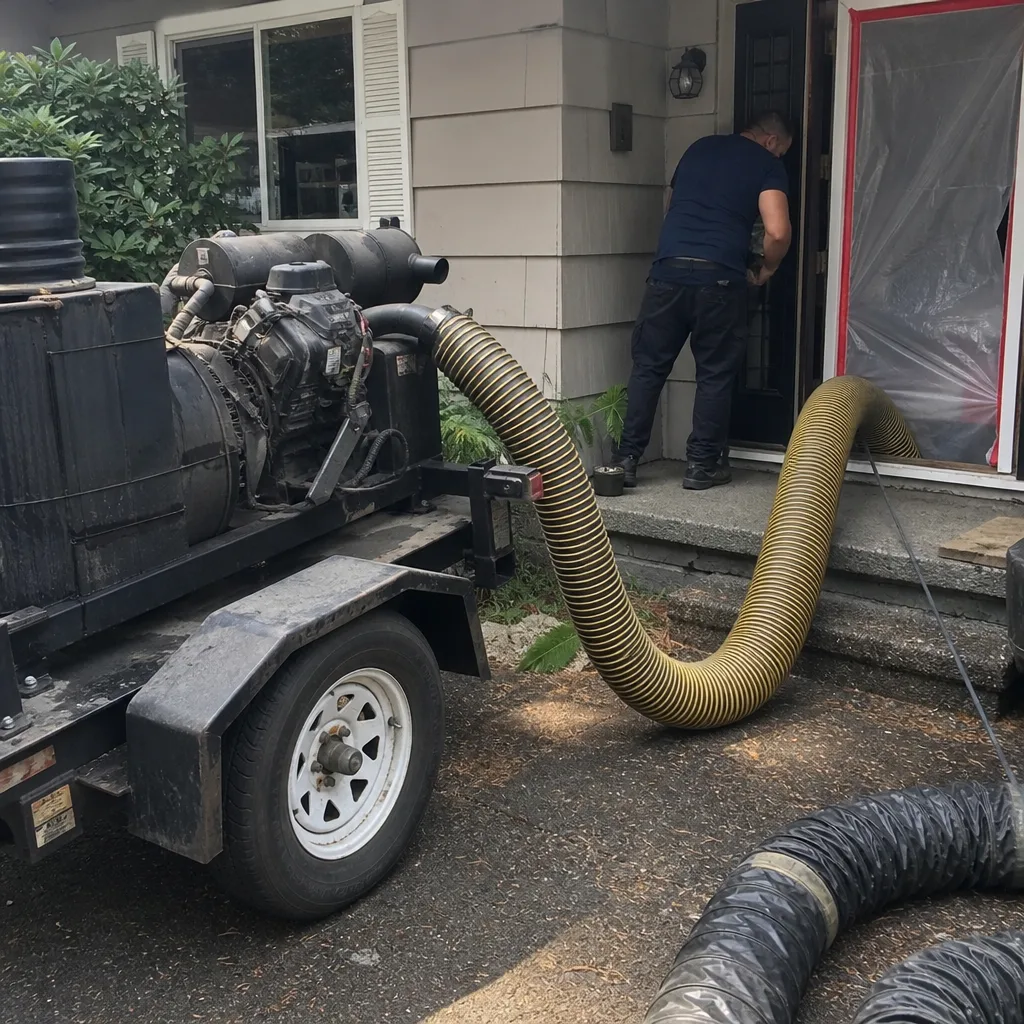
Last updated November 16, 2026
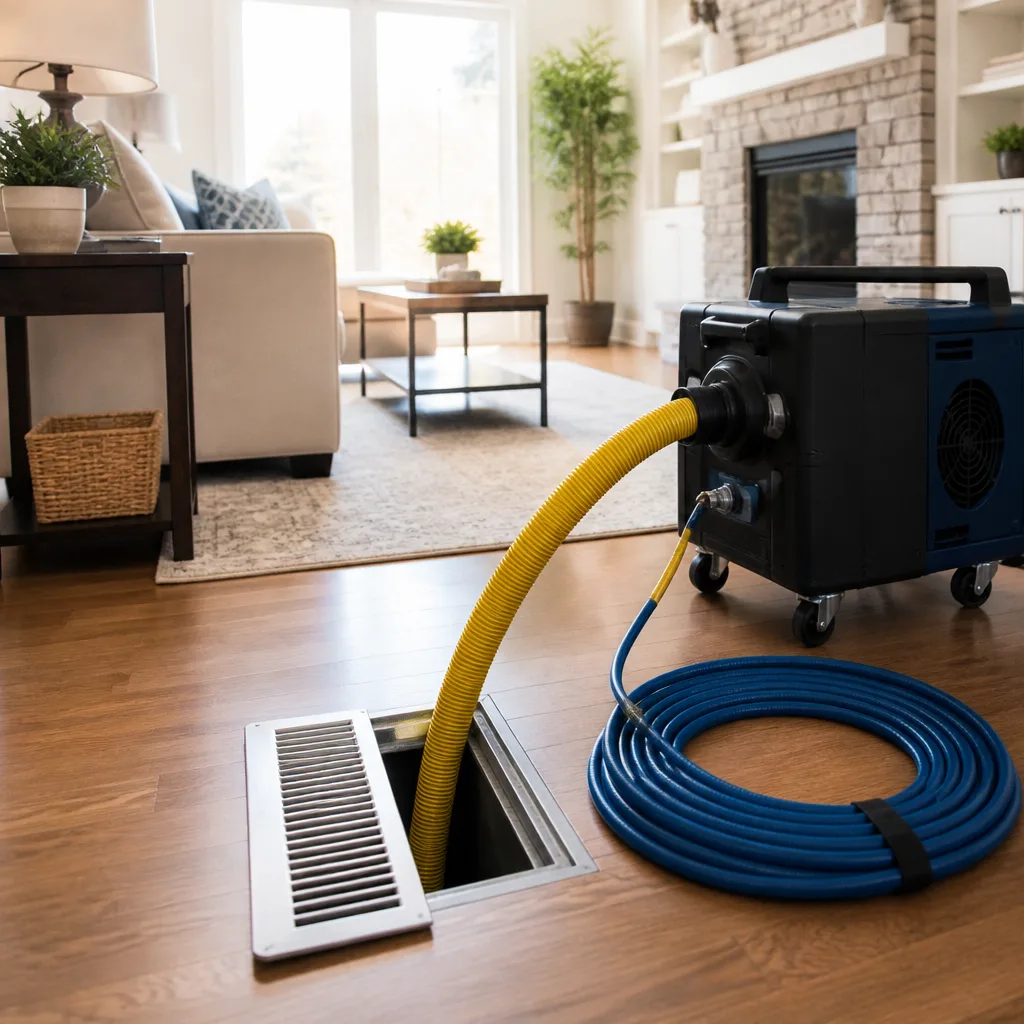 Whole-home duct cleaning
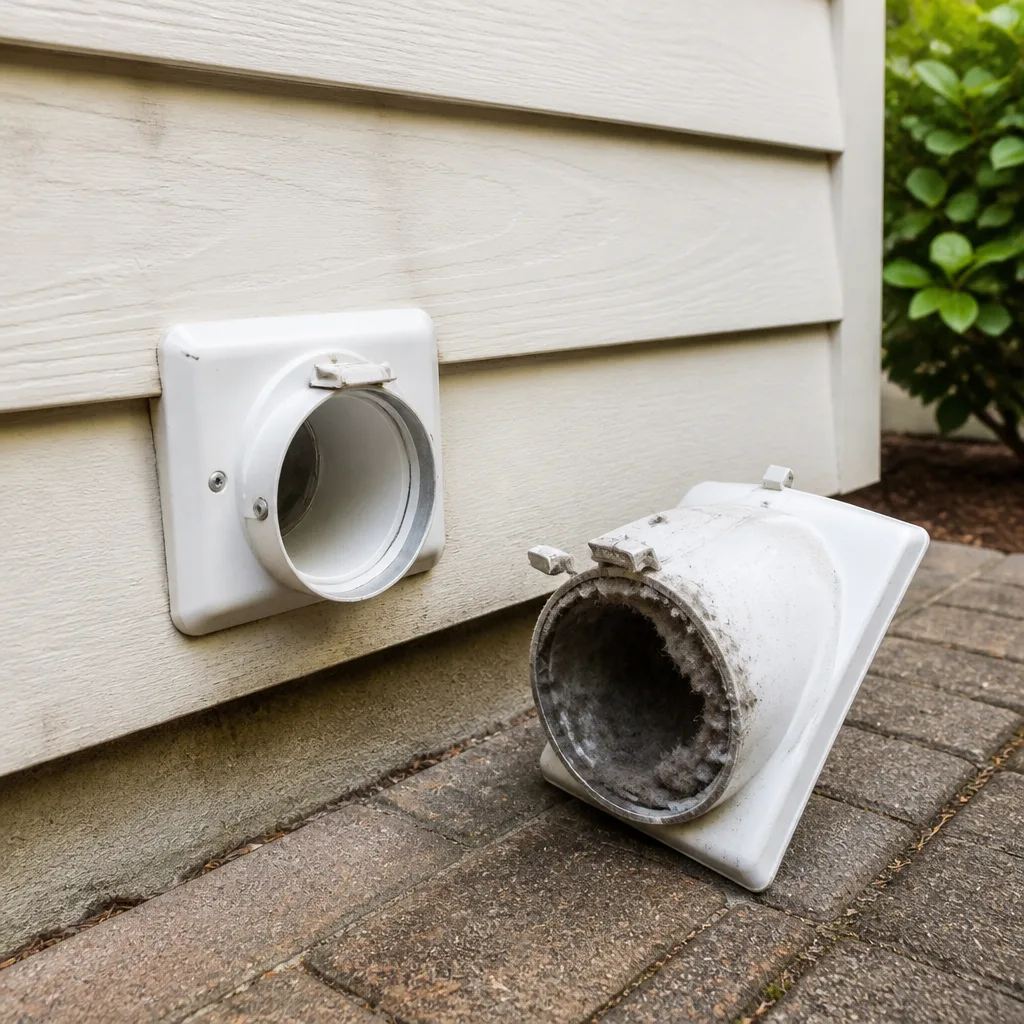 Dryer vent cleaning
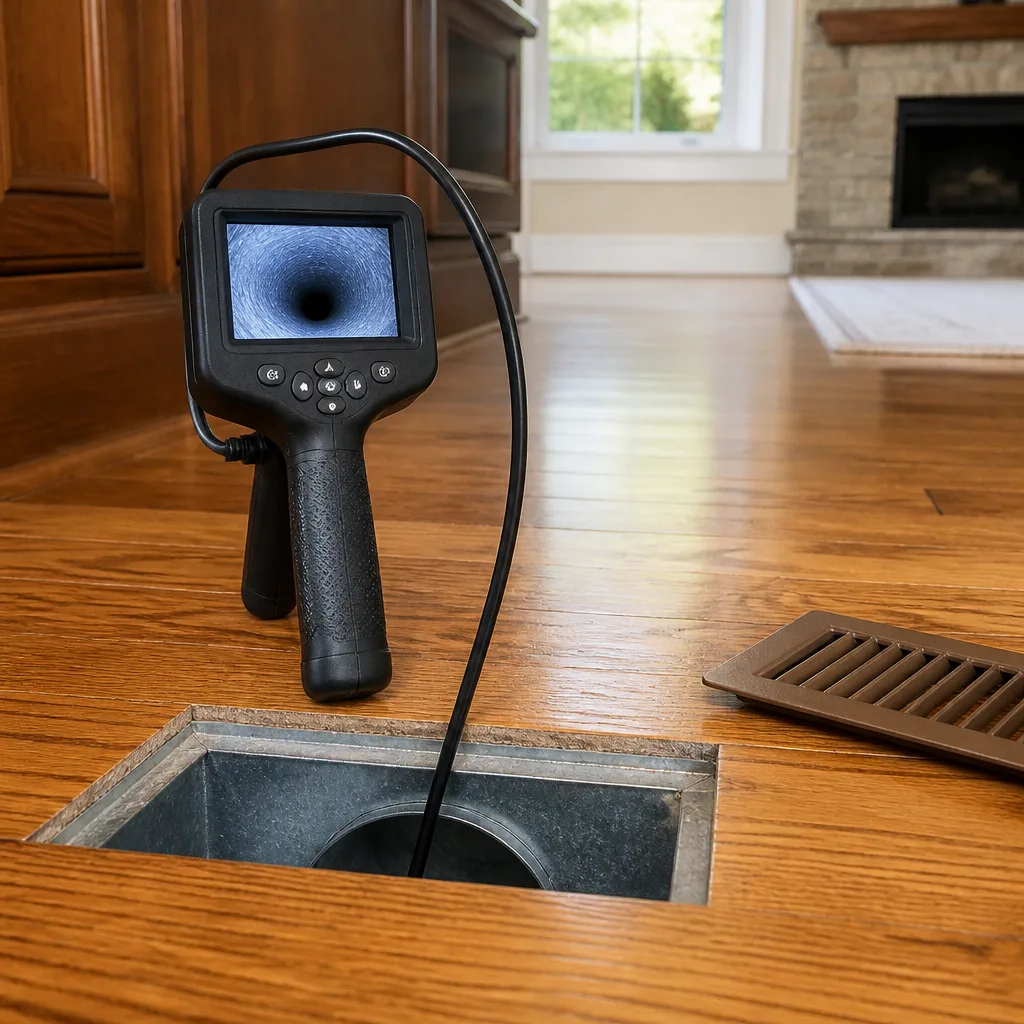 Camera inspection
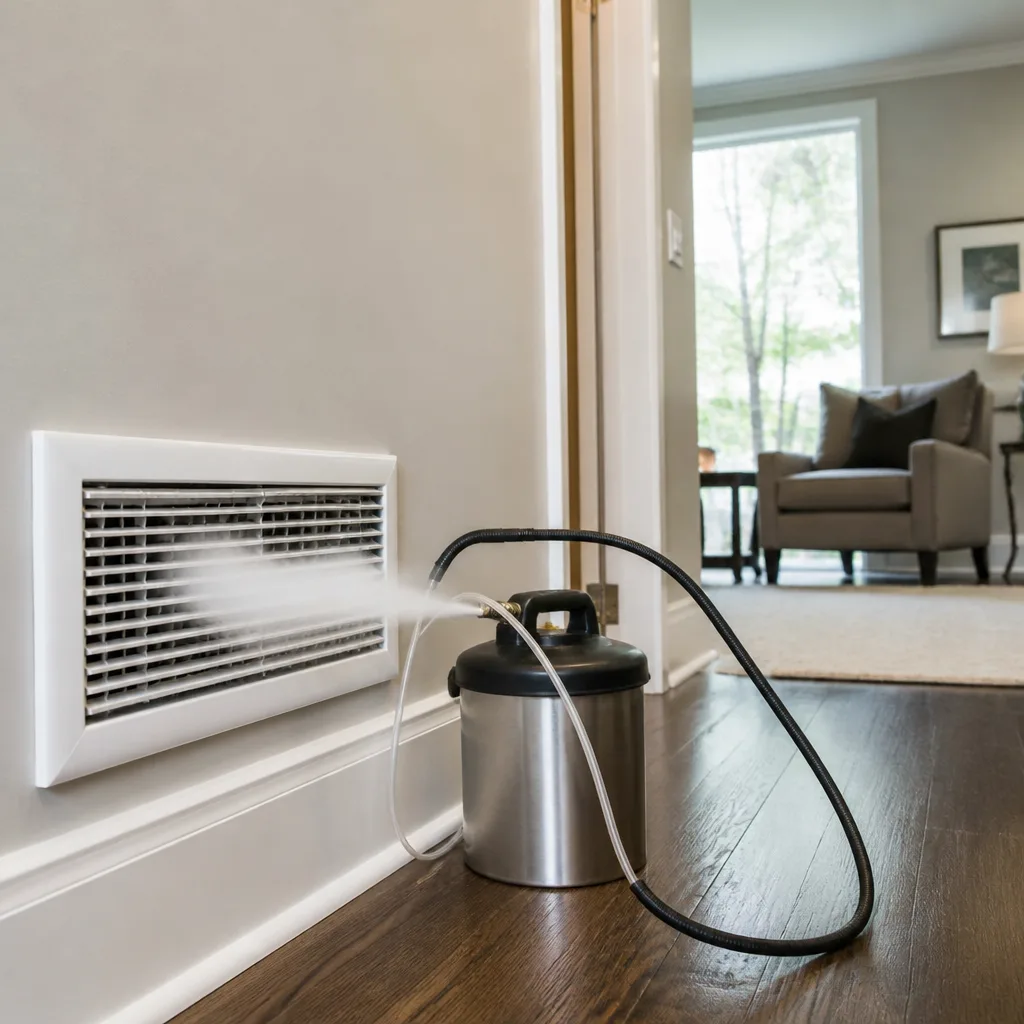 Sanitizing & deodorizing
Whole-system duct and dryer vent check with before-and-after photos - you see exactly what came out of your vents
That "$99 whole-house special" is a bait ad - the real number appears once they are in your hallway, or the "clean" is a shop-vac at the register. We photograph the inside of your ducts before and after instead.
Air Duct Cleaning Permits, Codes & Inspections in Kent, WA: What You Need to Know
Your duct cleaner found a collapsed flex duct section and wants to repair it on the same visit. That sounds straightforward – but depending on the scope, it may require a mechanical permit under WAC 51-52. And if it’s done without one, it can complicate a future home sale inspection. Here’s the part most homeowners never hear: routine cleaning and duct modification are treated differently under Washington State code. Cleaning a duct system is maintenance. Cutting into it, reconnecting it, or sealing a plenum is a modification. Where that line actually falls matters more than most people realize. This guide walks through what applies to duct cleaning versus duct repair in Kent, when City of Kent oversight comes into play, and what paperwork you should keep. Our technicians have up to 15 years of experience, and this is the question we field more than almost any other.
Quick Answer
Routine air duct cleaning in Kent does not require a permit. Mechanical permits under WAC 51-52 become relevant when the work alters the duct system itself – cutting into ductwork, replacing sections, sealing a plenum, or changing a connection point. If a technician goes beyond cleaning and starts repairing or modifying components, ask whether the scope crosses the permit threshold and request documentation of what was done. That question protects you at resale and for insurance.
Styles & brands we work with
- Whole-home duct cleaning
- Dryer vent cleaning
- Camera inspection
- Sanitizing & deodorizing
Table of Contents
- Cleaning vs. Duct Repair: Where the Code Line Falls
- What WAC 51-52 Actually Says About Ductwork
- King County, City of Kent, and Which Permit Applies
- What ‘Like-for-Like’ Repair Means in a Code Context
- How to Verify a Contractor’s Registration and Bond
- Documentation to Request and Keep After Any Ductwork Modification
- What an Inspection Actually Looks At
- Why Kent’s Climate Affects Duct Condition
Cleaning vs. Duct Repair: Where the Code Line Falls
The single most misunderstood part of this topic is that cleaning and repair live in two different worlds under Washington code. Cleaning a duct system – brushing, vacuuming, extracting debris with professional equipment – is maintenance. It’s the kind of work that doesn’t touch the mechanical system’s structure. No permit is required, and it isn’t inspected. That’s the clean category.
Duct repair is different. When a technician cuts into ductwork, replaces a section of flex duct, seals a plenum, or reconnects a run that’s come loose, the work now affects the mechanical system’s integrity. That’s the point where Washington State Mechanical Code, WAC 51-52, becomes relevant. The code governs how the work is done, and in some cases whether a permit is required.
What falls into each category:
- Maintenance (no permit): source removal cleaning of ducts and registers; brushing, vacuuming, and debris extraction; dryer vent cleaning; visual inspection of ductwork
- Modification (permit may apply): replacing or re-routing flex duct sections; sealing a plenum; changing a duct connection; adding or removing a run; repairing a collapsed section that requires new material
The tricky gray area is what we call “in-scope fix during a cleaning visit.” A technician opens a register and finds a disconnected flex duct in the crawl space. Reconnecting it the way it was originally connected is often treated as like-for-like repair, and that’s usually below the permit threshold. Cutting a new section and running a different length? That starts to look like a modification. The difference matters, and the homeowner should be told which one applies before the work is done in Kent.
In our experience, this is exactly the moment where some contractors skip the conversation. A crew that doesn’t mention the distinction between cleaning and modification is a crew that hasn’t thought it through. We clean it. We fix it if it’s broken. But we’re also clear about which category the fix belongs in, and what paperwork follows.
What WAC 51-52 Actually Says About Ductwork
The Washington State Mechanical Code, adopted and mapped in WAC 51-52, governs the installation, alteration, repair, and maintenance of mechanical systems – including the duct system. The code’s general principle is that mechanical systems must be installed and maintained in accordance with adopted standards. When a system is altered, the altered component must meet the requirements for a new installation of that component. That’s the practical core of what matters for duct repair.
For homeowners, that translates into three plain-language rules:
- Maintenance is continuous. You’re expected to keep the mechanical system in safe, functioning condition. Cleaning is part of that picture, not a code question.
- Alteration resets the standard. If a portion of the duct system is replaced or re-routed, the new portion is held to the requirements for new work – materials, supports, sealing, and connection method.
- Some alterations require a permit. WAC 51-52 gives local jurisdictions authority to administer and enforce these requirements. That’s where King County and the City of Kent come in.
The code doesn’t say every flex duct replacement needs a permit. But it does say that work on the mechanical system must meet the code. So even when a permit isn’t triggered, the work needs to be done to standard. That’s a detail many cheap bids miss: they’ll reconnect a duct, and the connection isn’t properly sealed, and a year later the homeowner is calling about dust or efficiency.
Two codes-adjacent points worth knowing for Kent:
- WAC 51-52 aligns Washington’s mechanical code with the International Mechanical Code as adopted and amended by the state. Duct sealing, support spacing, and material requirements flow from that framework.
- The code also works alongside energy code provisions – duct leakage and sealing requirements come up especially when a system is altered. We work with Honeywell and Aprilaire filtration equipment, and the air quality side of the system has its own code backdrop.
If you want the practical read: routine duct cleaning is a maintenance decision, and duct modification is a code-sensitive one. Knowing which category the proposed work falls into is the entire game.
King County, City of Kent, and Which Permit Applies
In Kent, building and mechanical permit oversight runs through the City of Kent building department. King County administers permits in unincorporated areas of the county, but most properties within Kent city limits fall under city jurisdiction. That’s the first thing to check when a duct repair is proposed: is the address inside Kent city limits or in unincorporated King County?
What typically triggers a mechanical permit for duct-related work:
- Replacing a significant section of ductwork, not just a like-for-like reconnect
- Adding, removing, or re-routing a duct run
- Altering the plenum or the air-handler connection
- Modifying the duct system as part of an HVAC replacement
- Any work that changes the layout or capacity of the system
What typically does not require a permit:
- Cleaning the duct system (source removal, brushing, vacuuming)
- Dryer vent cleaning
- Like-for-like reconnection of a disconnected duct at the same location
- Visual inspection and access-door installation for inspection
The gray zone is where the scope of the repair sits right at the line: reattaching a duct that’s come undone, replacing a short section of damaged flex, or sealing a plenum that’s leaking. A responsible contractor will explain whether the work is being done as maintenance (restoring the system to as-built condition) or modification (altering the system), because the two have different permit and documentation expectations.
For property managers in Kent, this matters especially. Duct issues in rental properties, multi-unit buildings, or recently renovated homes should be documented, and the permit question should be answered before the work, not after. Knowing which jurisdiction applies and which category the work falls into keeps a future sale or refinance from hitting a speed bump.
We keep the distinction visible in our own service: air duct cleaning is a maintenance service. Air duct repair, when its scope crosses into modification, is treated as a code-sensitive job. Same company, different documentation standard.
What ‘Like-for-Like’ Repair Means in a Code Context
“Like-for-like” is the phrase that decides whether a permit is usually required for a duct repair. In code terms, it means restoring a component to its as-built condition – same material, same diameter, same route, same connection method as was originally installed. When a technician reconnects a disconnected flex duct using the same fittings and the same length as before, that’s like-for-like, and that’s typically treated as maintenance rather than modification.
What breaks like-for-like:
- Different material. Replacing rigid duct with flex, or flex with a different type of flex, is not like-for-like.
- Different size. Upsizing or downsizing a duct changes the system’s capacity, which is a modification.
- Different route. Re-routing a duct through a different path or changing the connection location is a modification.
- Different connection method. Adding a new wye, trunk takeoff, or register box on a duct is not a like-for-like repair.
- Changes affecting the plenum. Anything that alters the air-handler connection or the supply or return plenum typically crosses out of maintenance territory.
Why the classification matters: a like-for-like repair is a straightforward maintenance fix, well within what a duct cleaning and repair provider can do. A modification is a code-scoped job with permit implications, and it should be documented as such. When a contractor tells you “we’ll just fix it while we’re here,” ask one question: “Is this a like-for-like repair, or a modification?” If they can’t answer clearly, that’s your signal.
In Kent, we’ve seen a lot of older homes where ductwork was updated incrementally over the years – a section replaced here, a run added there. A home can have a mixture of as-built and modified ductwork, and knowing which is which matters if a repair crops up later. That’s part of why documentation is worth keeping.
How to Verify a Contractor’s Registration and Bond
The state of Washington has a tool most homeowners have never used: the Department of Labor & Industries contractor verification lookup. Any contractor performing work in Washington state needs to be registered with L&I, and the registration status is available to the public. That’s the single fastest way to check whether the person quoting your duct work is legitimately operating.
What the lookup tells you:
- Registration status. Whether the contractor is active, suspended, or expired. An expired registration means the work should not proceed.
- Insurance status. Whether the contractor has current liability insurance on file with the state.
- Bond status. Whether the contractor’s surety bond is current. The bond is what protects you if the contractor fails to complete the job or doesn’t pay subcontractors.
- Specialty classifications. The registration lists the types of work the contractor is registered to perform. A cleaning-only registration is different from a full mechanical contractor registration.
For duct cleaning, the registration type is usually a general or specialty contractor registration. For duct modification and repair work that crosses into mechanical scope, the contractor’s registration and any mechanical endorsements should cover it. That’s the check most homeowners miss: they verify the company is registered, but they don’t check whether the registration covers this type of work.
Beyond L&I, ask two more questions in writing:
- Who is performing the work, and are they employed by the contractor or subcontracted?
- Does the contractor’s bond and insurance cover the scope of the proposed work – cleaning, repair, or modification?
The company you hire should be able to answer both without hedging. A provider using professional Rotobrush and Nikro equipment and following the process properly will also have clear answers on registration and coverage. A quick text to the contractor asking for their L&I registration number and the corresponding scope of work is a reasonable ask, and any legitimate contractor will respond without friction.
Documentation to Request and Keep After Any Ductwork Modification
If ductwork was modified – not just cleaned – the documentation trail matters later at sale, at refinance, and at insurance claim time. In Kent, we recommend keeping a simple file for any duct system work. It doesn’t have to be elaborate, but it should have the following:
- Scope of work, in plain language. What was cleaned, and what was repaired or modified. Note whether the work was like-for-like repair or a modification.
- Photos before and after. Photos of the duct interior before cleaning, after cleaning, and of any repaired section are the most useful record. Ask for them; a professional provider will have them.
- Permit number and final inspection, if applicable. If a mechanical permit was pulled for the modification, include the permit number and any final inspection documentation.
- Contractor registration details. The contractor’s L&I registration number, business name, and contact info.
- Receipt or paid invoice. Not for warranty purposes only, but for the paper trail if you sell the home and the buyer’s inspector asks questions.
- Any warranty on the repair work. A written warranty or workmanship statement on the repaired section is worth having on file.
Why keep this: when a home inspection at resale flags the duct system, the inspector is looking for evidence that modifications were done properly. If the seller can produce a permit, an inspection record, and photos, the conversation is short. If not, the buyer’s agent will ask for a re-inspection or a credit. Documentation pre-empts that friction.
For insurance, the same file answers the question “was this pre-existing or caused by a covered event?” after a water event, a pest intrusion, or a fire. Having the duct condition documented before an incident is what makes a claim cleaner.
Whether you hire us or another provider, ask for the file. If a contractor balks at providing photos of the work, that’s a signal about how they operate. We take before-and-after photos as part of our service, because the whole point of cleaning a duct system is that the difference should be visible.
What an Inspection Actually Looks At
When a mechanical permit is pulled for duct modification and an inspection follows, the inspector is not looking at the cleaning. Cleaning isn’t inspected. The inspection focuses on the mechanical system’s code compliance for the portion that was changed. In practice, that means:
- Materials used match the code-required type for the application
- Duct connections are properly sealed and supported
- Support spacing meets code requirements
- The work is consistent with the permit’s scope description
- Any related sealing or leakage requirements are met
- The air handler connection and plenum were addressed if the permit scope included them
A like-for-like repair is usually not inspected because it doesn’t require a permit. That doesn’t mean it doesn’t have to be done to code; it means the work isn’t routed through the inspection system. The expectation is that the repair restores the system to its as-built condition – same material, same connection, same route.
The inspection timing is set by the jurisdiction. In Kent, when a permit is pulled through the City of Kent building department, the inspection is scheduled after the work is complete and ready for review. The inspector may want access to the crawl space or attic where the duct is located, so access to the work area should be available at the time of inspection.
For homeowners, the practical takeaway: if a permit was pulled, confirm the inspection happened and the permit was closed out. A permit that’s been pulled but not signed off is a loose end that can surface years later during a title search. The final inspection documentation is the proof that the work closed cleanly.
Why Kent’s Climate Affects Duct Condition
Kent sits in the Puget Sound lowlands, which means mild, wet winters and relatively dry summers. Those conditions affect duct systems in ways that are easy to overlook. The wet season puts moisture into crawl spaces, and a duct system located in a damp crawl space can pick up moisture in the insulation jacket, especially where air sealing isn’t tight. Over time, that moisture degrades flex duct and contributes to the musty odor homeowners often describe as “the house smells like a basement” in spring.
The other side of the coin: Kent’s dry summer months heat up attics and crawl spaces, and ductwork that’s poorly supported or has a disconnected joint will leak conditioned air straight into those spaces. In efficient homes, that shows up as a room that never quite cools down or a utility bill that climbs without explanation. Cleaning a duct system and then finding a disconnected run is a common sequence here.
That’s one reason we bring professional-grade equipment, not improvised tools. The Rotobrush rotary-brush system is the same equipment certified restoration contractors use for duct cleaning; Nikro vacuum and collection equipment pulls debris out efficiently. And when we find a disconnected run, we don’t just note it and move on. We can repair it – which is where the code question kicks back in.
For the local context, Kent has a mix of older homes and newer construction, and both have duct systems that accumulate debris over time. Newer builds sometimes have tighter ducts but more complex routing. Older homes may have as-built ductwork that’s been partially modified over the years. Either way, knowing what the system was built as, and what it’s been changed to, is the foundation of good repair work.
If you’ve recently renovated, moved in, or noticed musty odors, the duct system is a reasonable place to look. Duct cleaning Kent is the parent service; dryer vent cleaning is a separate service that addresses a fire risk most cleaners treat as an afterthought.
Common Mistakes to Avoid
- Assuming every duct repair needs a permit. It doesn’t. But assuming none do is the more expensive mistake, because a modification done without a permit can complicate a future resale inspection. Ask the scope question before the work starts.
- Skipping the L&I lookup. A contractor can quote confidently and still be operating with a suspended registration. The lookup is free and takes under a minute. Verify before you hire.
- Accepting cleaning-only registration for modification work. Duct cleaning and duct modification fall into different scopes. Confirm the contractor’s registration covers the work being proposed, not just the cleaning portion.
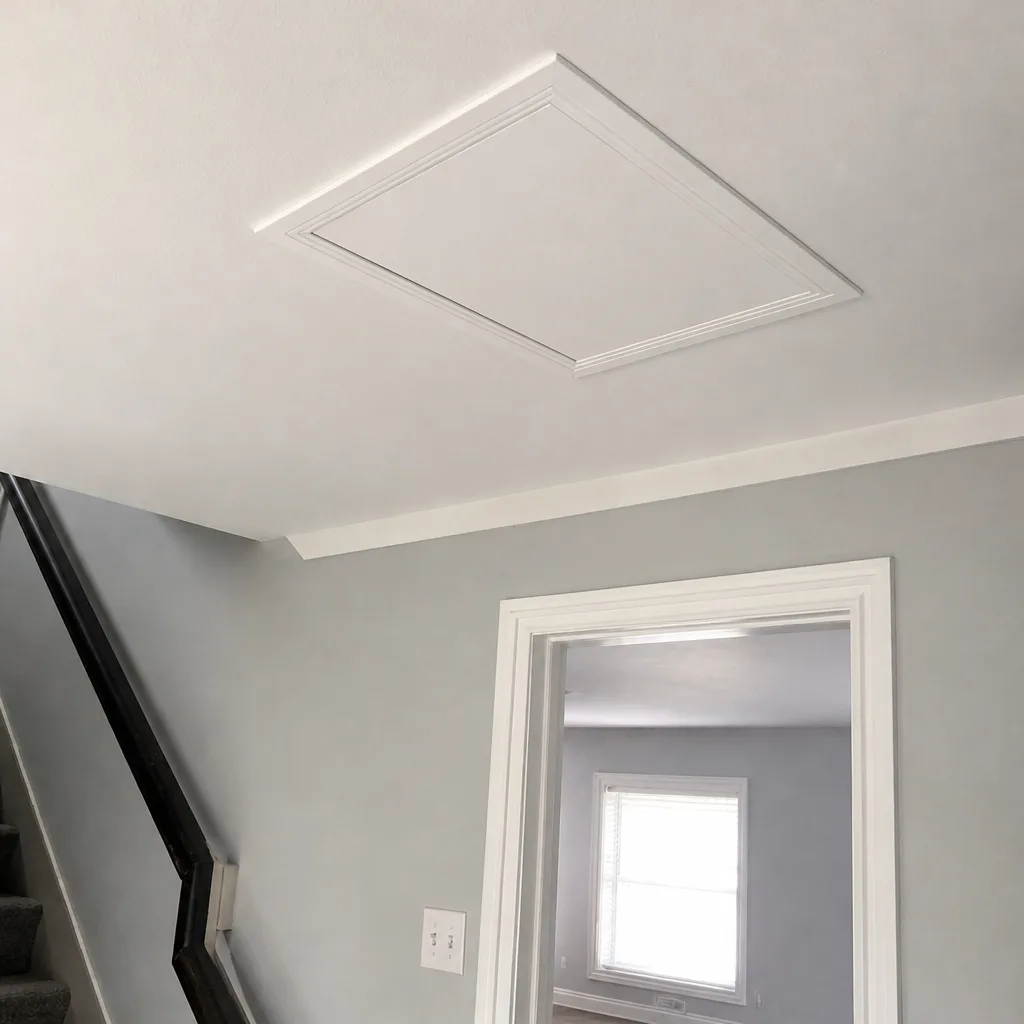
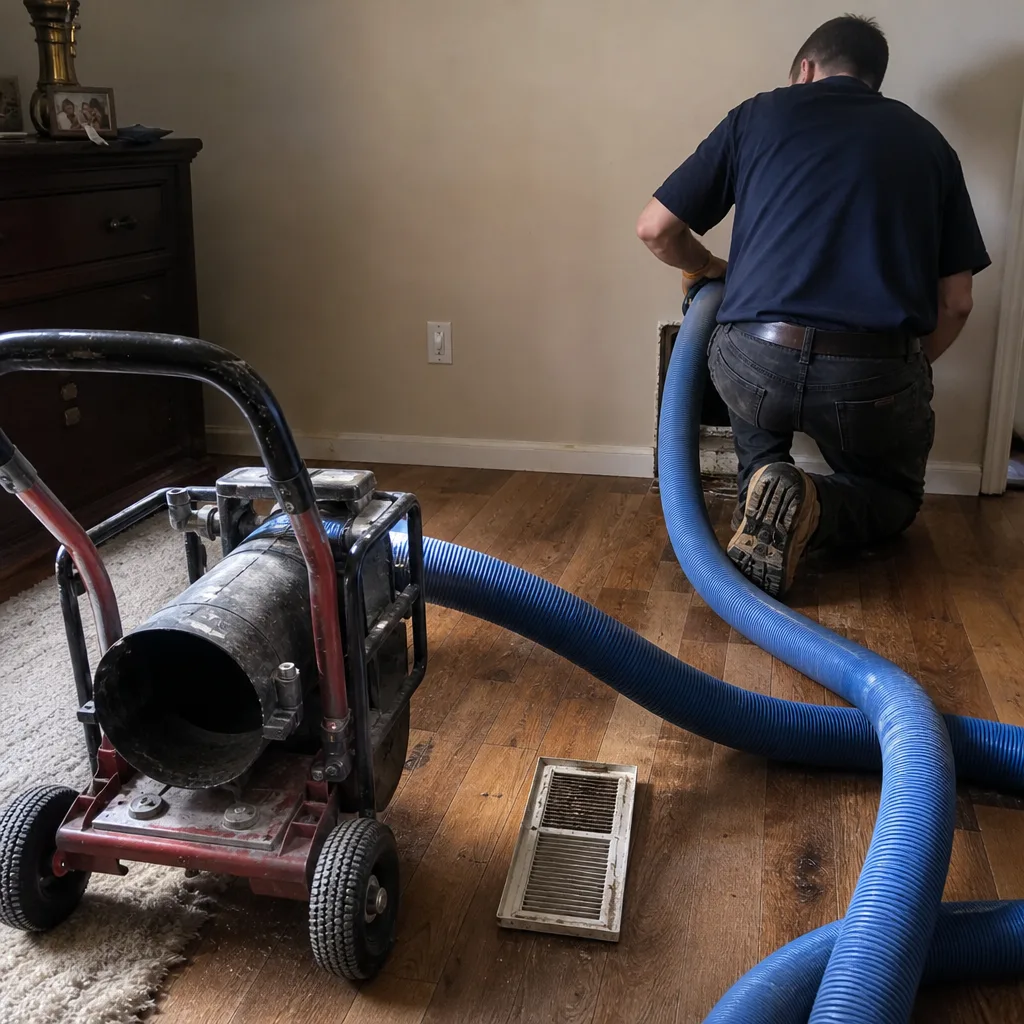
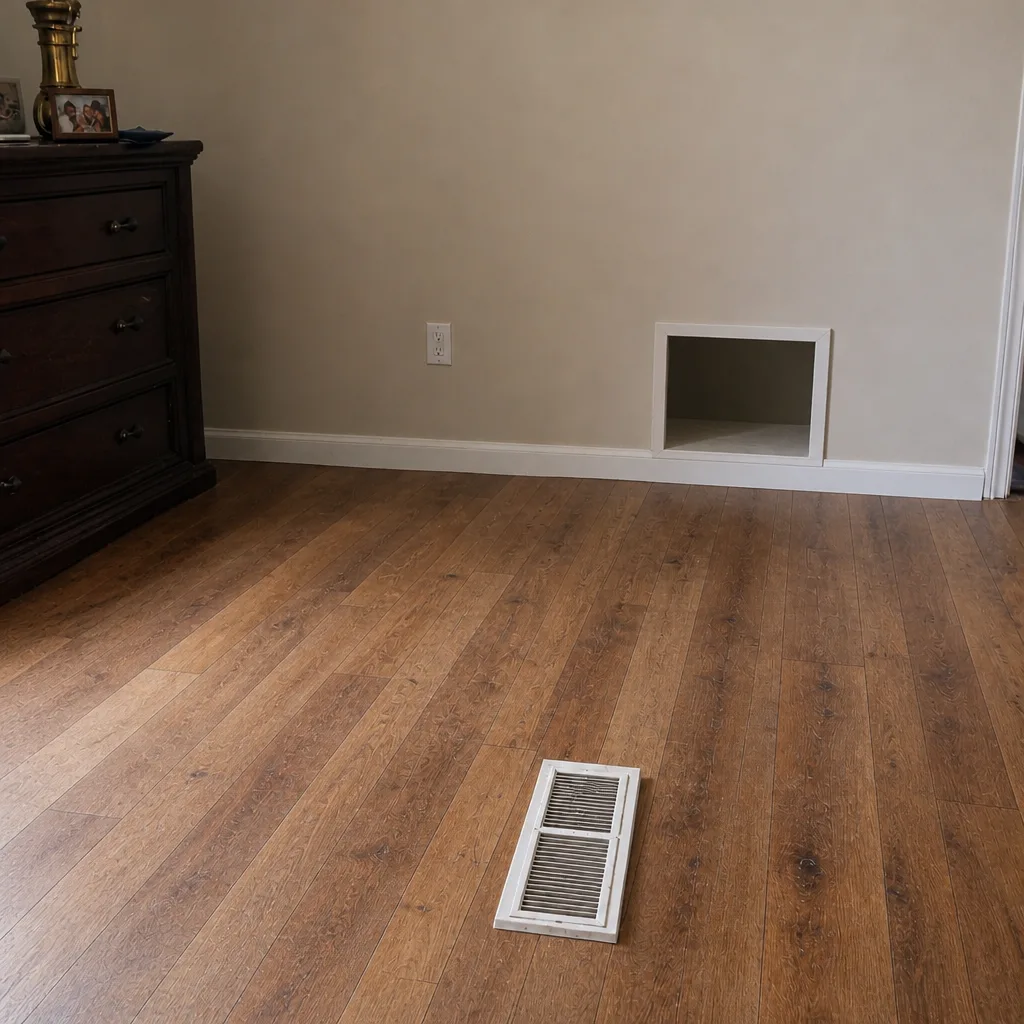
- Not asking for before-and-after photos. The photo record is the best evidence that cleaning happened and repair work was done. Ask for it, keep it, and don’t accept a verbal summary in its place.
- Letting a contractor do a “while we’re here” fix without documentation. Undocumented duct modifications are the kind of thing that surfaces at a home sale on the buyer’s inspector’s report. If work is done, document it.
- Ignoring the crawl space moisture question in Kent. Wet winters put moisture into crawl spaces, and duct systems in those spaces take the brunt. A duct system that smells musty in spring is asking for a look.
- Assuming a mechanical permit filed is the same as a mechanical permit closed. Confirm the final inspection. An open permit is a loose end that shows up on a title search.
See the difference
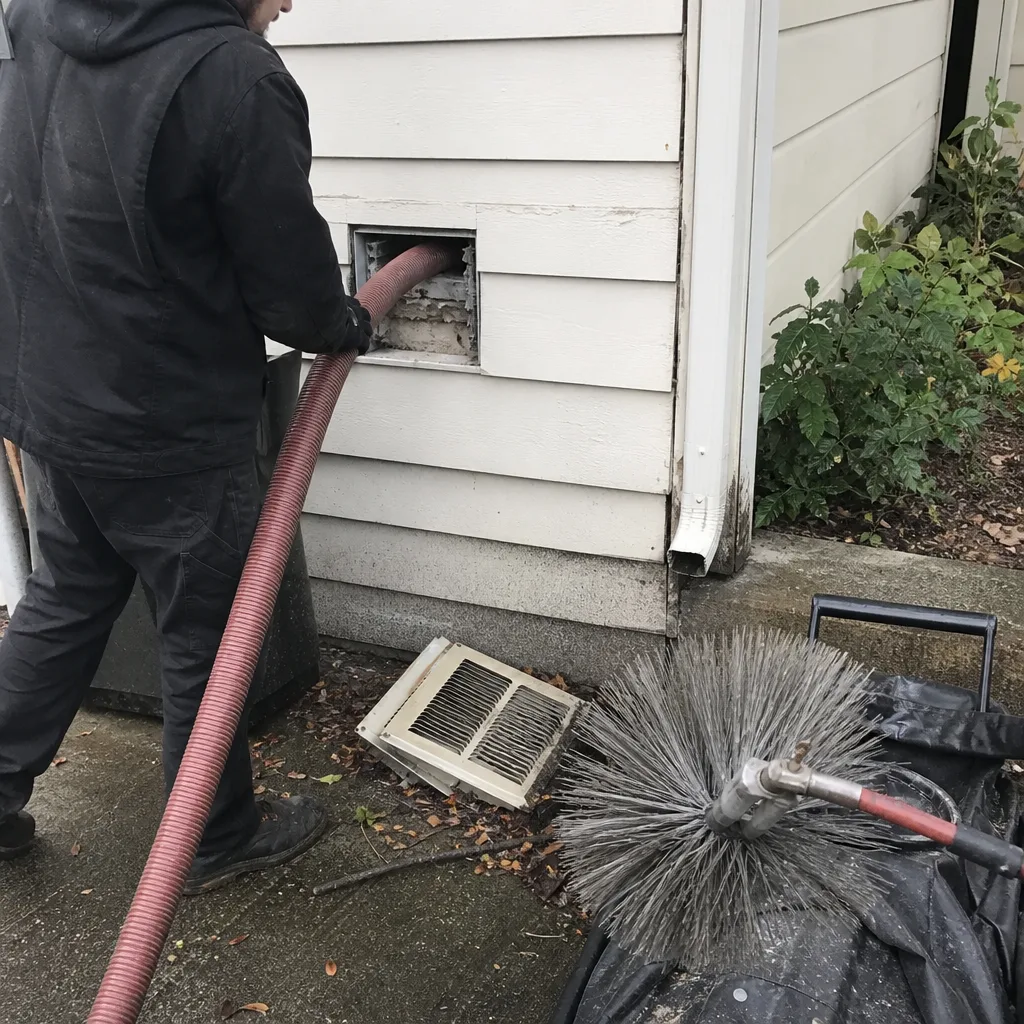 Before
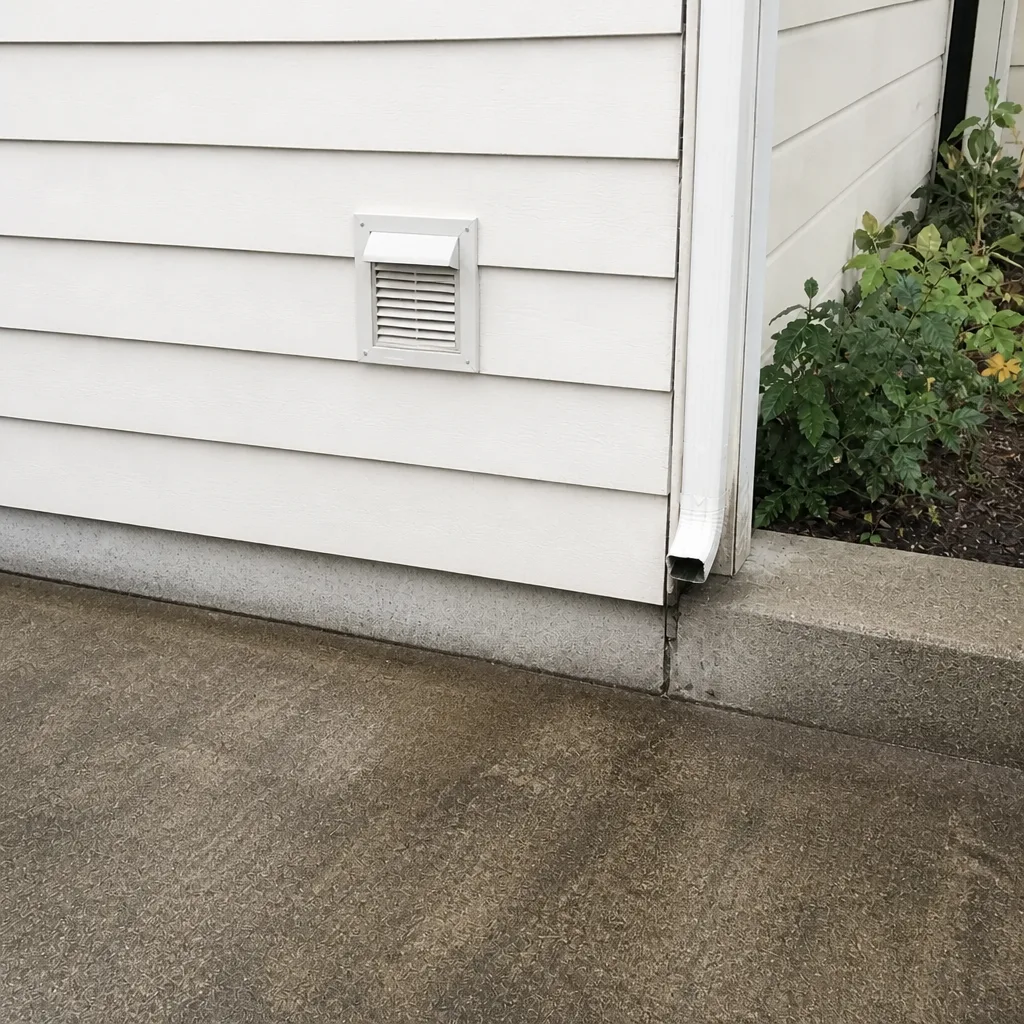 After
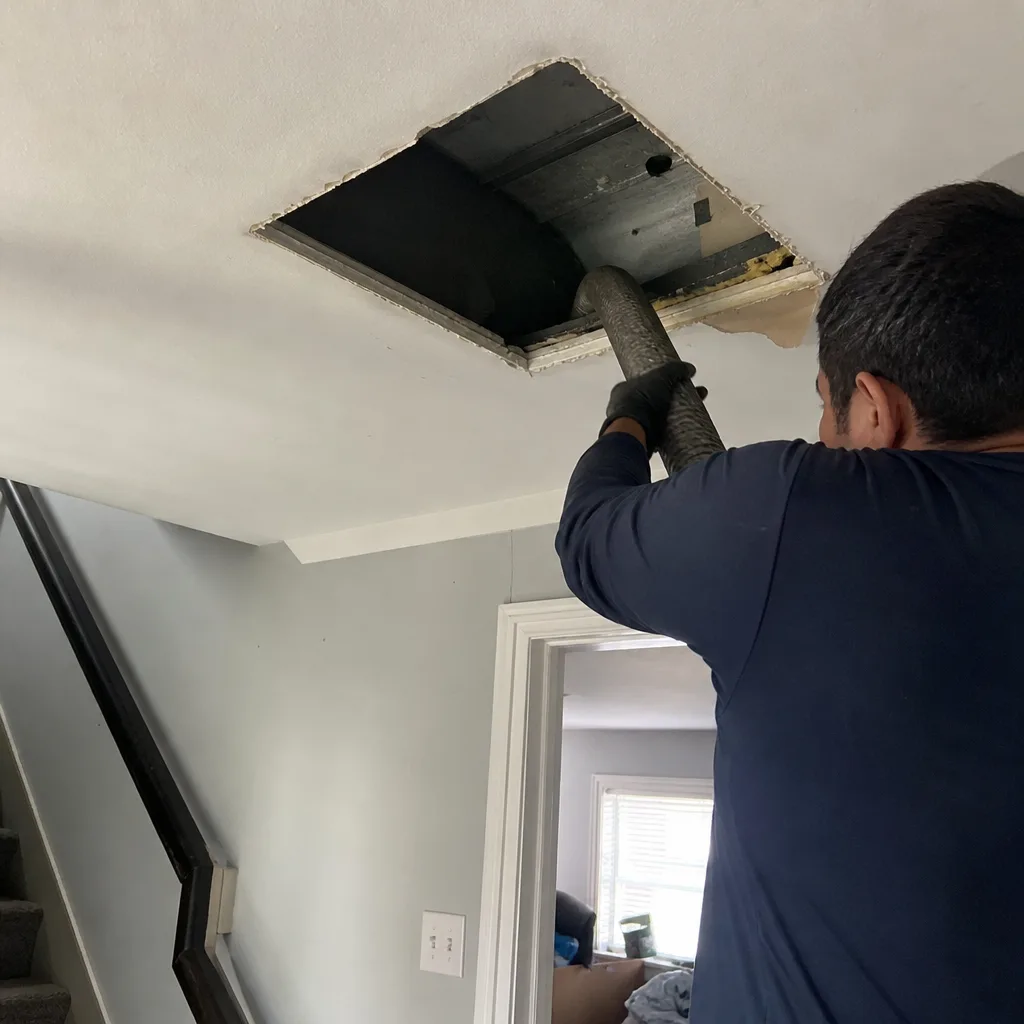 Before
 After
 Before
 After
When to Call a Professional
Call a professional when the duct condition question crosses from cleaning into repair, or when the system is showing symptoms you can’t interpret on your own. Specific scenarios: you’ve noticed a musty odor that returns after basic cleaning; a recent renovation released construction debris into the duct system; you’re seeing excess dust on registers shortly after the HVAC system ran; a home inspector flagged duct condition and you need it looked at before resale; or a duct cleaner found a disconnected or damaged run and quoted repairs. Any of these justifies a professional assessment. Duct Cleaning Kent offers free estimates in Kent – call (866) 761-6504. We answer 24/7. Fast dispatch from 7am to 7pm, Sunday through Friday.
Frequently Asked Questions
No. Routine air duct cleaning in Kent does not require a permit – it’s a maintenance service, not a modification of the mechanical system. If the work crosses into duct repair or modification, the scope matters: like-for-like repair is generally treated as maintenance, while a modification that changes material, size, route, or connection may require a mechanical permit under WAC 51-52 and City of Kent oversight. Ask your contractor which category the work falls into. Call (866) 761-6504 for an exact quote – estimates are free.
Air duct cleaning in Kent is quoted per job by a written estimate after a technician sees the system – not per vent. Whole-system cleaning typically comes in based on the number of runs, system size, and access, and the estimate sets the final price. We don’t quote a teaser price and then adjust it once the technician is on site. Call (866) 761-6504 for an exact quote – estimates are free.
Cheap quotes are often priced for the smallest possible version of the job – a quick pass with shop-vac-grade equipment, no photo documentation, and no mention of what happens if a duct run is disconnected or damaged. The low bid has its place for a very simple system, but it usually reflects a different process, not a better deal. Ask what equipment is used (professional rotary-brush and vacuum systems versus improvised tools), and ask whether the price includes repair and documentation. Call (866) 761-6504 for an exact quote – estimates are free.
Before-and-after photos of your own ducts. A professional provider photographs the duct interior before cleaning, after cleaning, and any repaired section. The photo record is the proof you keep, and it’s the single best answer to the question. Call (866) 761-6504 for an exact quote – estimates are free.
Most homes don’t need it on a fixed schedule. The triggers are: a recent renovation, a move into a new home, a musty odor that returns after basic cleaning, visible dust accumulation at registers, or a system that’s never been cleaned. A visual inspection is a reasonable starting point, and it can tell you whether cleaning is warranted. If a duct repair comes up during the inspection, the code question is the next conversation. Call (866) 761-6504 for an exact quote – estimates are free.
Yes. Keep the permit number and the final inspection sign-off in the same file as your before-and-after photos and paid invoice. That file answers the home inspector’s questions at a resale, supports insurance questions if a covered event affects the duct system, and closes out the paperwork cleanly. A permit that’s been pulled but never signed off is a loose end worth resolving. Call (866) 761-6504 for an exact quote – estimates are free.
The Bottom Line
Routine duct cleaning in Kent is a maintenance service, not a permit-triggering one. Duct repair is different. The moment a technician cuts into ductwork, replaces a section of flex, seals a plenum, or changes a connection point, WAC 51-52 and City of Kent oversight can come into play. Knowing whether the proposed work is like-for-like repair or a modification is the question that determines the permit path, the documentation trail, and the paperwork you’ll want at resale. Verify your contractor’s L&I registration, ask what scope the registration covers, and keep the file. Our technicians have up to 15 years of experience, and we treat the code distinction as part of the job, not an afterthought.
Duct Cleaning Kent offers free estimates in Kent. Call (866) 761-6504. We answer 24/7. Fast dispatch from 7am to 7pm, Sunday through Friday. One flat price per system agreed before work starts, before-and-after photos of your own ducts, and repair capability if the system needs more than cleaning. Licensed & insured.
Written by the team at Duct Cleaning Kent.