
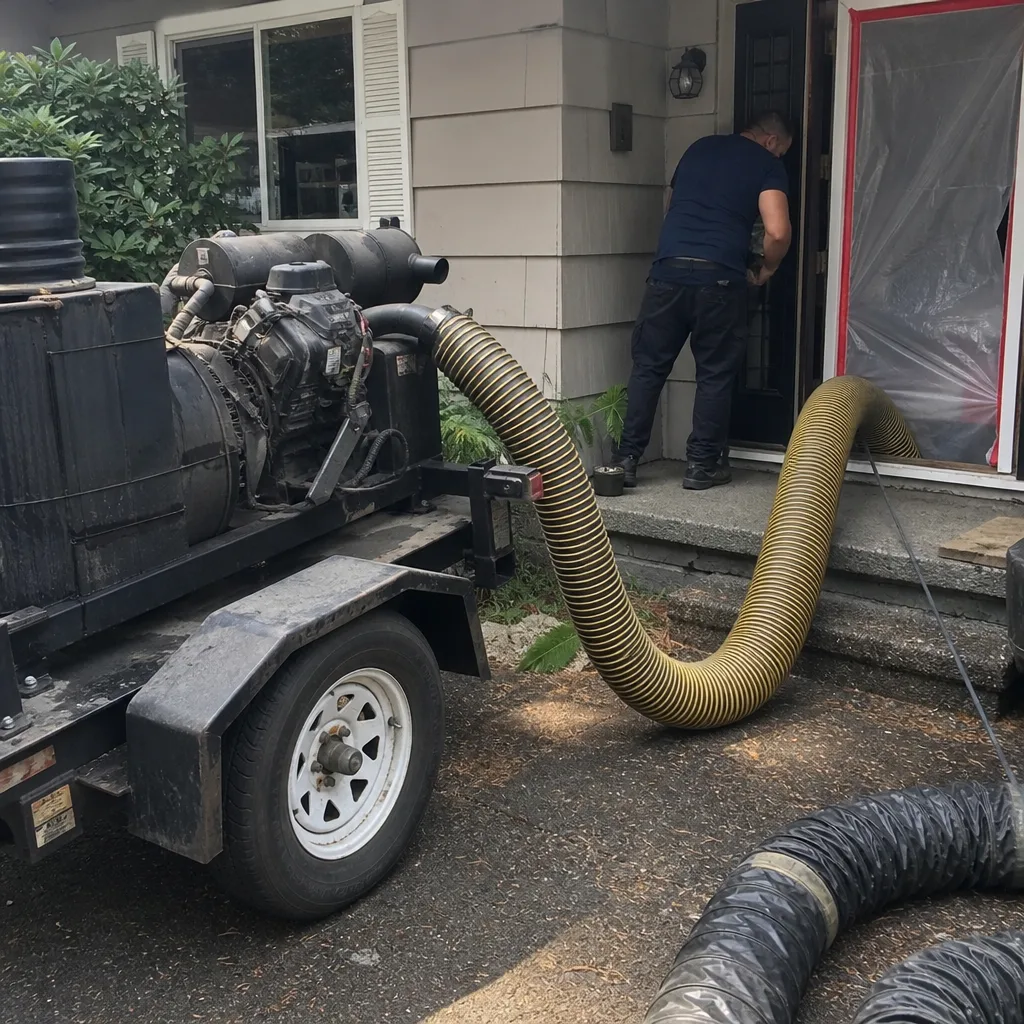
Last updated November 16, 2026
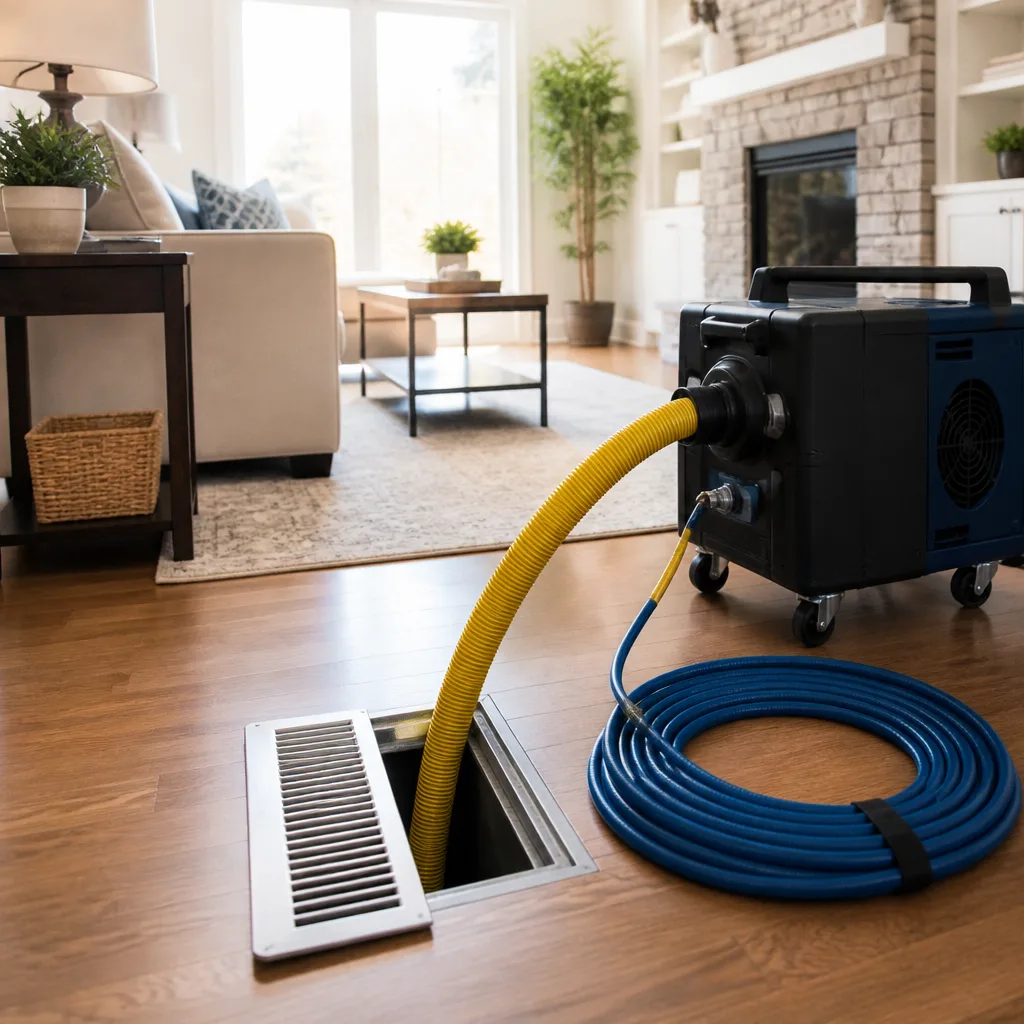 Whole-home duct cleaning
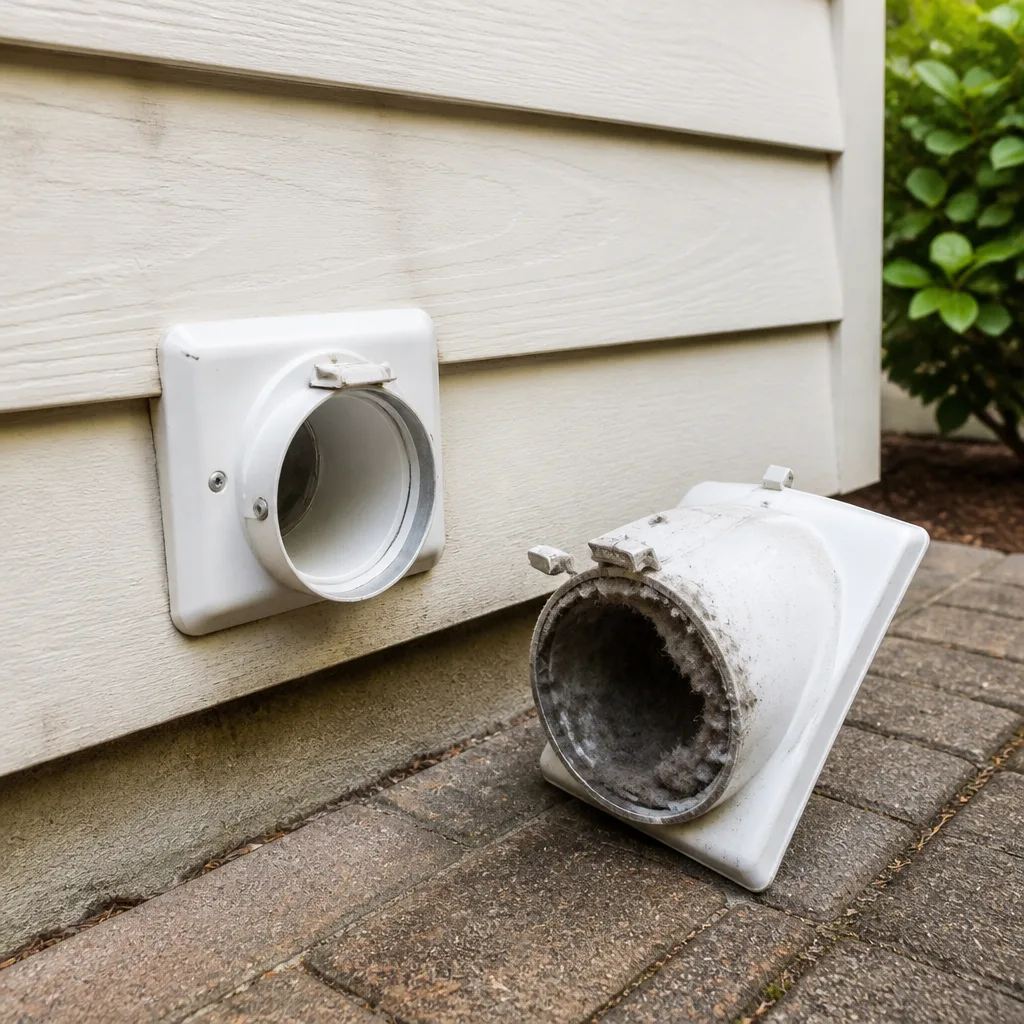 Dryer vent cleaning
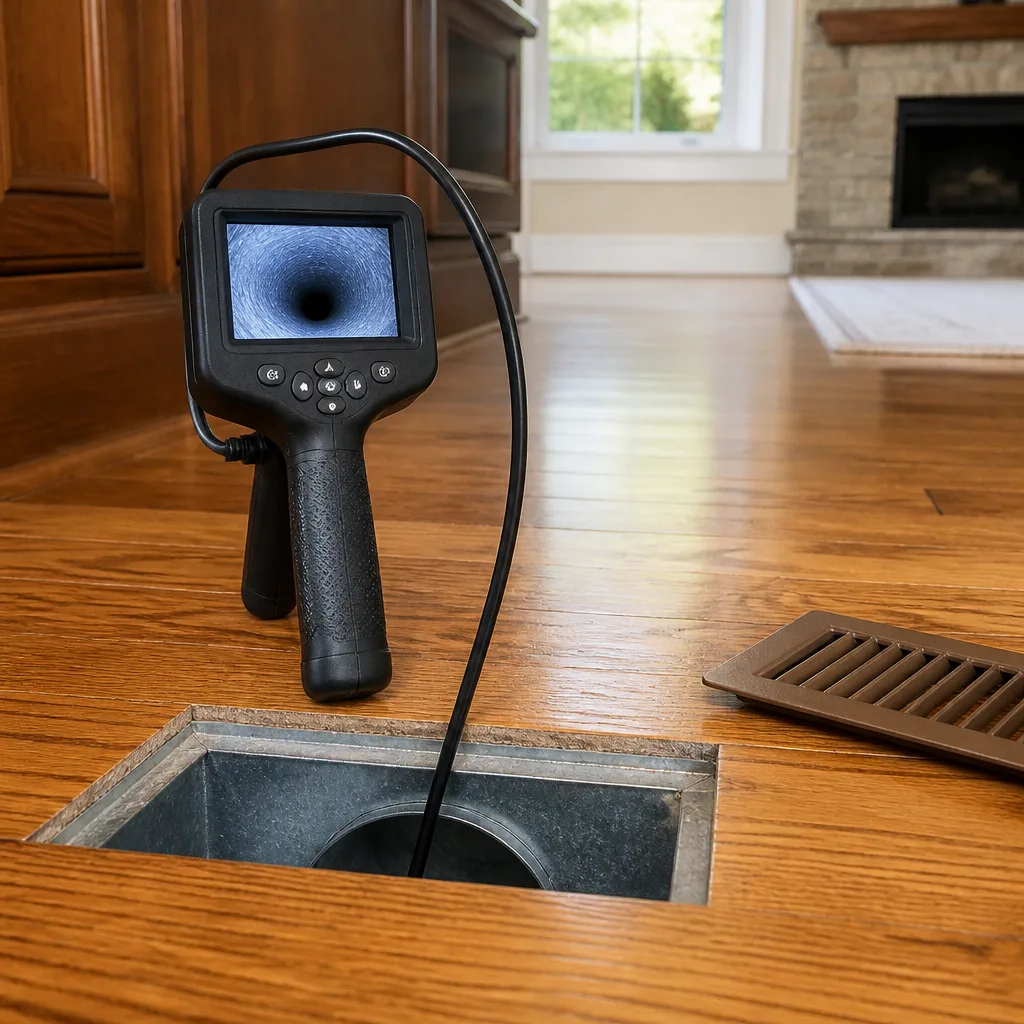 Camera inspection
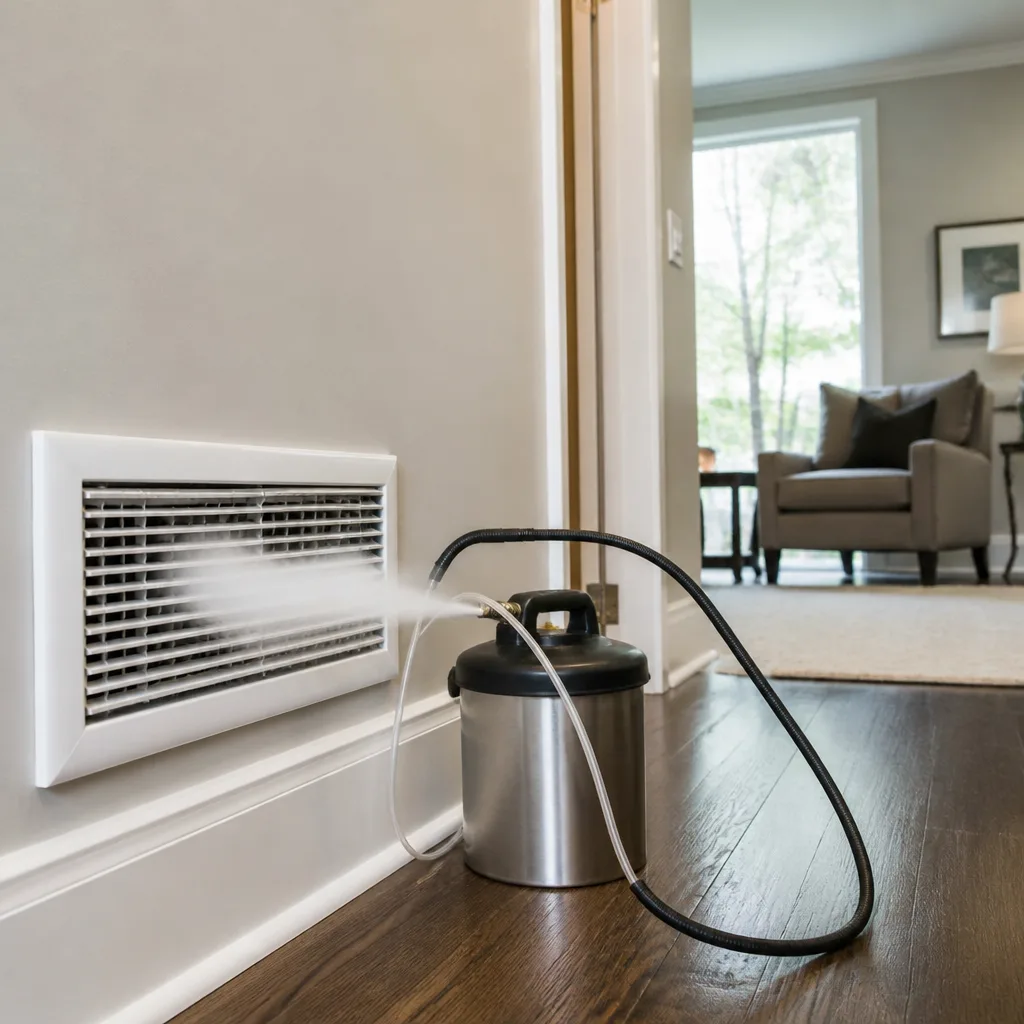 Sanitizing & deodorizing
Whole-system duct and dryer vent check with before-and-after photos - you see exactly what came out of your vents
That "$99 whole-house special" is a bait ad - the real number appears once they are in your hallway, or the "clean" is a shop-vac at the register. We photograph the inside of your ducts before and after instead.
Air Duct Cleaning Warning Signs: A Kent Homeowner’s Reference Guide
Dust collecting on a supply register isn’t one problem. It’s at least five different possible problems, each with its own cause and its own fix. That’s the part most homeowners miss. When a register looks dirty or a room smells off, the instinct is to book a cleaning and expect everything to reset. Sometimes that’s exactly right. Sometimes cleaning treats the symptom while the real issue – a disconnected joint, a leaking seam, moisture feeding growth – keeps right on happening behind the drywall. This guide breaks down what each warning sign in your home is actually telling you, and how to read it the way a technician does. We’ll cover Kent conditions, the difference between cleaning, sealing and moisture problems, and the signs that mean stop waiting and call now.
Quick Answer
Air duct warning signs in Kent fall into two groups: conditions that allow scheduled service and conditions that need urgent action. Musty odors, visible register dust and rising dust throughout the house usually point to a cleaning or sealing problem you can book on your calendar. Visible mold growth inside the system, rodent droppings or evidence, or contamination after flooding or a major leak cross into urgent territory – those need evaluation before anyone runs the system again.
Styles & brands we work with
- Whole-home duct cleaning
- Dryer vent cleaning
- Camera inspection
- Sanitizing & deodorizing
Table of Contents
- What Dust at Your Registers Is Really Telling You
- Musty Odors: Cleaning Problem, Sealing Problem, or Moisture Problem?
- Why Some Rooms Stay Cold or Warm No Matter What You Set
- Allergies Flaring Up: Duct-Related, Seasonal, or Crawlspace Moisture?
- Signs That Need Urgent Action, Not a Scheduled Visit
- Your Dryer Vent Is a Separate Warning System
- What a Professional Cleaning Actually Involves
- When to Call a Professional
What Dust at Your Registers Is Really Telling You
Dust on a register is a message, and the message changes with the dust. Before you assume it’s time to clean, look at what you’re actually seeing. The color and texture of the buildup narrows down the cause considerably, and in our experience that inspection step is what separates a real diagnosis from a guess.
Light gray, evenly spread film
This is the most common pattern and usually means normal household dust drawn through the return and redistributed. It builds slowly, appears on every register, and doesn’t smell. Often it just means the filter schedule has slipped or the filter is the wrong rating for the system. A cleaning helps, but the fix is often better filtration – which is where whole-home products from brands like Honeywell and Aprilaire come in.
Dark, sooty, or black streaking
Black residue around registers can point to a combustion byproduct issue, candle soot, or particles from a nearby source being pulled in. It can also appear when a system pulls air from an unconditioned space where something is burning or smoldering. This pattern warrants a closer look before anything else – it can indicate a source you don’t want recirculating.
Pinkish, greenish or speckled buildup
Discolored patches that look fuzzy or speckled are a moisture signal. Dust alone doesn’t change color like that. When organic material collects in a damp duct, it supports growth. This crosses into the moisture problem category, and cleaning alone won’t solve it – you have to find where the moisture is coming from.
Fibrous or granular debris
If you see material that looks like fiberglass strands or sand at a register, you may be looking at deteriorating duct liner or debris that entered through a compromised section. Fiberglass liner breakdown is a repair issue, not just a cleaning one.
Dust concentrated in one or two rooms only
When dust builds up heavily in specific rooms while others stay cleaner, that points away from a whole-system cleaning problem and toward a localized leak, a disconnected branch, or return air imbalance. This is the signature of a sealing problem, and our air duct repair work often starts here.
Musty Odors: Cleaning Problem, Sealing Problem, or Moisture Problem?
A musty smell coming through your vents is the single most important warning sign to read correctly, because the three possible causes have three completely different fixes. Treating all three as “time to clean” is how homeowners spend money and end up with the same smell a month later. Here’s how to tell them apart.
The cleaning problem
This is odor from accumulated dust, debris and organic material that has settled in the ducts over time. It tends to build gradually, appears strongest when the system first kicks on, and fades as air moves. The smell is stale rather than actively damp. A thorough cleaning with proper extraction – we use Nikro vacuum and collection equipment for exactly this – addresses it.
The sealing problem
When ducts pull air from a crawlspace, attic, or garage because of leaks and disconnections, they’re drawing that air’s smell into the living space. The ducts themselves may be reasonably clean. You notice the smell most in certain rooms or when the system runs hard. Sealing the leaks and reconnecting the offending sections is the fix. Cleaning first would just pull more of that air into a freshly cleaned system.
The moisture problem
This is the one that needs the most attention. Persistent damp odors, especially combined with any visible discoloration, mean moisture is present in the system. Moisture in ducts supports biological growth, and cleaning a damp system without drying it is a temporary fix at best. The source – a leak, high crawlspace humidity, condensation on cold duct surfaces – has to be addressed.
How to sort them quickly:
- Note when the smell is strongest. First-on-after-idle suggests a settled-debris cleaning issue. Strong whenever the system runs hard often points to a leak drawing air from elsewhere.
- Check whether the smell is seasonal. Warmer, more humid months can amplify a moisture problem. A year-round smell is usually debris or a leak.
- Look for visible discoloration at registers or in accessible ductwork. Any sign of it means moisture is a factor.
- Note whether the smell fades after air runs or stays constant. Fading suggests cleaning. Constant suggests a leak or ongoing moisture.
- Have it evaluated before booking. A technician can confirm the cause in a walkthrough and recommend the right service instead of the wrong one.
Why Some Rooms Stay Cold or Warm No Matter What You Set
Uneven room temperatures are rarely a cleaning problem. That’s the counterintuitive part. When one bedroom is always a few degrees off while the rest of the house is fine, the cause is almost always duct leakage, disconnected branches, crushed flex duct, or air balance – not accumulated dust. Cleaning still has a role, but it’s usually the first step, not the whole answer.
Why leakage causes uneven rooms
Every joint, seam and connection in a duct system is a place where conditioned air can escape before it reaches the room it was meant for. In Kent and across the Puget Sound region, ductwork runs through crawlspaces and attics where it’s exposed to temperature swings and, in older homes, to the kind of settling that opens joints over time. A supply branch that leaks into a crawlspace delivers less air to the room at its end. That room runs cold in winter and warm in summer while the thermostat reads fine.
When cleaning is still the right first step
If a room is uneven and dusty, or the system has never been cleaned and you’ve recently renovated or moved in, start with cleaning. Cleaning clears the debris that obscures what’s actually happening in the ducts – once the interior is clear, a technician can see disconnected joints, collapsed flex runs, or damaged liner. In our experience, cleaning followed by a proper inspection is the honest sequence. Cleaning a ducted system that’s clean on paper but leaking in reality won’t fix the temperature problem, but cleaning first makes the repair visible.
When it’s a repair problem
If a technician finds a disconnected run, crushed duct, or failed seal during the cleaning inspection, that’s a repair job, not a cleaning job. Our air duct cleaning visits include a duct condition check, and where needed we move straight into air duct repair. Better air starts inside the system, and so does better balance.
Allergies Flaring Up: Duct-Related, Seasonal, or Crawlspace Moisture?
When allergy symptoms worsen indoors, ducts get blamed first. Sometimes that’s correct. Sometimes it isn’t. Distinguishing a duct problem from seasonal pollen or crawlspace moisture matters because each has a different fix, and cleaning ducts doesn’t help with pollen that’s coming in through an open window or moisture that’s entering through the floor structure. Here’s how Kent homeowners can sort the signal from the noise.
Seasonal pollen
The Pacific Northwest has a real pollen season, and during it, symptoms often track the weather. If you feel worse after time outdoors, keep windows open, or come from yard work, pollen is the likely driver. Duct cleaning won’t resolve pollen exposure, though keeping the system clean and the filter changed helps the indoor picture.
Duct-related
Duct-related symptoms tend to be steady. You notice them indoors regardless of time outside, they’re worse when the system is actively running, and they improve when you’re away from home. Dust, musty odors and visible register buildup often accompany them. This is the category cleaning addresses – and using professional-grade extraction with Abatement Technologies air filtration on-site means the debris is controlled during the work rather than recirculated.
Crawlspace moisture
Crawlspace moisture is common in Kent and often gets missed. If the ducts run through a damp crawlspace with leaks or disconnected joints, they can pull moist crawlspace air into the living space. That air can carry mold spores, soil dust and higher humidity. The symptoms look duct-related because the delivery route is the ducts, but the source is the crawlspace. This calls for sealing the ducts and addressing the moisture, not just cleaning.
A quick way to tell:
- If symptoms track with outdoor pollen, suspect seasonal.
- If symptoms are worse when the system runs, suspect ducts.
- If symptoms are strongest in rooms over the crawlspace, suspect crawlspace intrusion.
- If there’s any musty odor indoors year-round, moisture is likely involved somewhere.
Signs That Need Urgent Action, Not a Scheduled Visit
Some warning signs shift from “schedule service” to “stop running the system and get someone out.” These are the ones where waiting risks spreading contamination through the home. Here’s the checklist:
- Visible mold growth inside the duct system or on accessible duct surfaces. If you can see it, the system has been moving spores. Turn the system off and get it evaluated before running it again.
- Rodent droppings, nests, or a strong rodent smell in the ducts. Rodents in ductwork create both contamination and a chewed-duct risk. This is not a cleaning you schedule for next month.
- Contamination after a flood, burst pipe, or major leak into the system. Any water intrusion that reaches the ducts needs evaluation before the system runs to prevent distributing biological growth.
- Persistent musty smell combined with allergy symptoms that get worse only at home. These together suggest moisture plus biological growth somewhere in the system.
- A strong chemical or burning smell through the vents. This can indicate a separate hazard – stop, turn the system off, and get it looked at before running again.
The urgent category is not about panic. It’s about sequence. Contamination from these sources spreads every time the system cycles. Getting evaluated first and scheduling the right work – cleaning, repair, or remediation – is the correct order of operations.
Your Dryer Vent Is a Separate Warning System
Dryer vents get lumped in with duct cleaning and treated as an afterthought. In practice, they’re a fire risk, not a nuisance task, and they deserve their own warning-sign reading. Lint buildup in a dryer vent robs the dryer of efficiency, overheats it, and can ignite. This is one of the reasons dryer vent cleaning should be part of a full duct care plan, not a separate add-on you keep postponing.
Signs your dryer vent needs attention
- Clothes take significantly longer to dry than they used to.
- The dryer feels hot to the touch during or after a cycle.
- There’s a burning or musty smell in the laundry area.
- Lint is visible around the exterior vent flap or accumulating behind the dryer.
- The exterior flap doesn’t fully open when the dryer runs.
- It’s been long enough that you can’t remember the last cleaning.
Dryer vent cleaning is a dedicated service for us, not a tacked-on extra. The same professional extraction approach that handles ducts – including our Guardsman access and protection equipment on-site – applies to the dryer vent line. When the vent is clear, the dryer runs cooler, dries faster, and the fire risk drops.
What a Professional Cleaning Actually Involves
Your ducts are only as clean as the process used to clean them. That’s the part of this industry that needs scrubbing. A quick pass with a shop vac and a wand at the registers is not a duct cleaning – it moves the debris around and leaves most of it in place. Here’s what a real cleaning looks like and what the equipment is for, because understanding the process is how you tell the difference when you’re choosing a provider.
The process
- Inspection first. The system is checked before anything starts to see what it’s cleanable, what may need repair, and whether moisture is present. If a problem turns up, the plan changes – cleaning doesn’t proceed blindly.
- Air control on-site. We run Abatement Technologies air filtration and negative-air equipment during the work. This controls particulate at the source instead of letting it circulate through the house. This is one of the biggest differences between a professional cleaning and a “we’ll just blow it out” job.
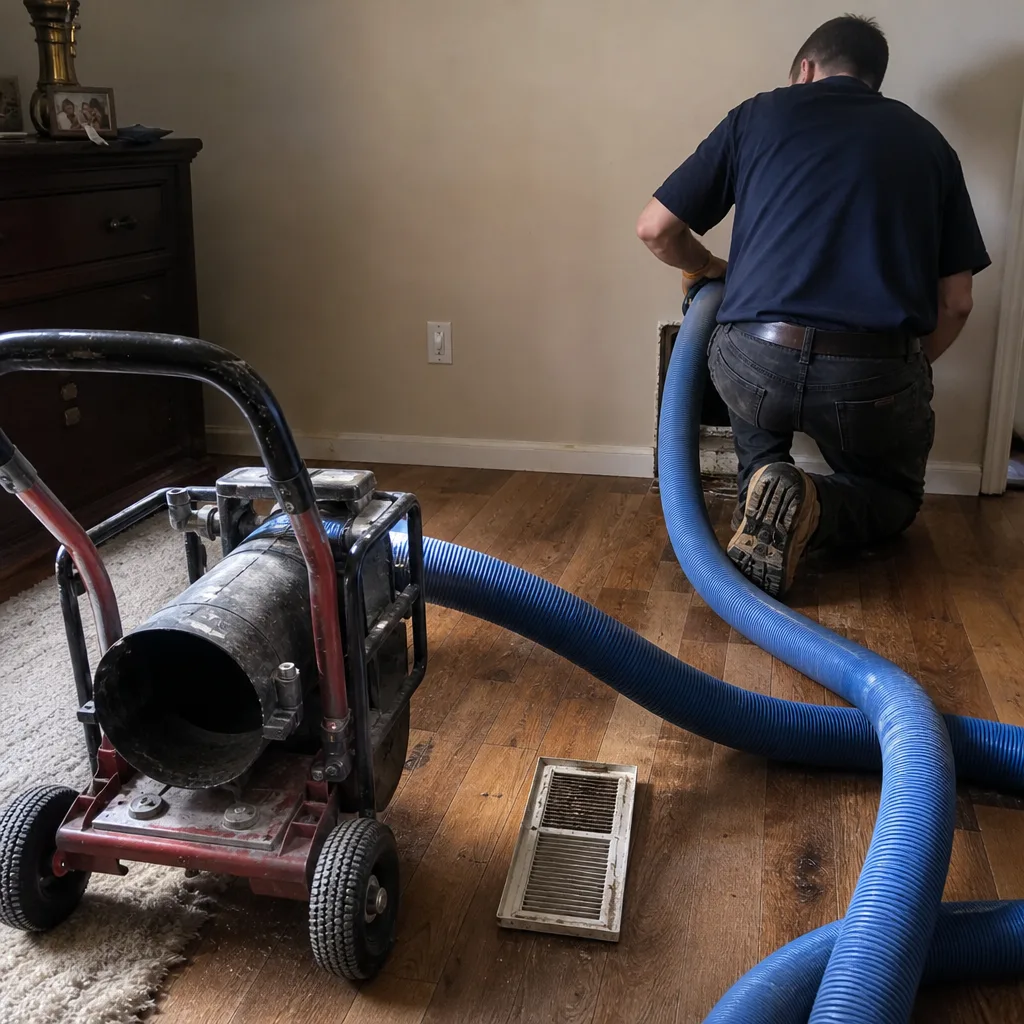
- Rotary brush cleaning. We use professional Rotobrush rotary-brush systems, the same equipment used in restoration work, to scrub the interior of ducts so debris is loosened and captured rather than simply moved.
- High-efficiency extraction. Nikro vacuum and collection equipment pulls the loosened debris out of the system – not into the room.
- Repair as needed. If the inspection or cleaning reveals damage – a disconnected joint, failed seal, or crushed section – we can address it in the same visit. We clean it. We fix it if it’s broken.
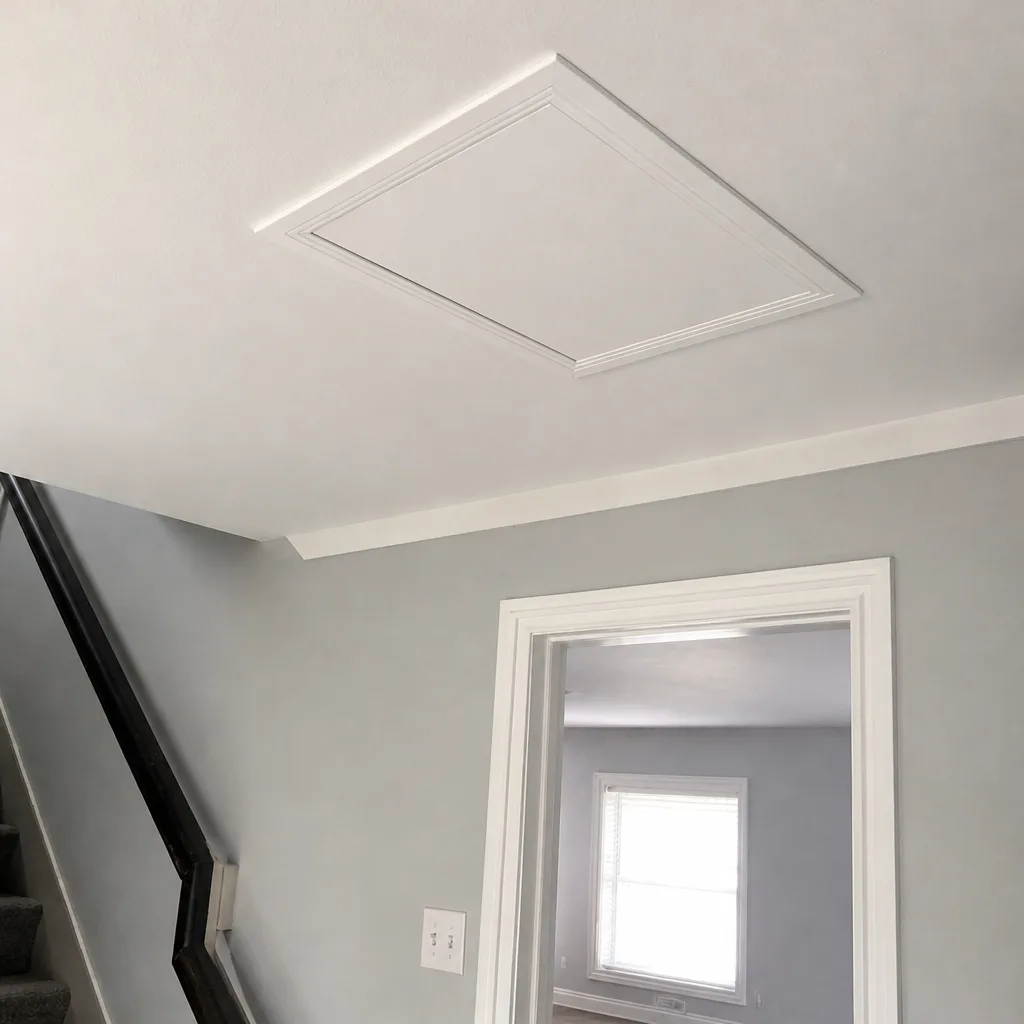
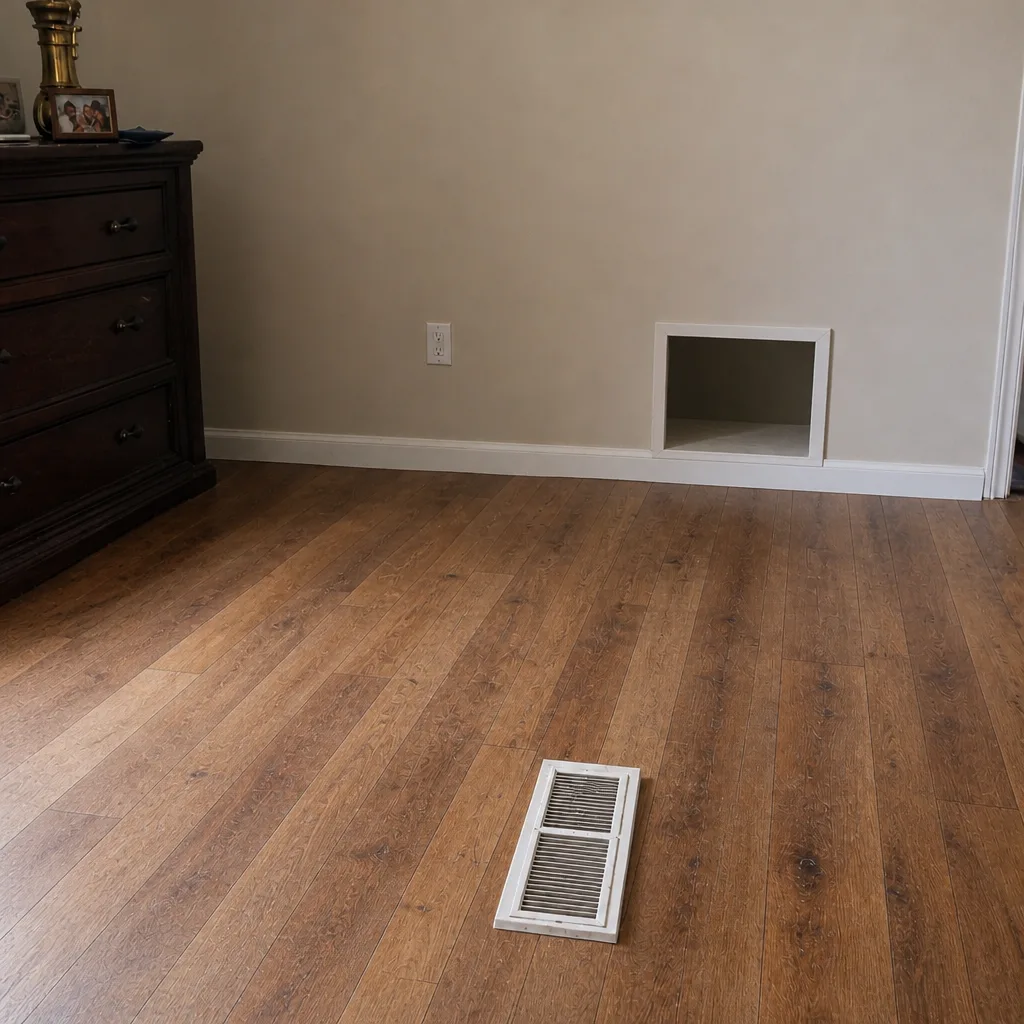
- Verification. Before-and-after photos show what was cleaned, what state it’s in now, and what was found. You see the result, not just the invoice.
The one thing we don’t do is charge per register, or quote a teaser price and then “discover” the real one when we’re on-site. One flat price per system, agreed before work starts. That’s the way it should be, and the way it is with us.
See the difference
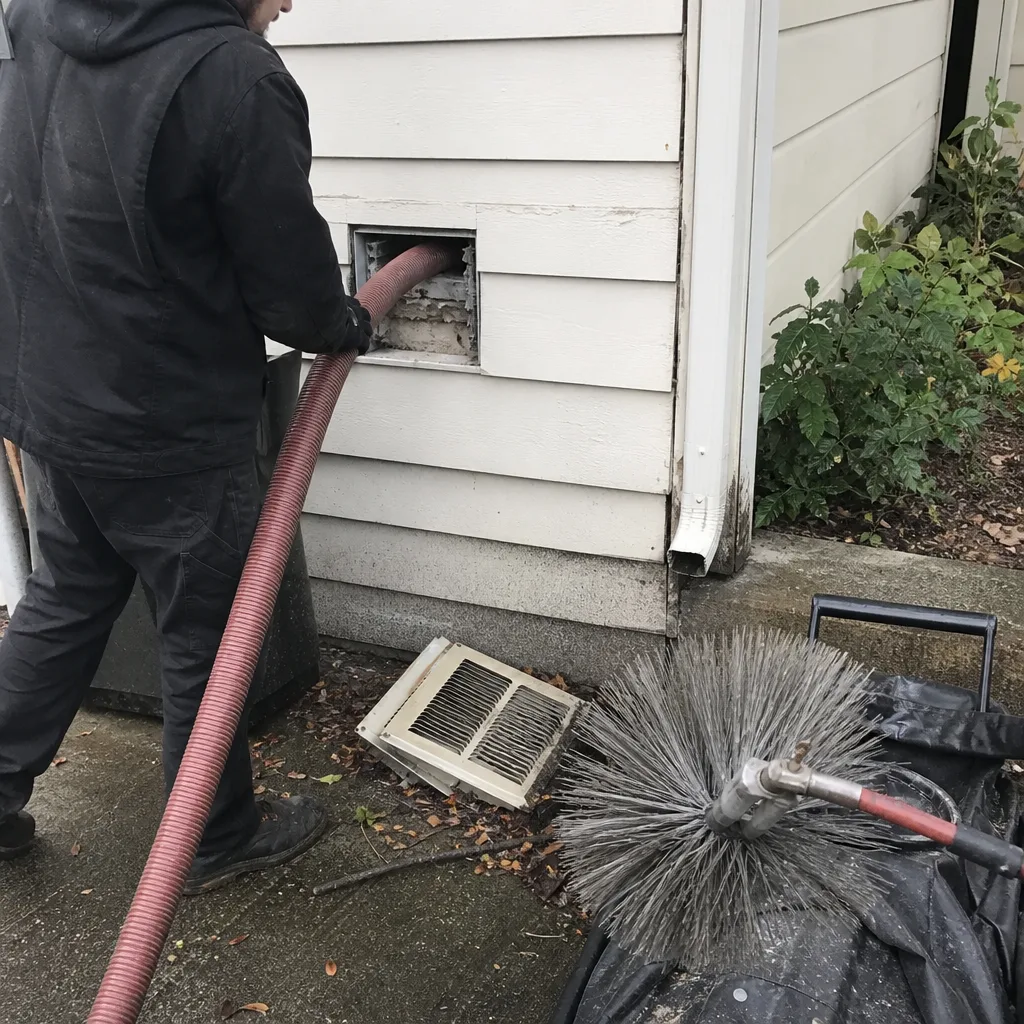 Before
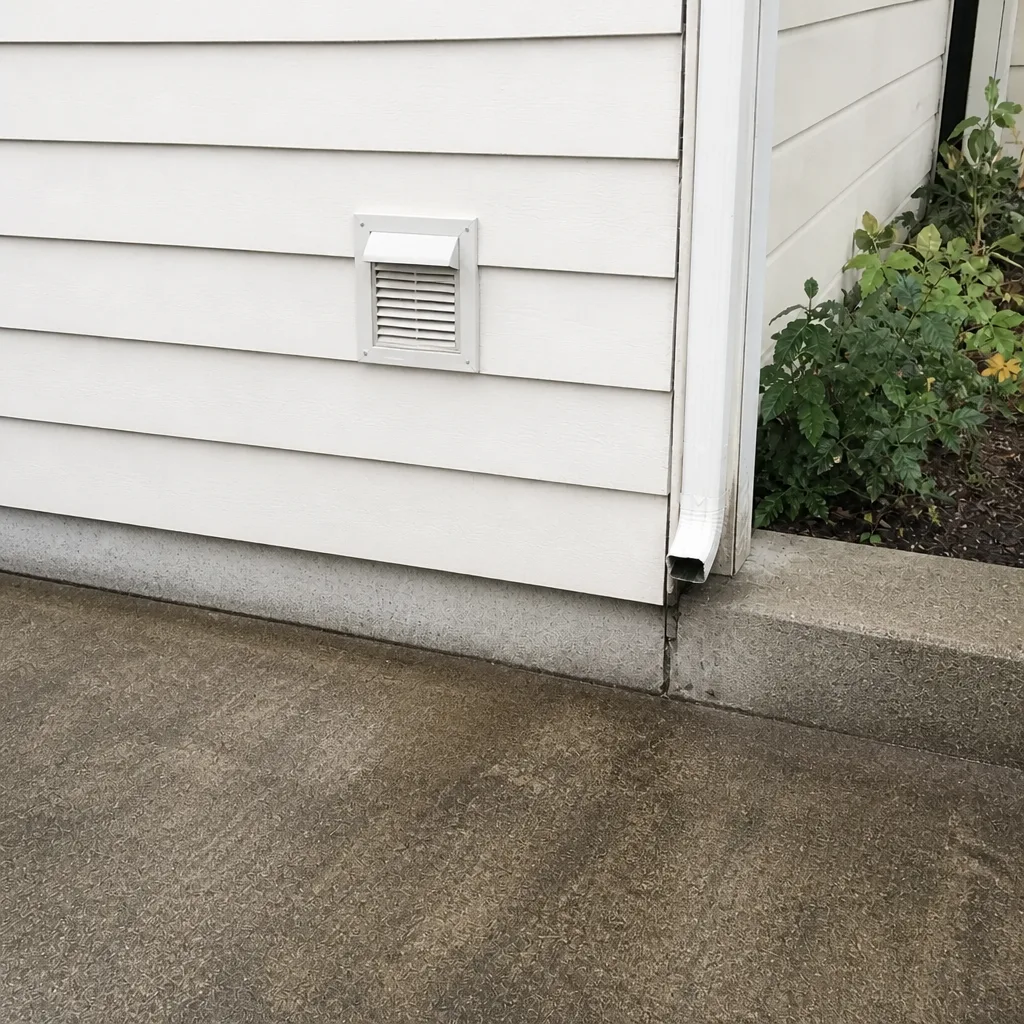 After
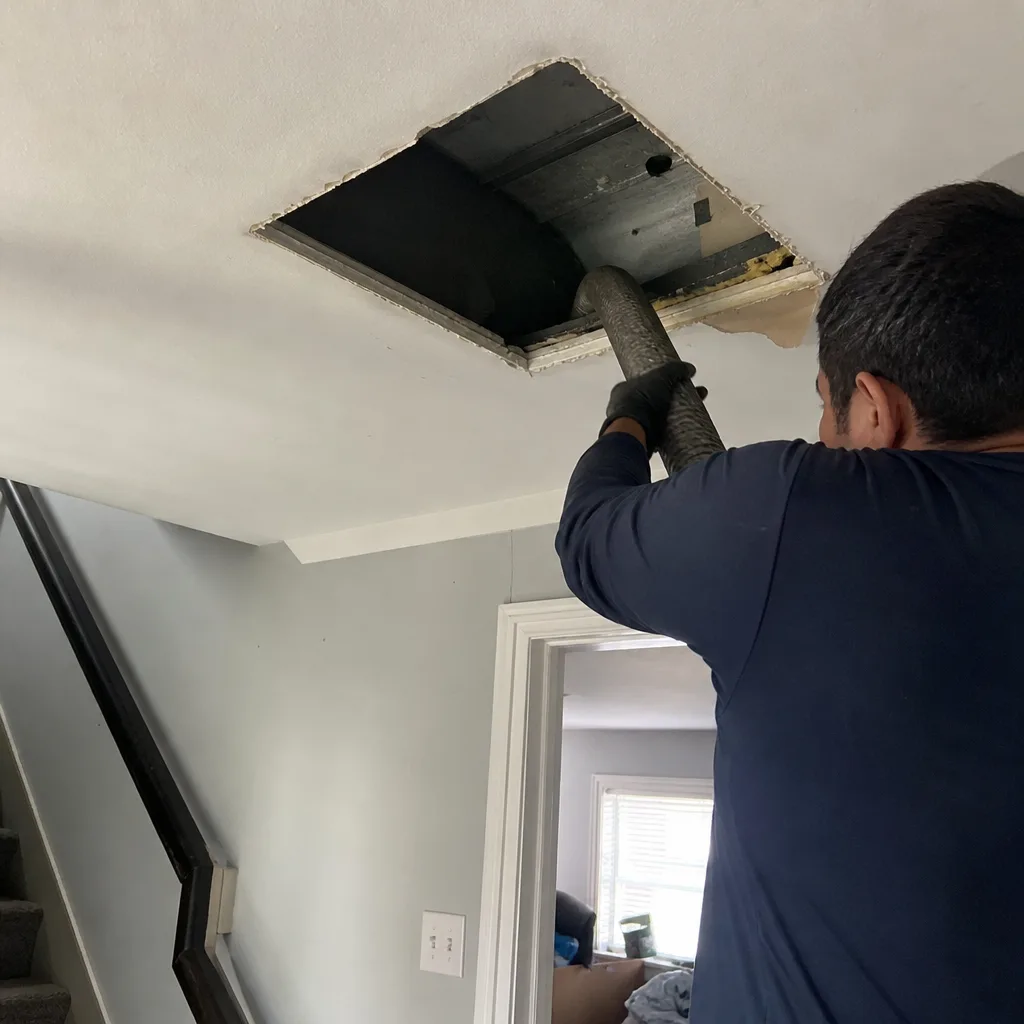 Before
 After
 Before
 After
Common Mistakes to Avoid
- Treating every warning sign the same way. Dust, musty odor, uneven temperatures and allergy symptoms each point at different causes. If your only response is “book the cheapest cleaning,” you may spend money and still have the problem. Match the symptom to the cause first.
- Assuming a routine cleaning will fix a leak or disconnect. Cleaning doesn’t reconnect a duct or seal a joint. If a room is uneven or air is escaping, you need repair and sealing, not just cleaning. Insist on an inspection that checks for those.
- Choosing a quote by price alone. If one quote is dramatically lower than the others, ask what equipment they use and whether they include extraction and air control. A low number often reflects a quick pass with a shop vac – and you get what you pay for.
- Blaming ducts for all indoor allergy symptoms. In Kent, crawlspace moisture and seasonal pollen are real contributors. Have a technician sort it out so you’re not cleaning ducts for a pollen problem or a moisture problem in the floor structure.
- Skipping the dryer vent. Lint in the dryer vent is a fire risk, not a cleaning convenience. Treat it as part of the system and clean it on a sensible schedule.
- Running the system after visible mold or rodent evidence. Every time the fan spins, the contamination gets distributed. Turn it off and get it evaluated first, even if that means a few days without central air.
- Not asking for before-and-after photos. You can’t see inside the ducts yourself. Ask for visual proof of the before and after. Any honest operator provides it.
When to Call a Professional
Call when you see visible mold or discoloration inside the system, when there’s rodent evidence, or after water has entered the ducts from flooding or a leak. Call when a musty smell is persistent and your allergy symptoms flare only at home. Call when temperatures are uneven and cleaning alone hasn’t moved the needle. Call before you list a home for sale or after you’ve finished a major renovation. And call when your dryer is running hot or taking much longer to dry a load.
Duct Cleaning Kent offers free estimates in Kent. We work with professional-grade equipment – Rotobrush, Nikro, Abatement Technologies, Guardsman – and we’re licensed and insured. We answer 24/7. Fast dispatch from 7am to 7pm, Sunday through Friday. If you’ve been putting off a call because you weren’t sure whether you had a real problem, the estimate is free and it will tell you. Call (866) 761-6504 for a free estimate.
Frequently Asked Questions
Air duct cleaning is priced per system, not per register, and the final price is set by a free written estimate after we’ve looked at your home. Most cleaning jobs are driven by the size and layout of the system, the number of returns, and how much repair is needed alongside the cleaning. We don’t quote teaser prices or per-vent rates. Call (866) 761-6504 for an exact quote – estimates are free.
Cheap quotes usually reflect less work. A quick pass with a shop vac at the registers isn’t a duct cleaning – it moves debris around and leaves most of it in the system. Real professional work uses rotary brush equipment and high-efficiency extraction, and it includes an inspection. That costs more on paper but it actually solves the problem. One flat price per system, agreed before work starts, is the honest model. Call (866) 761-6504 for a free estimate.
Ask for before-and-after photos. Any honest operator will provide them. With our visits, you’ll get photos of the ducts before cleaning and after, along with a summary of anything we found – damage, disconnected sections, moisture, or the condition of the dryer vent. Ask to see the equipment being used too: professional-grade rotary and extraction equipment is visibly different from shop-vac workarounds. Call (866) 761-6504 to schedule a free estimate.
There’s no universal number. Most homes fall somewhere in the 3-5 year range, but it depends on the home: renovations, pets, filters, and whether anyone smokes all shift the answer. Homes with recent construction debris or water intrusion may need it sooner. The warning signs in this guide are the better trigger than a calendar – read them and call if you see enough of them. Call (866) 761-6504 for a free estimate.
Sometimes, but not on its own. Uneven rooms are usually caused by duct leakage, disconnected branches, crushed flex runs, or air balance – not by dirt. Cleaning removes the debris that makes problems harder to see, and it’s often the right first step. But if a leak or disconnect turns up during inspection, it needs repair. Cleaning alone won’t fix a duct problem. Call (866) 761-6504 to book an inspection and free estimate.
No. Musty smell can come from three different causes: accumulated debris (cleaning fixes it), leaks pulling air from a crawlspace or garage (sealing fixes it), or moisture in the system driving biological growth (the moisture source has to be addressed). Cleaning the wrong one wastes money. A technician can sort out which one you have during the estimate. Call (866) 761-6504 for a free estimate.
The Bottom Line
Warning signs in a duct system are telling you more than “clean me.” Dust color and texture point at normal dust, moisture, or repair problems. Musty odors split into cleaning, sealing and moisture categories. Uneven temperatures usually mean leakage or balance issues. Allergies need to be sorted against seasonal pollen and crawlspace moisture – both real for Kent homes. The urgent signs – visible mold, rodent evidence, post-flood contamination – mean stop the system and get evaluated. The rest you can book. Write down what you’re seeing, describe it honestly, and get it looked at. The estimate is free, and a technician will tell you the truth about what’s actually going on. Call (866) 761-6504. We answer 24/7. Fast dispatch from 7am to 7pm, Sunday through Friday.
Written by the team at Duct Cleaning Kent.