
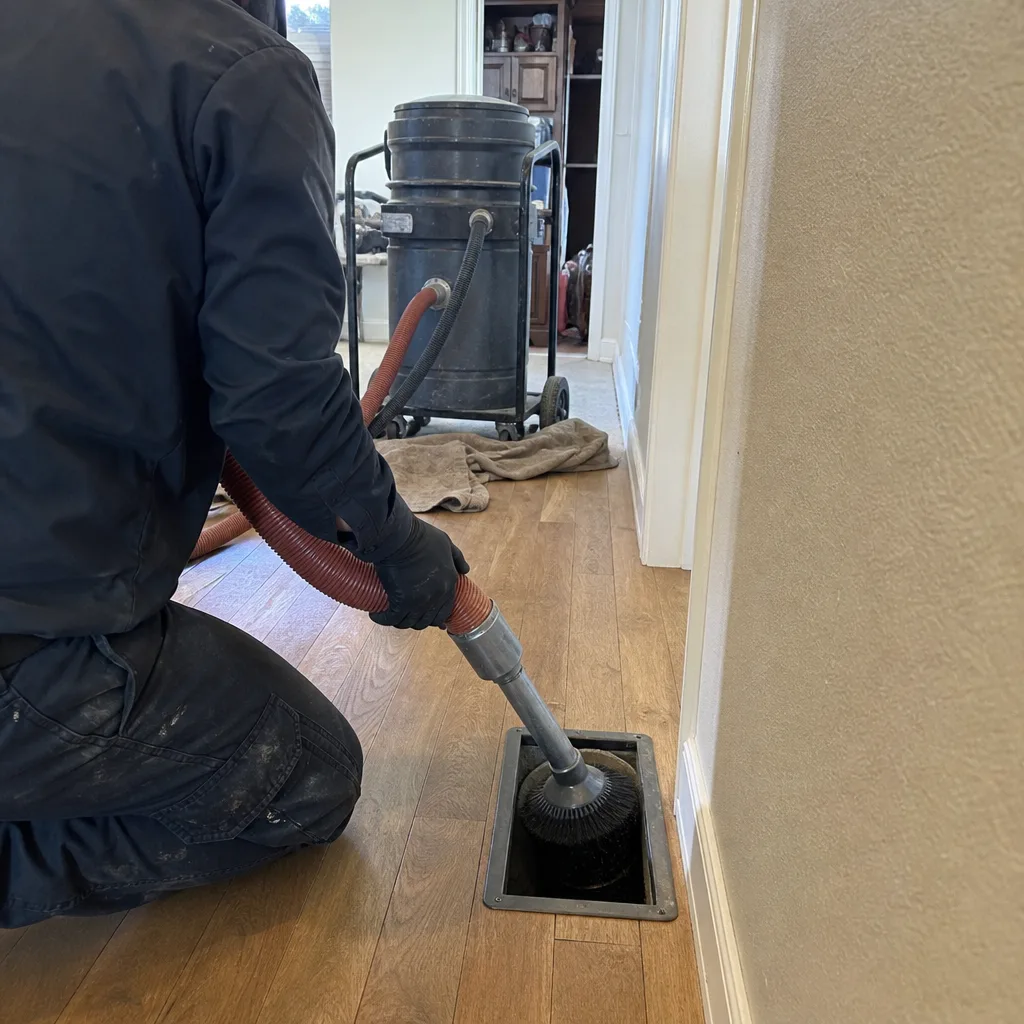
Last updated November 16, 2026
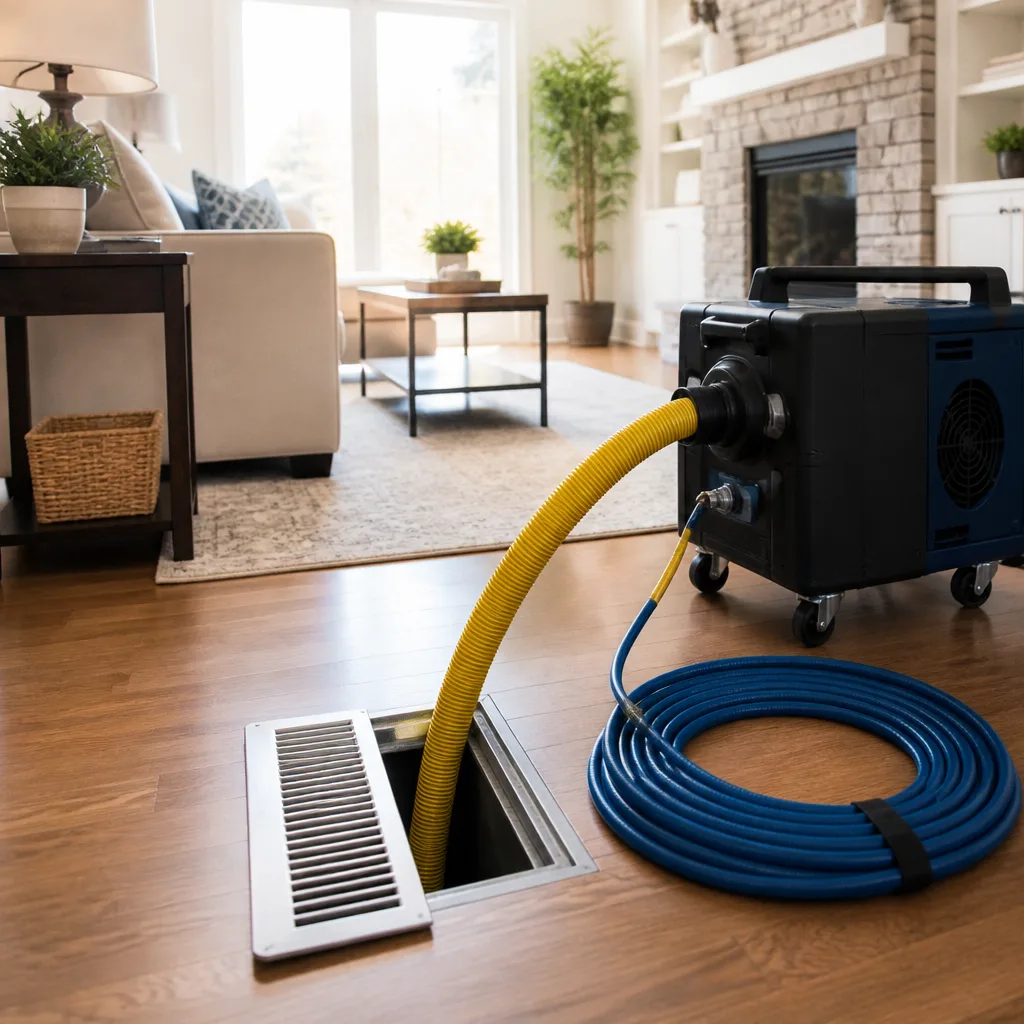 Whole-home duct cleaning
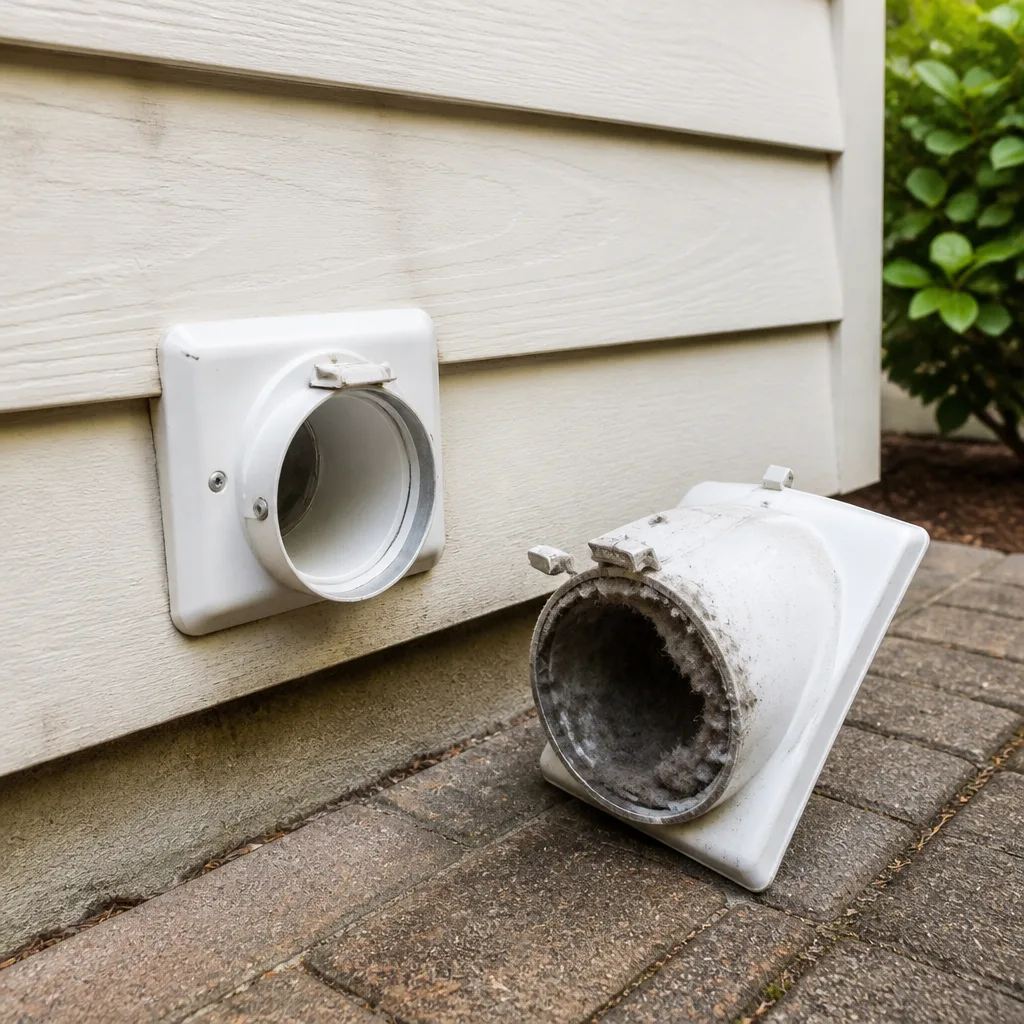 Dryer vent cleaning
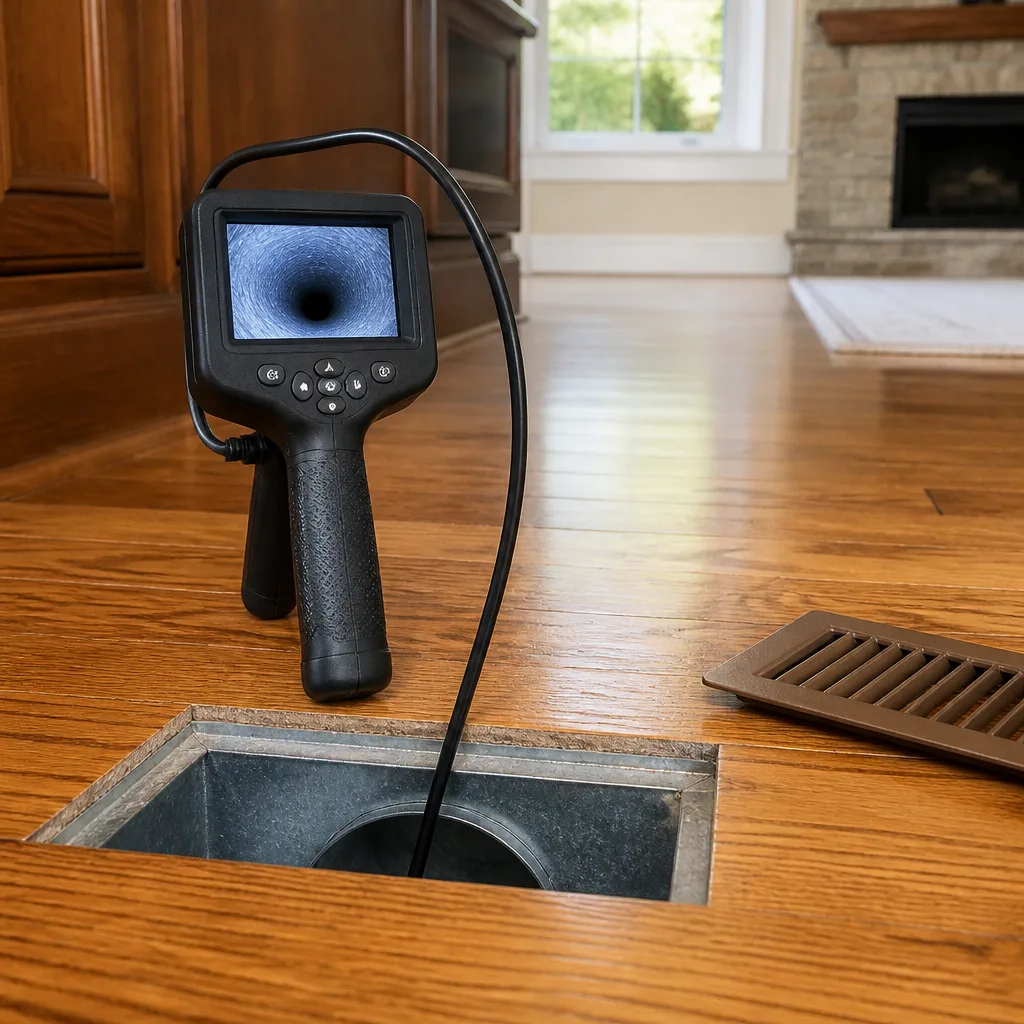 Camera inspection
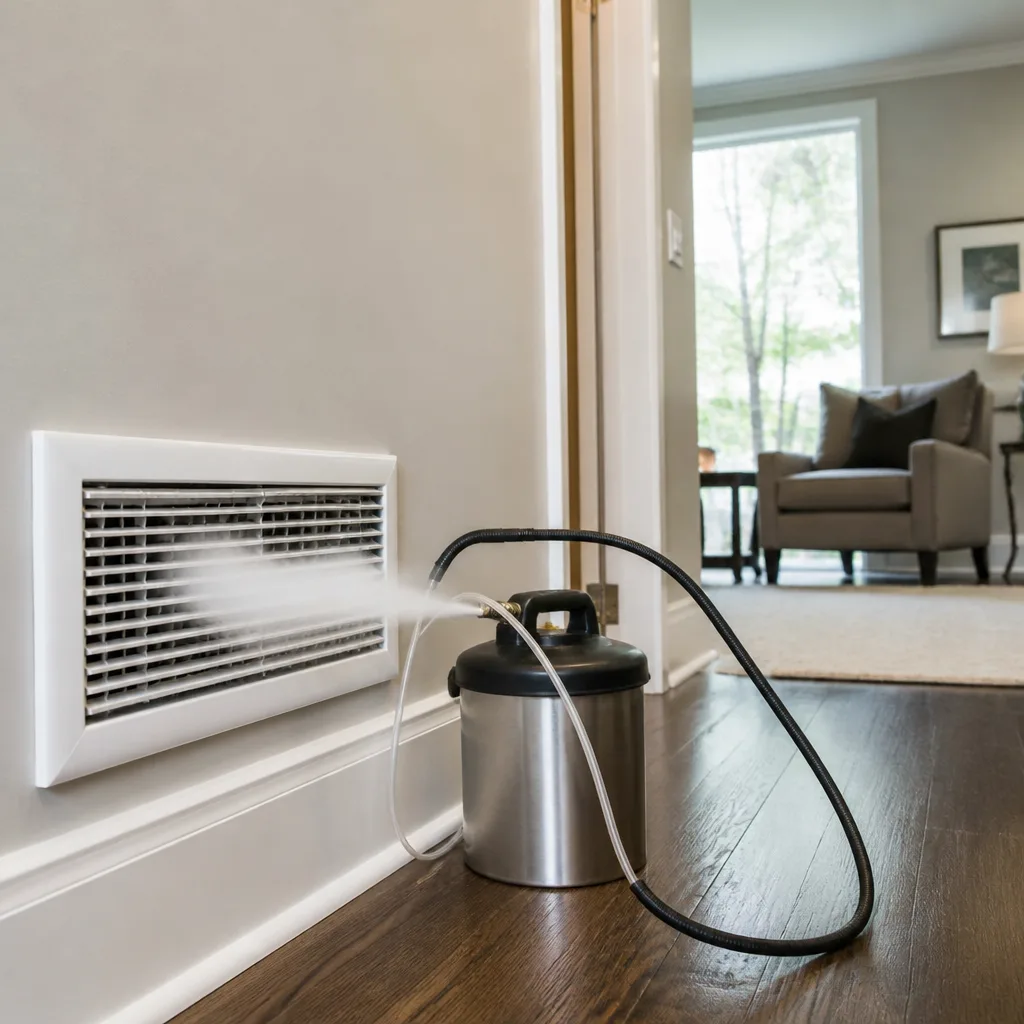 Sanitizing & deodorizing
Whole-system duct and dryer vent check with before-and-after photos - you see exactly what came out of your vents
That "$99 whole-house special" is a bait ad - the real number appears once they are in your hallway, or the "clean" is a shop-vac at the register. We photograph the inside of your ducts before and after instead.
The Complete Guide to Air Duct Cleaning in Kent
Most air duct guides are written for Phoenix or Atlanta. Kent, WA gets roughly 38 inches of rain a year and sits in a valley that traps wildfire smoke from the Cascades and eastern Washington. That combination means your ductwork is dealing with a very different set of threats than most online advice assumes.
We’ve opened enough duct systems around Kent to know the difference. This guide treats Kent ducts as a local engineering problem, not a universal maintenance task. You’ll learn how our marine climate encourages growth inside flex duct, why a big share of Kent homes have undersized returns, how to tell real source-removal cleaning from a vacuum pass, and when cleaning stops being the answer and repair begins.
Quick Answer
Air duct cleaning in Kent is a source-removal process: a truck-mounted vacuum pulls the whole system under negative pressure while a rotary brush and air tools loosen debris from every trunk and branch, and the machine collects what comes loose instead of blowing it back into your rooms. It matters more in Kent than in a dry climate because steady damp keeps organic dust viable for microbes and roughly nine months of closed-window living lets smoke-season particulate settle inside the ducts.
Styles & brands we work with
- Whole-home duct cleaning
- Dryer vent cleaning
- Camera inspection
- Sanitizing & deodorizing
Table of Contents
- Why Kent Ducts Need Different Advice
- How Kent’s Marine Climate Feeds Contamination
- The 1970s – 1990s Construction Boom and Undersized Returns
- Source Removal vs. What Some Companies Actually Do
- How to Read a Post-Cleaning Verification Report
- When Cleaning Isn’t Enough: Repair and Partial Replacement
- The Equipment That Changes the Result
- Filtration and Whole-Home Air Quality
Why Kent Ducts Need Different Advice
Kent sits in the Green River Valley, and the geography works against your ducts in two ways at once. Wet air moves in from Puget Sound and doesn’t leave quickly; the valley holds it. Then in late summer, smoke from regional fires settles into that same basin.
Put those together and the inside of a residential duct system sees more moisture than a desert climate and more airborne fine particulate during smoke season than most of the country gets in a year. The two don’t cancel out. They stack. A light coating of settled dust absorbs moisture and becomes a substrate. Then smoke particulate binds to that film, and the next damp stretch keeps it biologically active.
What makes Kent specifically awkward is the building stock this plays out in. Neighborhoods like East Hill, Panther Lake, and the older parts of the Kent Valley have a mix of original 1970s and 1980s sheet-metal trunk lines, mid-1990s flex branches, and plenty of retrofit work done by different contractors across decades. In the same house you can find galvanized steel in good shape, flex duct that has slumped and puddled slightly at a low point, and a disconnected joint hidden above a soffit. Generic advice doesn’t help here. What helps is knowing the actual condition of your system, what material it’s built from, and where the moisture is sitting.
That’s why we treat a Kent duct cleaning as an assessment first. Professional-grade equipment tells you more when you know what it’s looking at.
How Kent’s Marine Climate Feeds Contamination
Flex duct is the weak link in wet climates. A length of insulated flex has a corrugated inner liner, and that corrugation catches debris that a smooth sheet-metal wall would let slide by. Add humidity and it becomes a nursery.
Kent’s damp season is long. From fall through spring, outdoor air is close to saturation a lot of the time, and the return side of an HVAC system pulls that moist air through a filter and often straight into the ductwork. A standard filter catches the big material. It doesn’t stop the moisture. Condensation forms on cool duct surfaces in unconditioned spaces, and where there’s condensation, there’s a surface that supports microbial growth.
Here’s what that looks like on a typical job:
- A musty, wet-cardboard smell on the first cool day the furnace runs. That odor is coming from the ducts, not the furnace itself.
- Flex runs sagging between hangers, forming low spots where moisture collects.
- Dark staining or visible film on the inside of the liner that a flashlight reveals when you look up a return.
- Bathroom and laundry exhaust that vents too close to an outdoor air intake, pulling damp air back into the system.
We use Abatement Technologies air scrubbers and negative-air equipment on-site in part because of this. When you disturb a moist, biologically active film of dust, you don’t want the loosened particulate floating back into the living room. You want it captured at the source. That’s the practical reason filtration control on the job site matters so much more in Kent than a national guide would suggest.
Better air starts inside the system, not just at the filter. When the duct interior is the problem, changing a filter more often only slows the cycle.
The 1970s – 1990s Construction Boom and Undersized Returns
Kent grew fast during the 1970s, 1980s, and 1990s. A lot of housing went up quickly, and return-air sizing was often treated as an afterthought. That single fact shapes how dirty ducts behave in this city.
A return duct that’s too small for the airflow forced through it moves air faster than it should. Fast air carries more debris and drops it at elbows, transitions, and the return plenum. Put that inside corrugated flex and the debris builds up in exactly the places the next round of air passes over. Over years, an undersized return concentrates contamination faster than a properly sized system of the same age and occupancy.
We see a few recurring patterns in Kent’s older housing:
- Undersized return trunks in homes where the original design prioritized supply coverage and gave the return whatever space was left.
- Mixed materials where decades of remodels spliced flex onto original steel without matching the sizing.
- Long, unsupported flex runs added to reach a new addition, with slack that sags and collects moisture.
- Disconnected joints above finished ceilings after a kitchen or bathroom remodel.
- Sealed-off old branches left in place during an upgrade, now quietly accumulating debris and never getting any airflow to keep them dry.
None of this is a knock on Kent housing. It’s simply what a fast building boom plus decades of modification produces, and it’s the context a real assessment needs to work with.
Source Removal vs. What Some Companies Actually Do
Real duct cleaning is source removal. Everything else is a filter change with a hose.
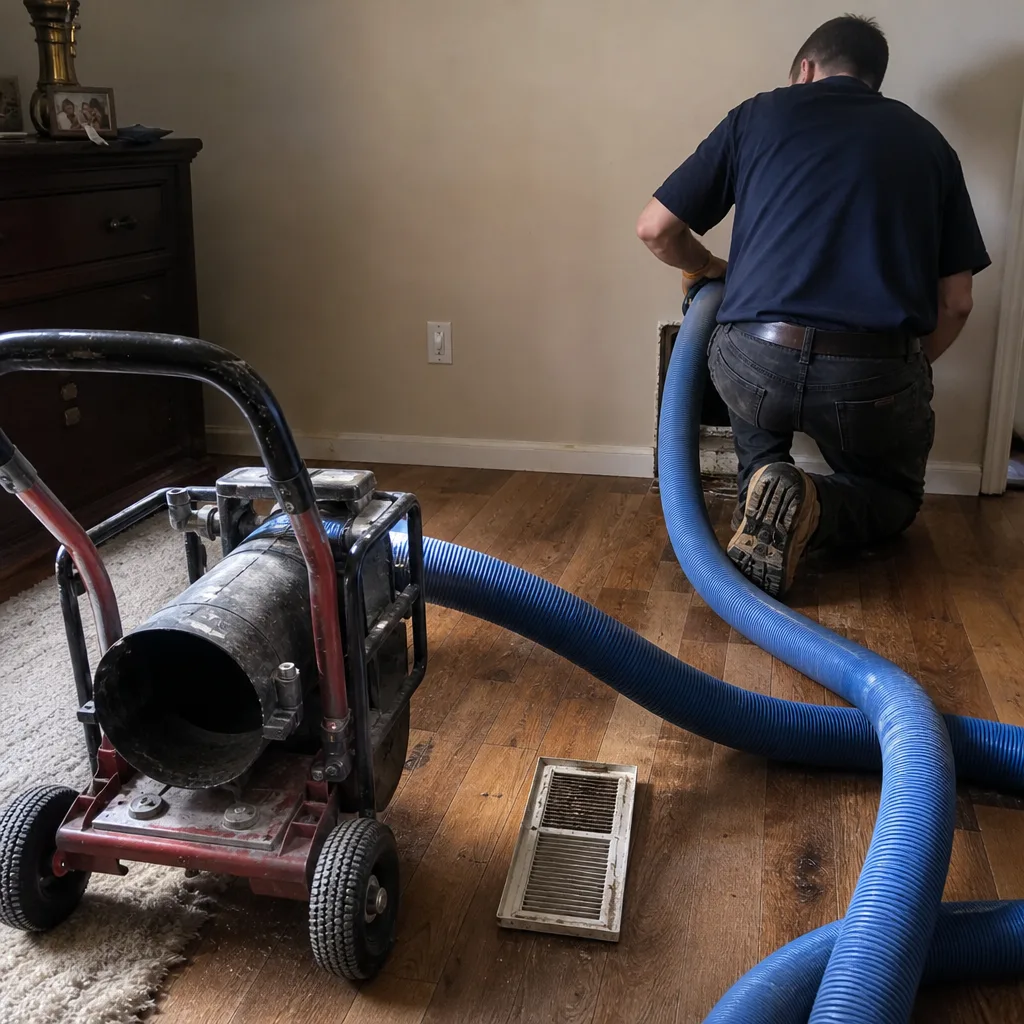
Source removal means the entire system gets put under negative pressure by a truck-mounted or high-capacity vacuum, then agitation tools loosen the debris from every square inch of interior surface while that negative pressure holds it. The debris gets captured, not displaced. A rotary brush reaches the trunk lines and branches a shop-vac can’t. Compressed air tools reach the corners and elbows a brush can’t. You need both, working while the vacuum is running.
Plenty of companies skip part of that. What that can look like:
- Filter-and-vent pass. The technician removes the register covers, vacuums what’s visible inside the boot, changes the filter, and calls it done. The trunk line and branches get no attention at all.
- No vacuum source. A hand vacuum or a shop-vac on the register, without the main system under negative pressure. Debris you loosen just migrates and resettles elsewhere.
- No agitation. Vacuum only, no brush and no air tools, which only removes loose material that happens to be near the suction point.
- No containment. Rotating brushes through a system with no dust control, recirculating fine particulate into your home during the process. This is the one most people never think to ask about, and the one that causes the headache and the mess.
Your ducts are only as clean as the process used to clean them. If a bid seems unusually low, ask what the technician actually plans to touch. If the answer doesn’t mention the whole system under negative pressure plus mechanical agitation, you’re likely looking at cleaning that won’t do what you paid for.
For a closer look at the process, see our page on air duct cleaning.
How to Read a Post-Cleaning Verification Report
You shouldn’t have to take anyone’s word for it. A proper job includes before-and-after photos of your own ducts, not stock images, plus a written record of what was serviced.
Ask the technician what you’ll get when the job is done. A professional result includes:
- Before-and-after photographs of the interior of at least your main trunk lines, labeled so you can see which photo belongs to which run.
- Notes on any areas that couldn’t be fully cleaned because of access limitations or because a damaged section needed repair before cleaning could succeed.
- A list of every register and return serviced, matched against the count in your home, so you can confirm none were skipped.
- Written observations about duct condition, including any disconnected joints, damaged liner, or moisture problems found.
- Filter recommendations specific to your system, not a default.
Read it for what’s missing as much as what’s there. If there are no photos of the inside of the ducts, no notes on condition, and no record of which vents got attention, you don’t have verification. You have a receipt.
In our experience, homeowners who ask for the report before the job starts get a better outcome. The technician knows what’s expected, and you know how to check.
When Cleaning Isn’t Enough: Repair and Partial Replacement
Sometimes cleaning a damaged system is the wrong answer. This is where an honest assessment separates a real technician from a salesperson with a shop-vac.
Cleaning works on ductwork that’s intact. It can’t fix a disconnected joint, a crushed section, or a liner that’s structurally broken down. If we clean a flex branch that’s fallen off its collar above a soffit, the cleaning is wasted and the problem is still there.
In Kent, a few conditions show up often enough to call out:
- Disconnected flex at a collar after a remodel or a poorly installed addition. The system has been losing air into a joist cavity and pulling unconditioned air in through the gap.
- Crushed or collapsed flex in a tight attic or crawlspace run, where the liner is pinched closed and airflow is choked past it.
- Water-damaged liner where the interior has degraded past the point of recovery, especially in wet housing stock.
- Sealed-off dead branches accumulating debris that a moving-air cleaning process can’t reach and that should be removed or properly isolated.
In those cases, the technically correct answer is duct repair or partial replacement of the affected run. We clean it. We fix it if it’s broken. That distinction is the whole point of working with a duct specialist instead of a general HVAC contractor focused on equipment. For a full picture of the services we offer, the home base is Duct Cleaning Kent.
The Equipment That Changes the Result
Equipment is the difference between a service and a gesture. We mention brands because they tell you what kind of operation is showing up.
Rotobrush rotary-brush systems are purpose-built for duct interiors, with a rotating brush head on a flexible whip that scrubs the walls as it advances. The same equipment is used by certified restoration contractors, and that’s not a coincidence: restoration requires real source removal after a water event, and this is the tool that achieves it. Nikro vacuum and collection equipment handles the extraction side, pulling high volumes of debris out of the system into a collection vessel instead of back into the room. Abatement Technologies air scrubbers and negative-air equipment control what’s in the air on-site while the work happens.
What a generalist HVAC company often brings is a shop-vac with a wand, sometimes a camera, and no dust control. That’s not a knock on generalists. Their skill is in the furnace, the coil, and the thermostat. Duct interiors are a separate trade with separate tools.
The right set of equipment working together looks like this:
- Connect the collection vacuum to the main trunk, putting the whole system under negative pressure.
- Set up air scrubbing and containment at the work area to protect indoor air during the process.
- Run the rotary brush through every trunk and branch through an access point, then follow with air tools at elbows and corners.
- Work through each register and return boot individually, brushing and pulling to the vacuum as you go.
- Photograph the interior at completion, before packing up.
Filtration and Whole-Home Air Quality
Once the ducts are clean, keeping them clean is a filtration conversation. This is where Kent homeowners often get generic advice that doesn’t fit their actual system.
We work with Honeywell and Aprilaire filtration products, so we can look at your existing setup and give you specific advice on what fits. A whole-home media filter sits at the equipment, catches finer particulate than a standard pleated filter, and lasts longer. That matters in a city where smoke-season particulate loads the filter faster than you’d expect from the calendar. A media filter with the right MERV rating for your blower can also help your equipment run without strain.
What we don’t do is tell every homeowner to buy the same thing. Return sizing in your Kent house, whether the duct run is mostly steel or flex, and your indoor humidity profile all change the recommendation. A product that’s right for a well-serviced 1990s home with matched equipment may not suit a 1970s home with an undersized return and a retrofit filter box.
Get the ducts clean first. Then make filtration decisions with a technician who’s actually looked inside.
Common Mistakes to Avoid
- Choosing on price alone. In Kent, a bid that’s significantly below the rest usually reflects a filter-and-vent pass rather than a full system clean. Ask what the process actually involves before you compare.
- Skipping the duct inspection after a remodel. Additions and remodels regularly leave disconnected flex or crushed runs above finished ceilings. Get the system inspected, not just cleaned.
- Ignoring a musty smell in the fall. The first cool run of the furnace often reveals a moisture problem that’s been building all summer. Treat it as a diagnostic signal, not a nuisance.
- Replacing filters without addressing the source. A new filter on top of contaminated ductwork only catches what the ducts send it. Clean the system, then filter.
- Letting a contractor clean a damaged duct. If there’s a disconnected joint or a collapsed section, cleaning doesn’t fix it. The system needs repair before the cleaning does you any good.
- Accepting a job without photos or a written report. Before-and-after photos of your own ducts and a record of which registers were serviced are the minimum. If the technician doesn’t offer them, ask.
- Forgetting the dryer vent. Dryer vents are a fire risk, not a nuisance task, and Kent homeowners often lump them in with duct cleaning or skip them entirely. They’re a separate service with their own safety rationale.
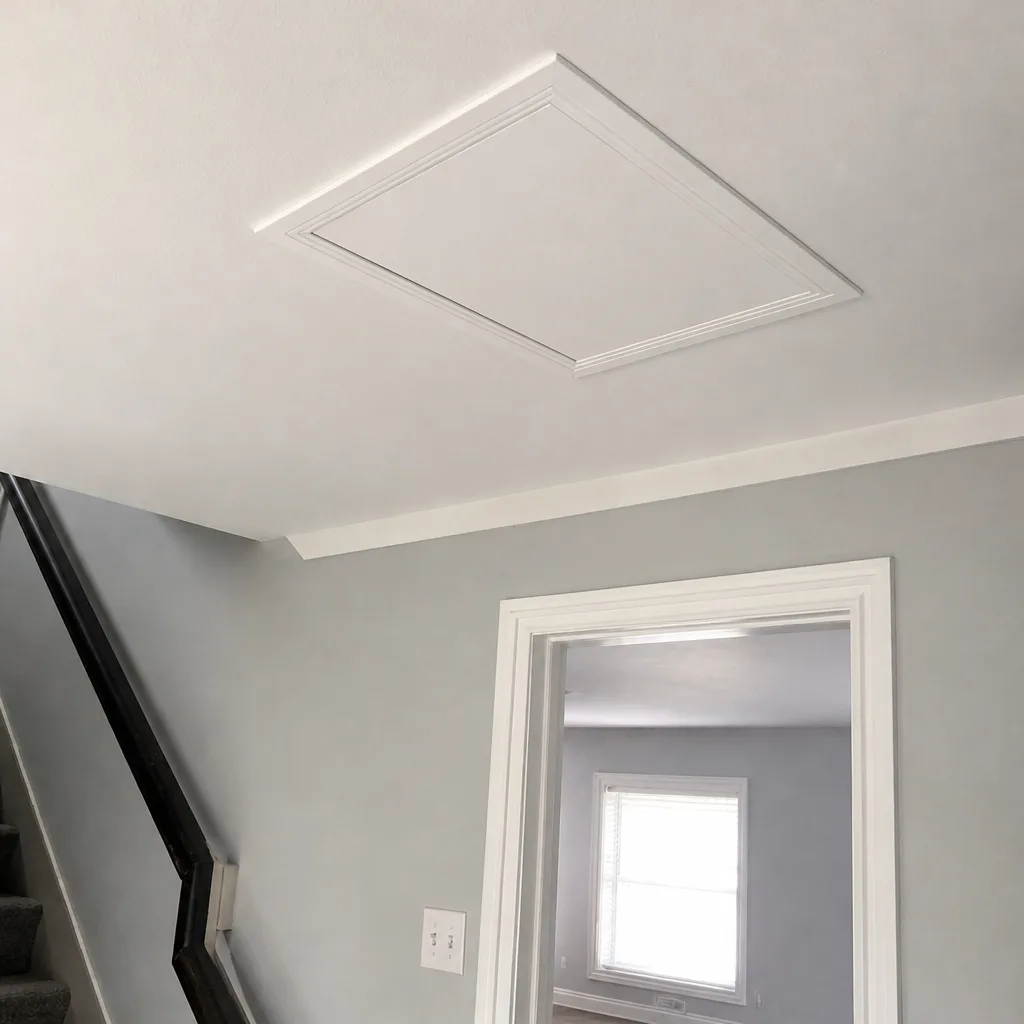
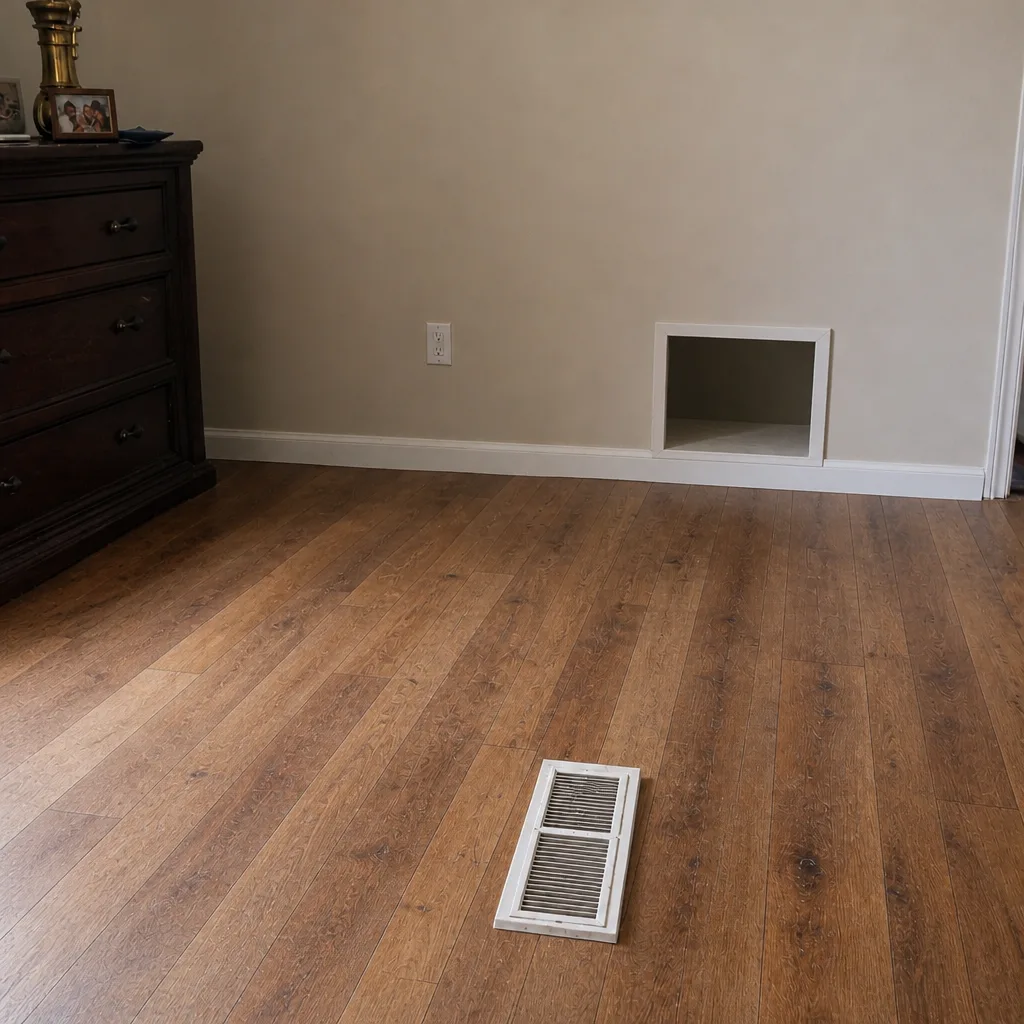
See the difference
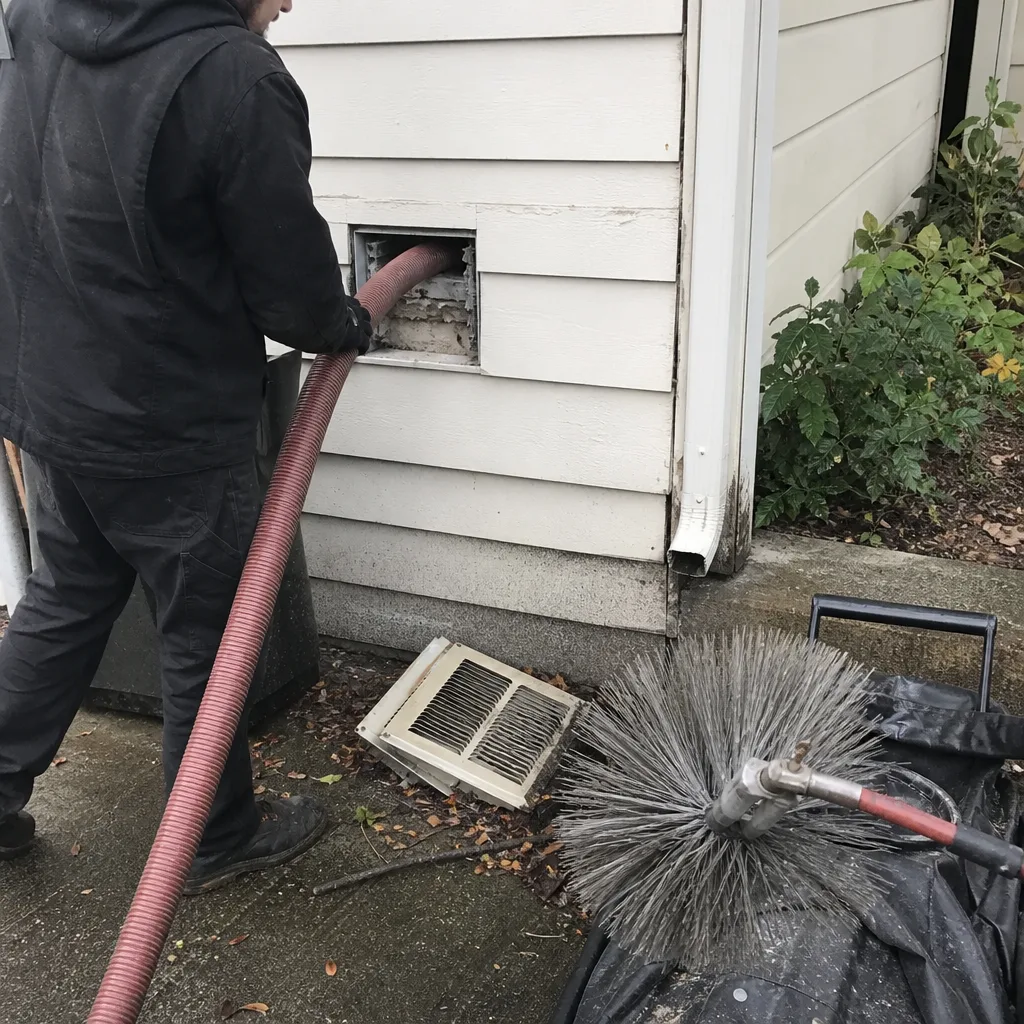 Before
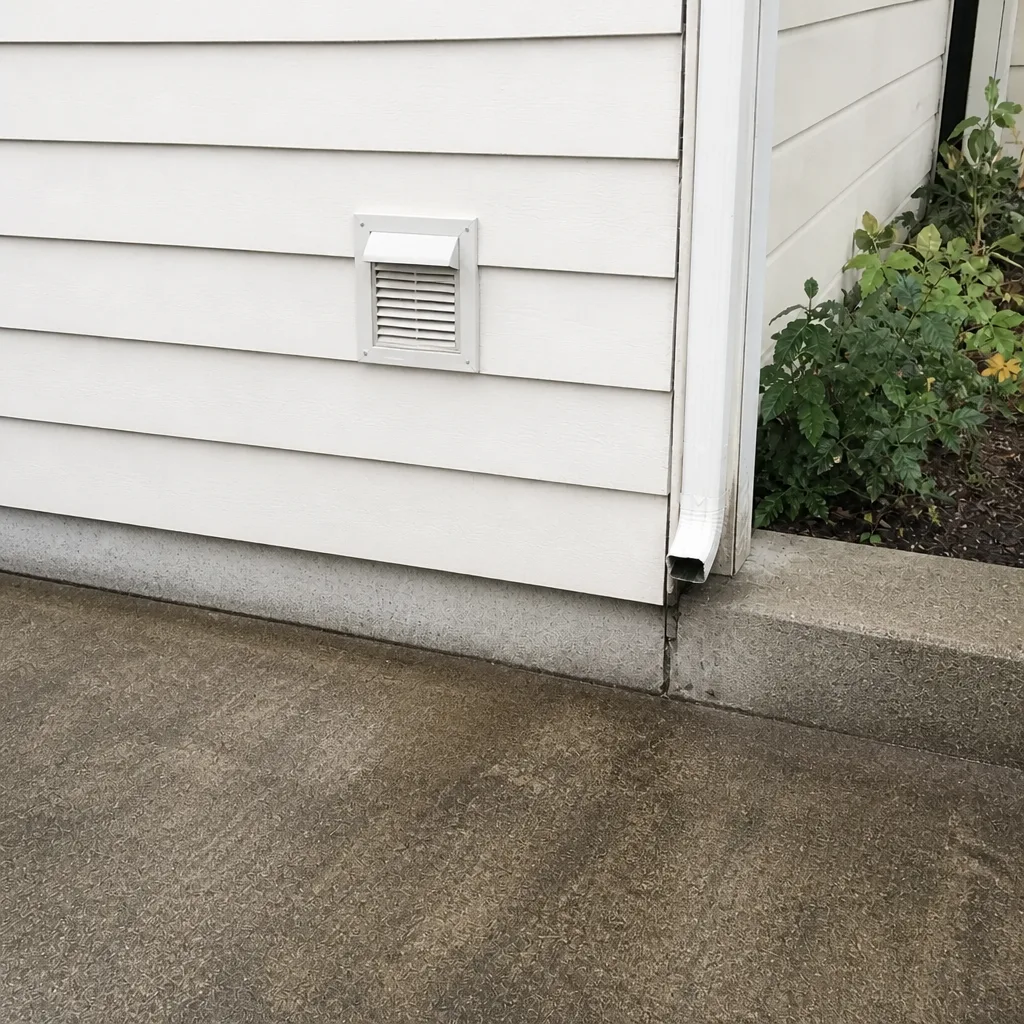 After
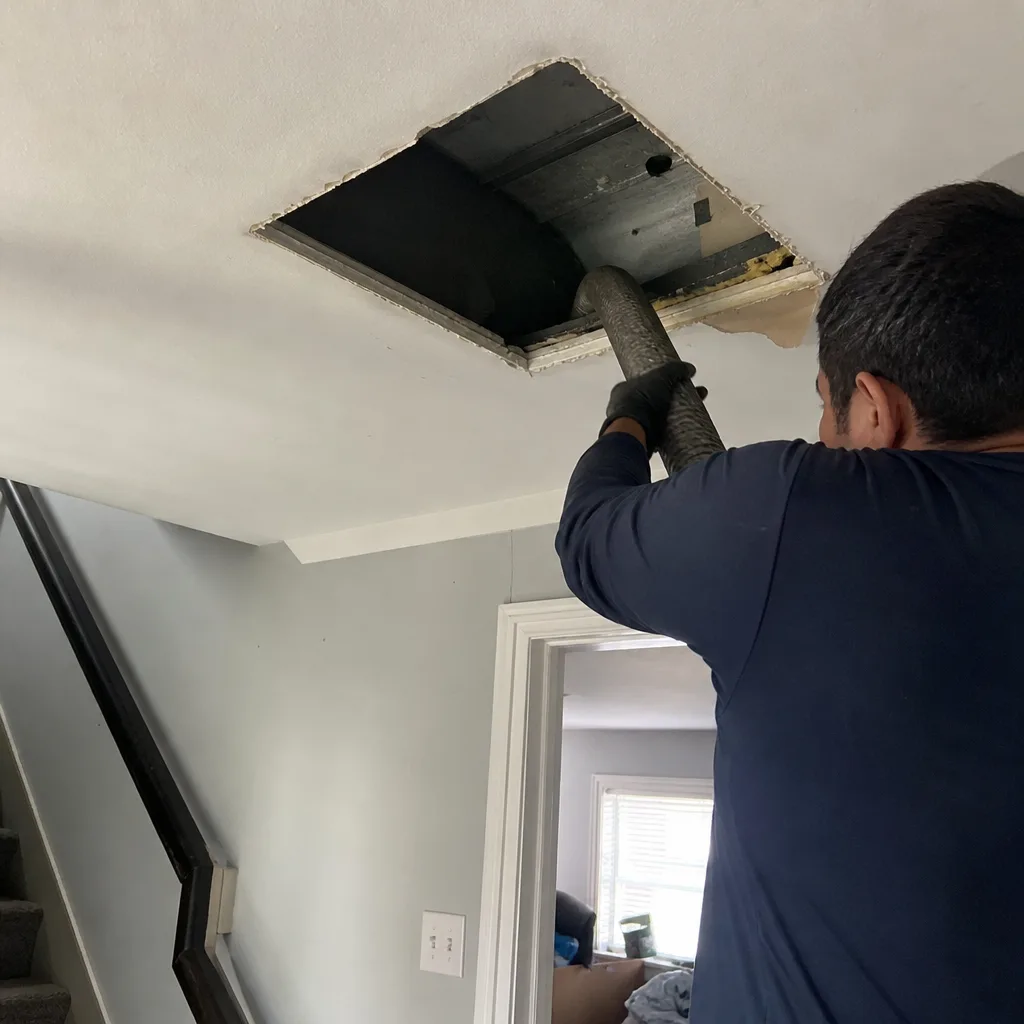 Before
 After
 Before
 After
When to Call a Professional
Some situations clearly point to a professional. If you’ve never had the ducts serviced since moving into a Kent home, start there. If a remodel or addition happened in the last five years, get the system inspected, because remodels are where disconnected joints hide. If you smell mustiness every time the furnace comes on in fall, or you’re noticing more dust on surfaces than you used to, or anyone in the house is dealing with persistent allergies or asthma triggers, an inspection and assessment will tell you what’s actually happening.
For the dryer vent, if it’s been a year or more or you notice lint accumulating behind the dryer, that’s a safety call, not a maintenance item.
Duct Cleaning Kent offers free estimates in Kent. Call (866) 761-6504. We answer 24/7. Fast dispatch from 7am to 7pm.
Frequently Asked Questions
Most residential jobs in Kent fall into a whole-system estimate agreed before the work starts, based on the size of the system and the condition of the ductwork. We don’t quote per vent or promote a teaser price that grows once the technician is on site. Call (866) 761-6504 for an exact quote on your home; estimates are free.
Because the work being done is different. A low bid often means a vacuum pass at the registers with no rotary brush on the trunk lines, no air tools at the elbows, and no dust containment. That’s a filter change and a wipe-down. If you compare bids, compare what’s actually included: full system under negative pressure, mechanical agitation, air scrubbing on-site, and before-and-after photos of your own ducts. Call (866) 761-6504 to talk through what a real job involves.
You get before-and-after photos of the interior of your own ductwork, a written record of which registers and returns were serviced, and notes on condition or access issues found during the job. Ask for that report before the work starts and hold the technician to it. Call (866) 761-6504 to book a free estimate and see what the report covers.
There’s no single interval that fits every Kent home. It depends on the system’s condition, the material, the filter you use, whether the house has pets or recent remodeling, and whether anyone in the house has respiratory sensitivity. For most homes, an inspection every few years plus cleaning when the inspection calls for it is the right approach. Homes with heavy remodeling, indoor pets, or moisture issues may need more frequent attention. Call (866) 761-6504 to talk through your specific case.
Often, yes. If we find a disconnected flex joint, a crushed section, or a sealed-off dead branch, we can address the repair as part of the service rather than sending you to a separate contractor. If the damage is extensive enough that partial replacement is the right answer, we’ll say so before the work proceeds, not after. For dryer vent work specifically, see our page on dryer vent cleaning.
Yes. Persistent damp through the fall-to-spring stretch keeps settled dust biologically active, softens flex duct liners over time, and creates condensation on cool duct surfaces in unconditioned spaces. That means a Kent home can accumulate meaningful contamination faster than the same home in a dry city. The wildfire-smoke season adds fine particulate that the same ducts then trap through the closed-window months. Call (866) 761-6504 for a free estimate and we’ll tell you what your system actually shows.
The Bottom Line
Kent ducts live in a specific environment: wet coastal air, a valley that holds wildfire smoke, and housing built fast in the 1970s through 1990s with too-small returns and mixed materials. That combination pushes contamination deeper and faster than the generic advice you’ll find online will admit. Clean ducts are a source-removal job done with the right equipment, verified with photos and a report you can read, and sometimes the answer is repair before cleaning. Your ducts are only as clean as the process used to clean them. If you’re ready to find out what’s actually in yours, call (866) 761-6504 for a free estimate. We answer 24/7. Fast dispatch from 7am to 7pm, Sunday through Friday.
Written by the team at Duct Cleaning Kent.