
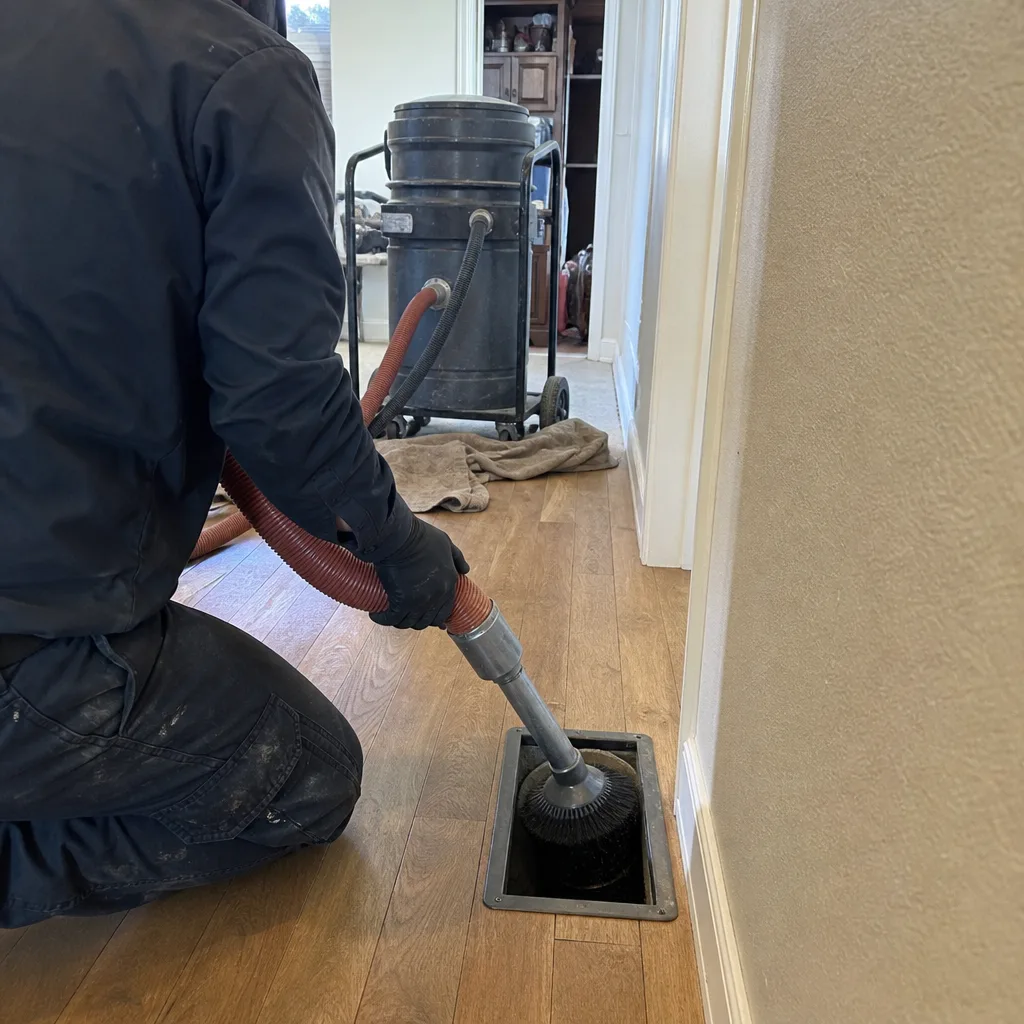
Last updated November 16, 2026
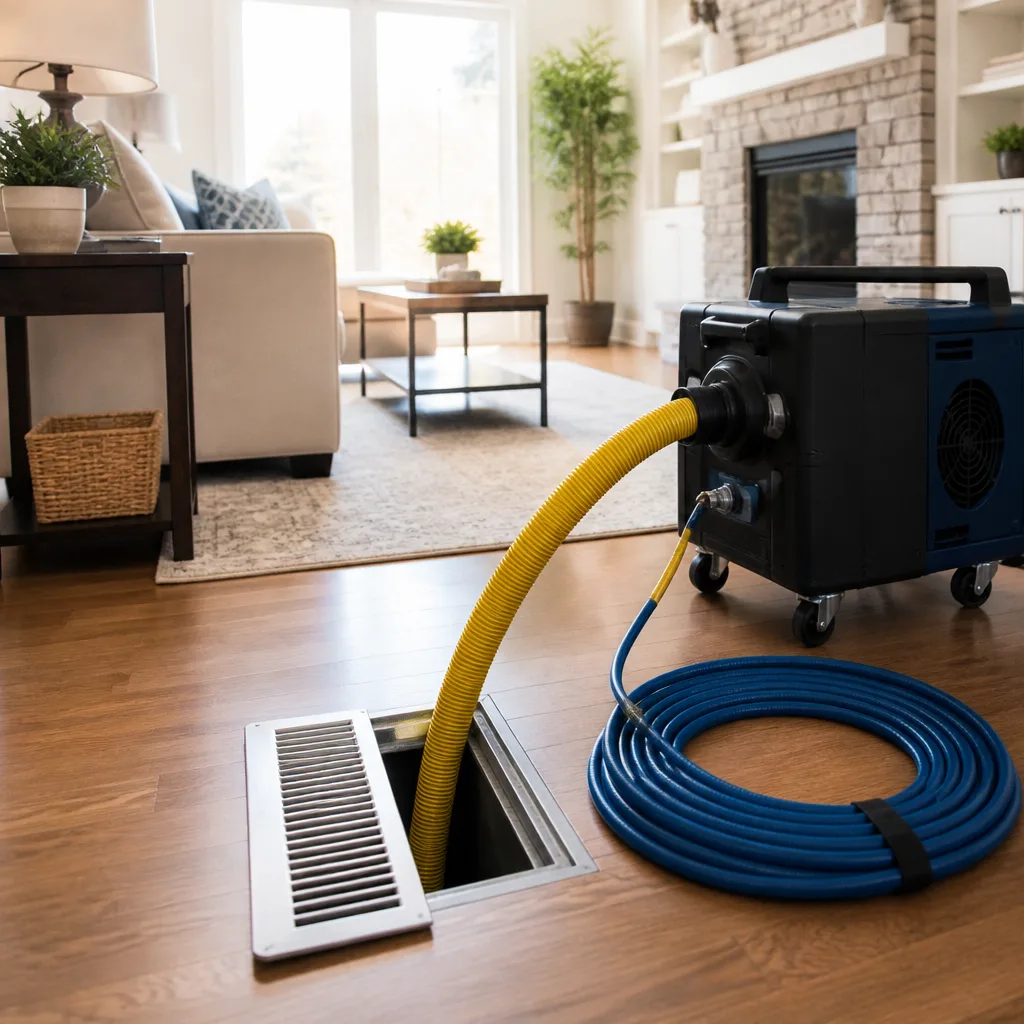 Whole-home duct cleaning
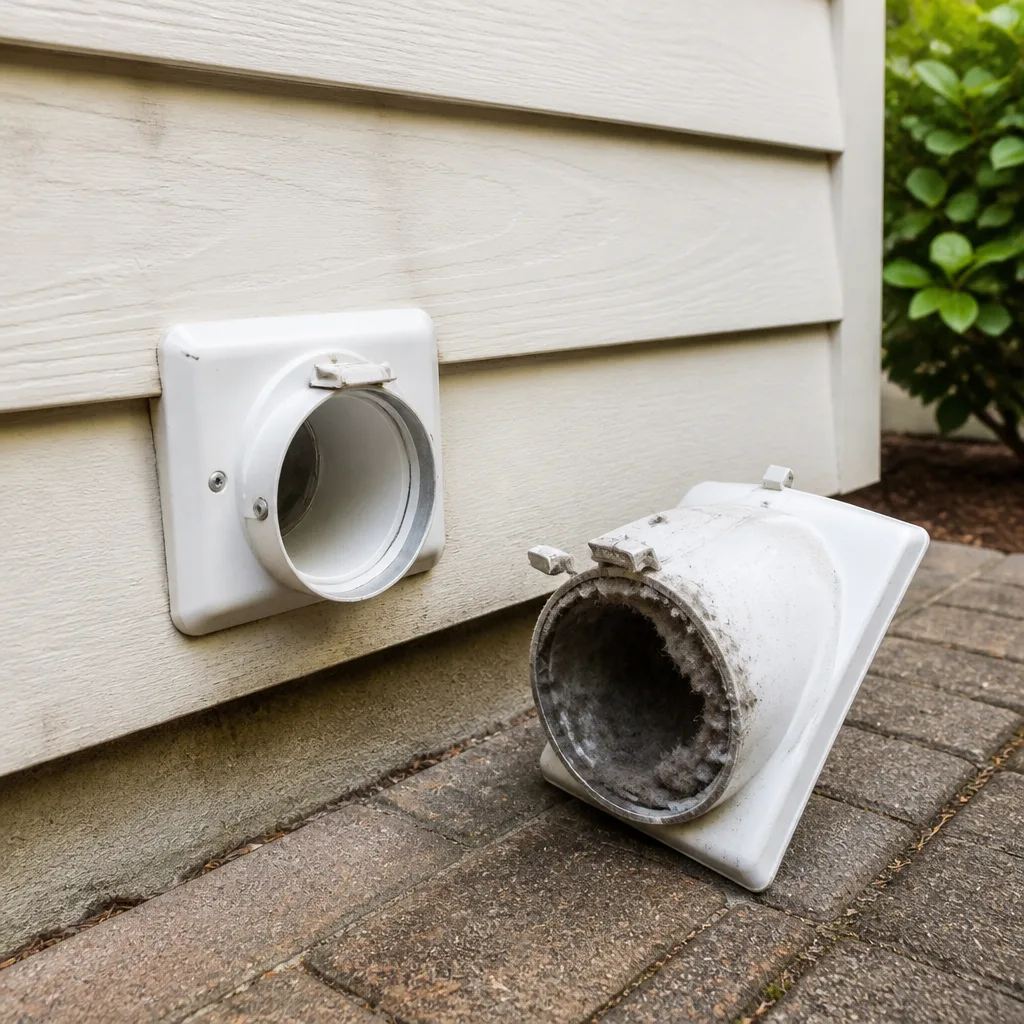 Dryer vent cleaning
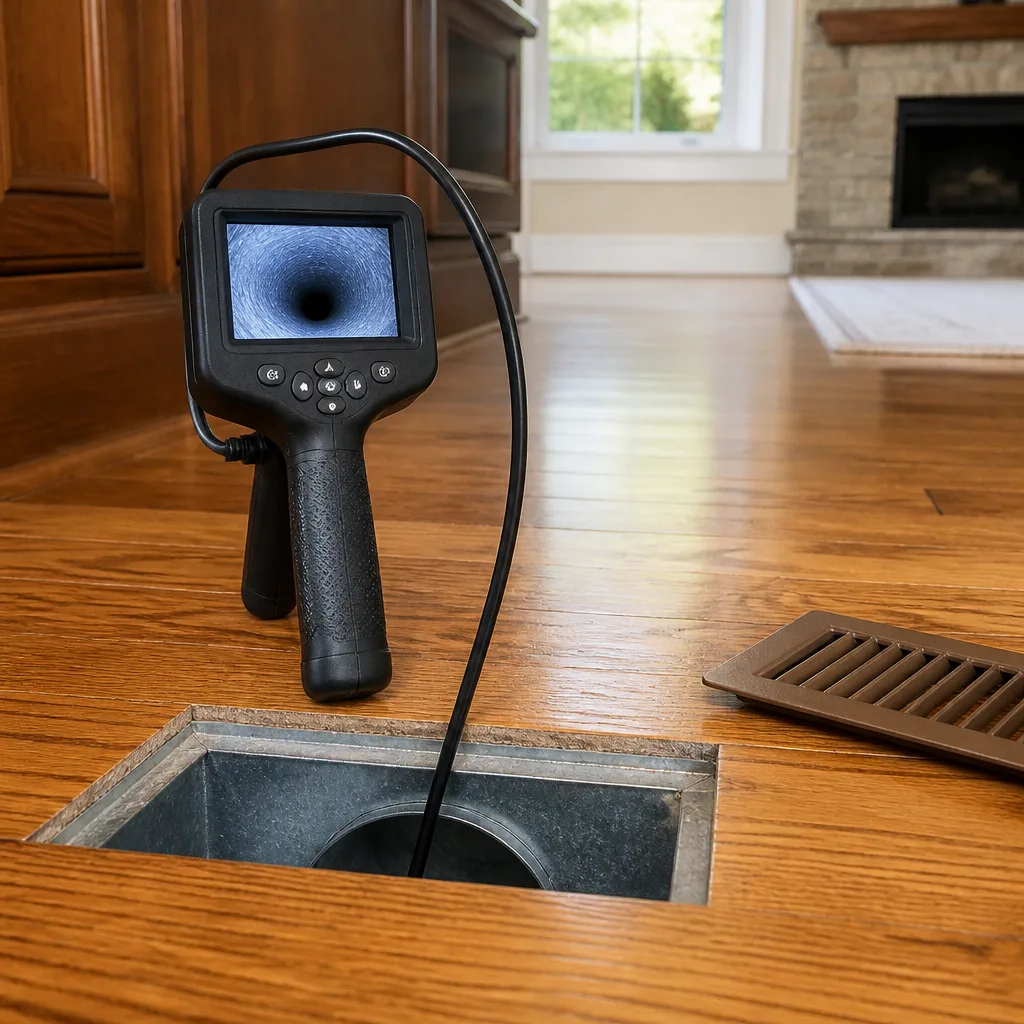 Camera inspection
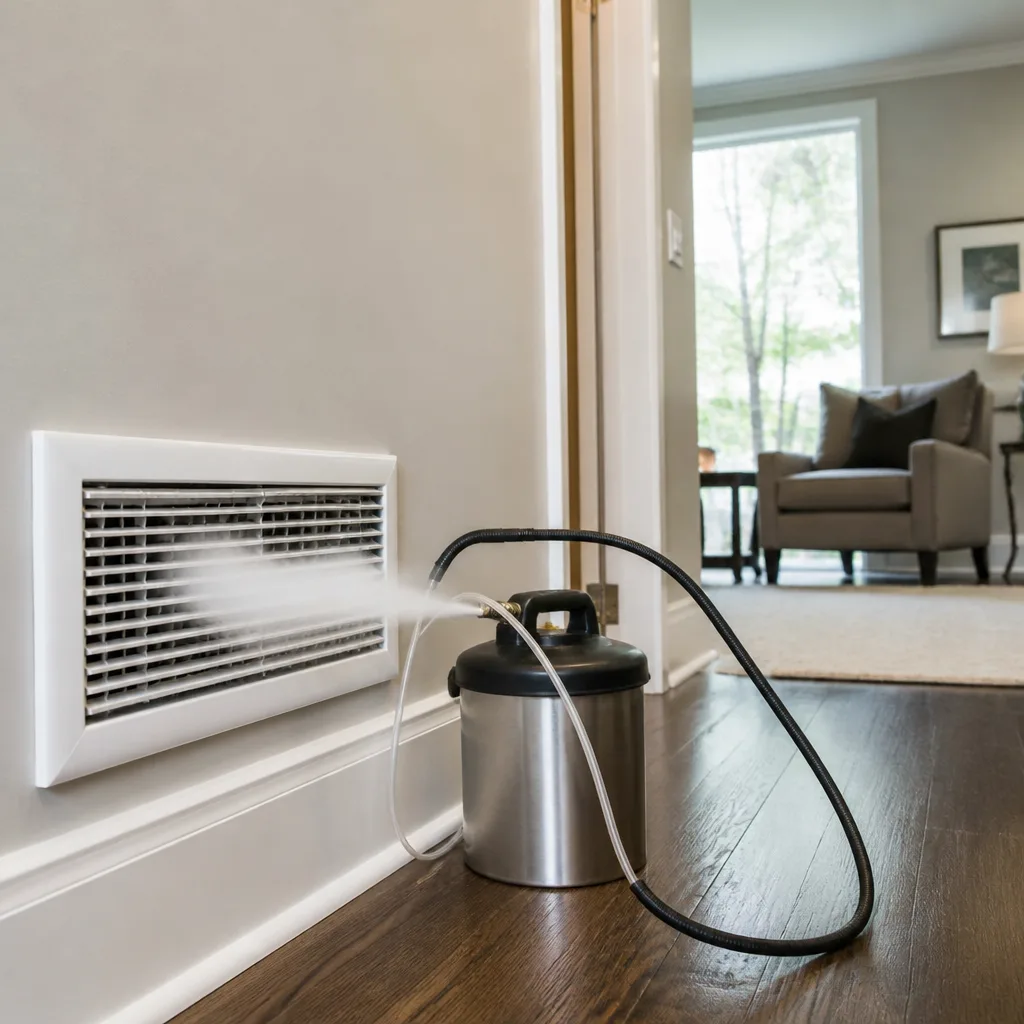 Sanitizing & deodorizing
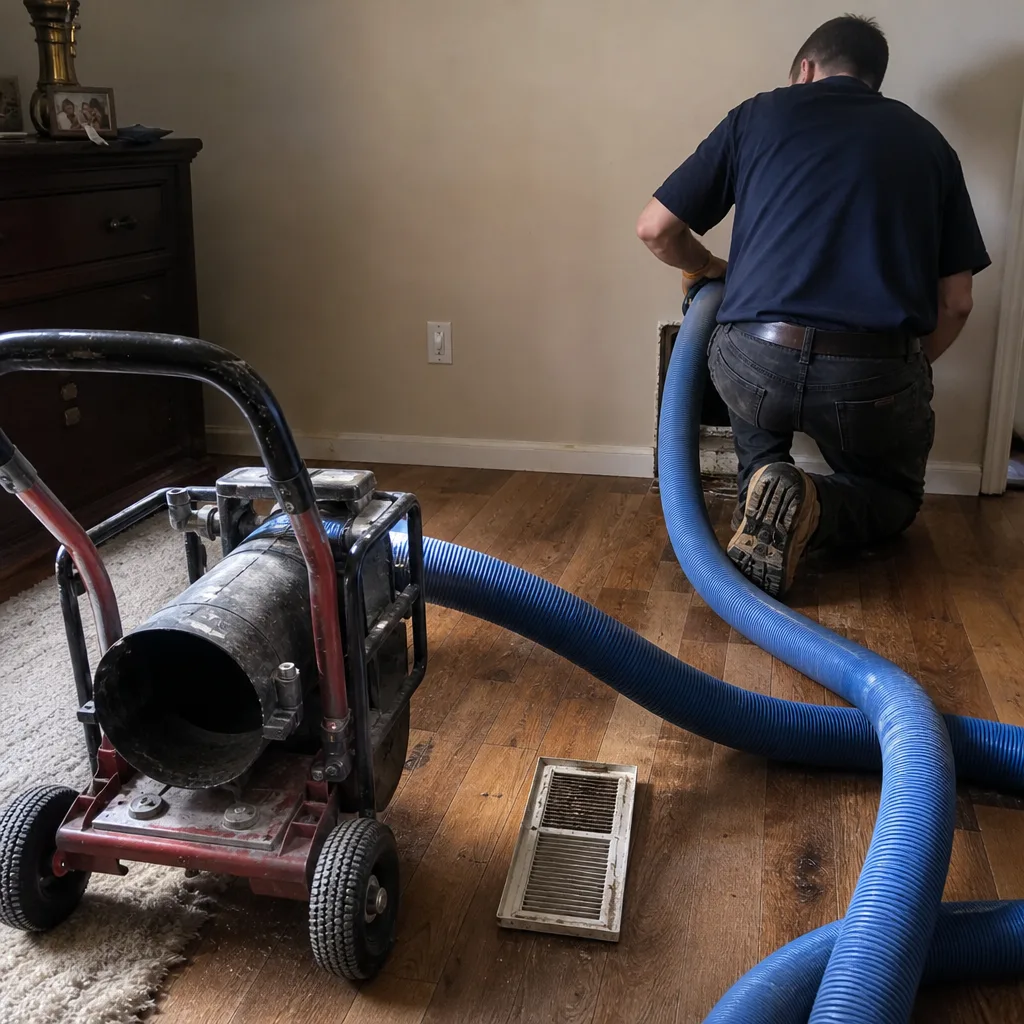
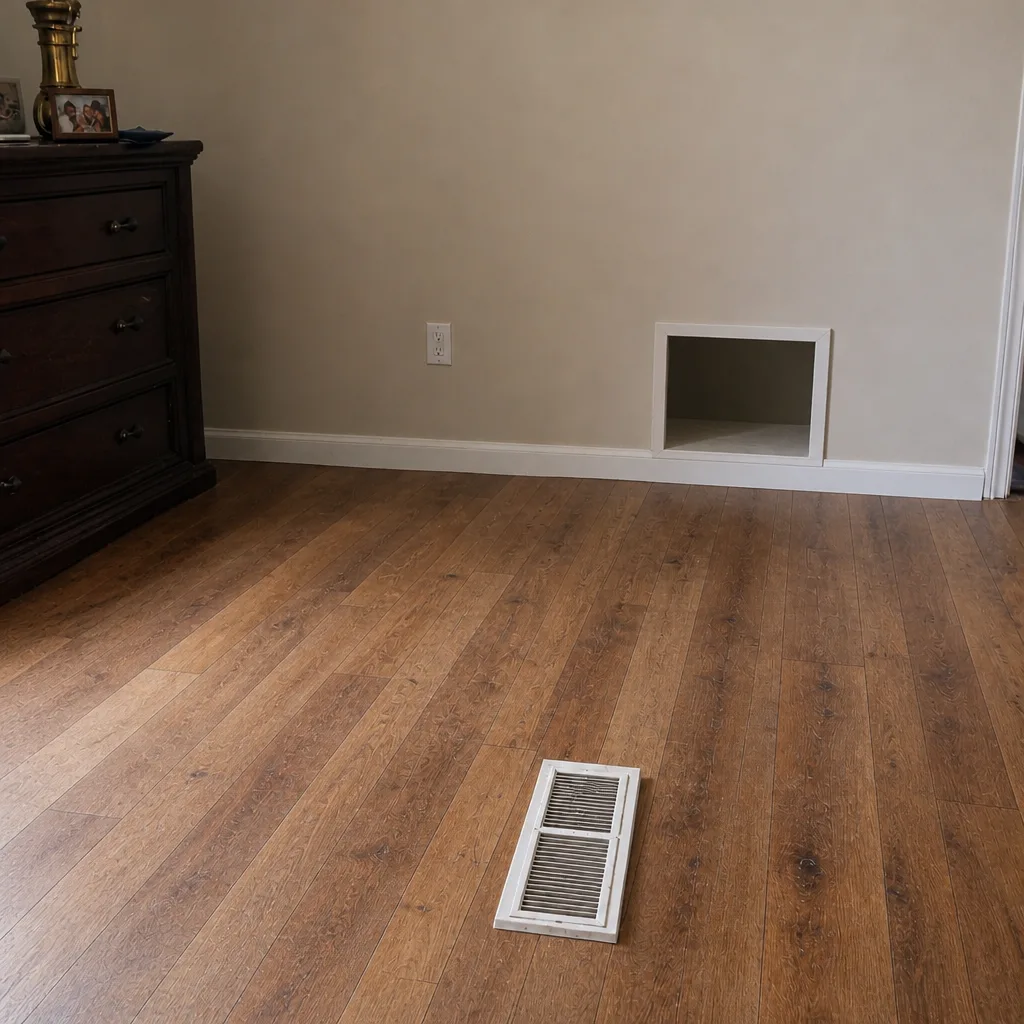
Whole-system duct and dryer vent check with before-and-after photos - you see exactly what came out of your vents
That "$99 whole-house special" is a bait ad - the real number appears once they are in your hallway, or the "clean" is a shop-vac at the register. We photograph the inside of your ducts before and after instead.
Air Duct Cleaning Emergency Preparedness Guide for Kent Homes
When the 2020 wildfire smoke blanketed the Pacific Northwest, most Kent homeowners kept running their HVAC systems, which meant their duct systems spent days pulling fine particulate through every return and depositing it into supply runs where it recirculates long after the outdoor air clears. The instinct makes sense: you want air moving, filtered, cool. But a duct system is a reservoir, not a filter, and it doesn’t empty itself when the sky goes blue again. This guide covers the three emergencies most likely to force urgent duct work in Kent (smoke events, water intrusion, and renovation dust), the response protocol for each, and how to document the damage in a way your insurer will actually accept.
Quick Answer
In a duct emergency, shut down the HVAC system before anything else so smoke or moisture isn’t distributed through the house, then get the system inspected before you restart it. Flooded or smoke-impacted ducts need professional cleaning or repair within days, not weeks, because wet ductwork and settled fine particulate both get harder and more expensive to correct the longer they sit. If the event is part of a larger loss, document duct condition with photos before cleaning begins.
Styles & brands we work with
- Whole-home duct cleaning
- Dryer vent cleaning
- Camera inspection
- Sanitizing & deodorizing
Table of Contents
- Wildfire Smoke Events: When to Shut Down the HVAC
- What Filter Rating Actually Blocks PM2.5
- What a Post-Event Duct Inspection Should Cover
- Flood Response: Cleaning vs. Replacement
- Post-Renovation Drywall Dust Protocol
- Documenting Duct Damage for Insurance
- Who to Call, and in What Order
Wildfire Smoke Events: When to Shut Down the HVAC
The first decision in a smoke event is whether to run the system at all. The answer depends on what kind of filtration is installed, and most Kent homes don’t know the answer until smoke is already in the air.
If your system has only a basic fiberglass or low-MERV filter, and outdoor air quality has dropped into the unhealthy range, shut the system off. Running it pulls smoke through the return, past a filter that wasn’t designed for fine particulate, and deposits it throughout the supply ducts. Every cycle adds to what’s already there. In our experience, the homes that end up needing post-event cleaning are usually the ones where the system ran continuously through the worst of it.
If you have a higher-rated filter (MERV 13 or better) and your system can handle the added static pressure, running the fan on low with the house closed up can help during the event. But that only reduces what enters. It doesn’t prevent deposition, and it doesn’t clean what was already in the ducts.
After the smoke clears, don’t assume you’re done. Duct systems hold fine ash and combustion particulate in seams, at elbows, and on the inside of flex runs. That material keeps getting picked up and recirculated every time the system cycles. The question isn’t whether some particulates reached the ductwork during the event. It’s how much, and whether it needs cleaning.
When smoke is in the air, do this
- Check outdoor air quality on a local monitor, not just the national fire map.
- Close windows and doors and shut off any whole-house ventilation that brings in outside air.
- Determine what filter is installed: check the rating before deciding whether to run the system.
- If the air quality is unhealthy and the filter is low-rated, turn the system off.
- After the event, inspect the ducts before restarting normal operation.
The Kent valley tends to trap smoke and hold it longer than nearby higher-elevation areas, which means a smoke event can linger here after the region’s air quality has improved. That holds true for the whole Kent valley, not just the hills. Timing your post-event inspection to when your specific neighborhood is clear is worth the wait.
What Filter Rating Actually Blocks PM2.5
Wildfire smoke is primarily fine particulate, the fraction small enough to reach deep into the respiratory system. The filter industry measures filtering power with the MERV scale (Minimum Efficiency Reporting Value). For blocking PM2.5, what matters most isn’t the category “HEPA,” it’s the actual capture rating of the filter in a residential furnace system.
As a general rule:
- MERV 1-4: Basic protection. Blocks large debris and visible dust. Doesn’t meaningfully capture fine smoke particles.
- MERV 5-8: Standard residential. Captures larger dust and mold spores. Partial fine-particulate capture at best.
- MERV 9-12: Improved. Better for pollen, smoke, and fine dust. Suitable for most systems.
- MERV 13-16: Highest residential capture, with meaningful PM2.5 reduction. May increase static pressure, so system compatibility matters.
- HEPA (whole-house or standalone portable): Highest capture. Standard residential duct systems weren’t originally designed for HEPA filter pressure drops, so retrofit requires consultation.
The catch: pushing a higher-rated filter into a system that wasn’t designed for it can cause real problems. Pressure drop goes up, airflow goes down, and the blower motor has to work harder. Some systems handle MERV 13 without issue. Others, particularly older units in Kent’s mid-century housing stock, struggle at MERV 11. A blower motor or heat exchanger isn’t cheap to replace.
If you’re running a Honeywell or Aprilaire whole-home filtration unit, the filter should be rated for the specific housing it sits in, and those systems can often support higher-efficiency media. Knowing which filter you have and what’s installed is the difference between knowing whether running the system during a smoke event helps or hurts.
What a Post-Event Duct Inspection Should Cover
A post-smoke-event inspection is not a filter swap. The filter is the easy part. The point of the inspection is to answer two questions: how much particulate has settled inside the ducts, and is there any damage from the event or the process of running the system through it.
Any thorough inspection should cover:
- All accessible supply and return runs: Open a representative sample at the register boots and at the plenum. Fine ash settles where airflow is slow, which is often at the ends of runs and the tops of trunk lines.
- The blower and evaporator coil: Smoke particulate that gets past the filter lands on the coil, and a dirty coil reduces both efficiency and airflow. Confirm the coil fins are clean.
- Flex duct condition: Flex ducts sag and can trap fine particles in the corrugations. Look for visible darkening or dust accumulation inside the liner.
- Seams and connections: Smoke intrusion into a duct system often happens through gaps, not just at the return. Confirm seams are sealed and that disconnected runs aren’t leaking into wall or ceiling cavities.
- Filter housing and cabinet: The area directly around the filter can accumulate smoke particulate that never enters the ducts but keeps getting reintroduced.
In Kent homes we’ve worked on, the most common post-event finding is fine ash concentrated in the return trunk and the last few feet of the supply runs. That’s the pattern you’d predict: the return brings everything into the system, and the supply ends are where airflow drops and settling happens. Finding that pattern is not the same thing as knowing how much to clean. The inspection should include a clear statement of what was found and what cleaning or repair is recommended.
Flood Response: Cleaning vs. Replacement
A wet duct system is a more urgent problem than a smoky one. Flood or water intrusion into ductwork creates the conditions for mold growth, and mold doesn’t wait for a convenient scheduling window. Depending on moisture, temperature, and material, visible mold growth on duct surfaces can begin within days of water exposure. The exact timeline depends on conditions, but the operating principle is the same: get the ducts dry and evaluated fast.
What to do, in order:
- Stop the water source first. Don’t try to dry the duct system while water is still entering it.
- Shut off the HVAC system. A wet system that continues to run distributes moisture and spores through the house.
- Document the damage with photos before anything is moved or cleaned (more on documentation below).
- Get a professional duct inspection before deciding whether to clean or replace. The right answer depends on what got wet and for how long.
What’s the difference between emergency cleaning and emergency replacement?
- Cleaning is usually appropriate when the wetting was brief, the duct materials are intact, water didn’t pool inside the ducts, and the system can be thoroughly dried before contamination sets in.
- Replacement is usually necessary when duct board or insulated flex has been saturated, when visible mold growth has colonized the duct liner, or when duct sections were already compromised before the flood and the water simply finished the job.
Air duct repair capability matters here, which is a big part of why we do both. A cleaning-only provider can’t fix a duct system that needs a run replaced or a connection re-sealed after water damage. If the ducts are broken, cleaning them and leaving them broken is not a solution. We clean it. We fix it if it’s broken.
Kent’s low-lying geography means certain areas are more flood-prone than others. Properties near the Green River and its tributaries are the ones most likely to see groundwater intrusion during heavy rain events, but any home with a below-grade crawlspace or a first-floor mechanical room near grade has some flood exposure.
Post-Renovation Drywall Dust Protocol
Drywall dust is one of the most common and most underappreciated sources of duct contamination. Drywall as a material is mildly alkaline and slightly abrasive, and the dust itself is extremely fine. When it settles inside ductwork, it doesn’t just sit. Airflow keeps picking it up and carrying it into the living space, where it lands on every horizontal surface and gets pulled into the return to repeat the cycle.
Here’s the part most homeowners don’t know: drywall dust in ducts doesn’t clean up like routine dust. Routine dust is loose. Drywall dust is fine and tends to cling, which means the cleaning method has to be more vigorous than a light vacuum pass. A rotary brush system is what actually cleans the duct wall rather than skimming the surface. That’s why we run Rotobrush equipment on this type of job. Your ducts are only as clean as the process used to clean them.
The other issue is containment. Renovation projects generate a lot of airborne particulate, and a typical construction vacuum doesn’t move nearly enough air or filter finely enough to protect the interior of a home. On-site we run Abatement Technologies air filtration and negative-air equipment so the cleaning process removes particulate rather than redistributing it. If the cleaning crew is working without that protection, some of what’s in the ducts ends up in the air you’re breathing during the job.
Renovation duct cleaning, step by step
- Complete the renovation first. Cleaning ducts before the drywall work is finished just means cleaning again after.
- Change the filter. Construction dust loads filters fast, and a loaded filter defeats the point of cleaning.
- Confirm access points. Every run that will be cleaned needs an accessible register or cut-in. Plan for that before the cleaning visit.
- Clean all runs with rotary brush equipment, not just the returns.
- Run filtration during the cleaning so particulate is captured, not recirculated.
- Inspect the system after cleaning. Confirm the runs are clear, and check for drywall dust that drifted into the blower or coil.
If the renovation involved moving walls, adding returns, or relocating the air handler, professional air duct cleaning should be paired with a check for disconnected and re-routed runs. New construction and significant remodels are the most common cause of disconnected duct sections we see.
Documenting Duct Damage for Insurance
If your duct system was affected by a qualifying event (smoke, flood, fire suppression water, or a structure loss), documentation is what determines your claim. Adjusters deal with hundreds of claims after a major regional event, and the file with clearer photos and a more specific report moves faster and more favorably. Start documenting before the cleaning crew arrives.
What to capture:
- Pre-cleaning photos of every accessible duct opening. Include the register boot, the plenum, and the filter compartment. Digital photos have timestamps; use them.
- Photos of the filter itself before replacing it, showing visible smoke, soot, or particulate.
- Photos of the water intrusion if flooding is involved, showing both the duct entry point and the extent inside.
- A written technician report describing the condition observed, the recommended cleaning or repair scope, and the specific equipment used. Equipment matters: adjusters know the difference between a rotary-brush cleaning and a shop vac.
- Before-and-after photos of the cleaned ducts so the adjuster can see the work completed, not just the diagnosis.
Two things to say out loud when you file: first, that the duct system is part of the dwelling and its cleaning or repair is a line item separate from general cleanup. Second, that the duct system may have been contaminated by the same event that damaged the rest of the home, and that a duct-specific scope is required. We can work with your insurer on documentation, but the clearer your own record, the faster the process goes.
Get the documentation done early. After a major regional event, duct-cleaning schedules fill, and what would have been a short window in a quiet month can become a long wait. Having the photos and report in hand before scheduling shortens the whole timeline.
Who to Call, and in What Order
When a duct emergency is part of a larger home disaster, the order of calls matters. Getting it wrong can cost you on the claim.
- Emergency services first if there’s an active fire, gas leak, or structural risk. Duct care waits behind life safety, always.
- Your insurance company to open a claim and get a claim number. This is the anchor for every other conversation.
- Water mitigation or restoration if flooding is involved. Ducts that stay wet while restoration is being coordinated get worse by the day.
- Your HVAC contractor if the system itself was damaged or has failed.
- A duct specialist for inspection, cleaning, and repair once the immediate hazard is under control and the insurer knows the scope.
For dryer vent emergencies: if you smell burning, see lint accumulation around the dryer exhaust, or notice the dryer getting unusually hot to the touch, stop using the dryer and get the vent inspected. Dryer vents are a fire risk, not a nuisance task. That’s why we treat dryer vent cleaning as a dedicated service rather than an add-on.
For more on our full scope and to reach the team that handles these jobs, visit Duct Cleaning Kent. We answer 24/7. Fast dispatch from 7am to 7pm, Sunday through Friday. If a call comes in outside dispatch hours, we’ll book it into the next opening. Call (866) 761-6504 for a free estimate.
Common Mistakes to Avoid
- Running the HVAC system during a severe smoke event with a low-rated filter. This distributes fine particulate deeper into the ducts, making what would have been a light cleaning into a heavier one. Check your filter rating before you decide to run the system.
- Assuming the ducts are fine because the air looks clear. Smoke clears from the outside air long before the settled particulate inside the ducts has been dealt with. In the Kent valley, smoke can linger in the air for days longer than in surrounding areas, so timing your inspection matters.
- Waiting out a wet duct system. Mold growth on duct materials can begin within days of water exposure, and insulated flex and duct board can’t always be recovered once colonized. The longer you wait, the more likely the answer is replacement instead of cleaning.
- Cleaning ducts mid-renovation. Cleaning before the last coat of paint or the last sanding pass means cleaning again afterward. Clean after the dust source is gone.
- Skipping documentation. Adjusters need before-and-after photos, a written scope, and evidence of professional equipment. If you haven’t documented the condition, the cleanup becomes hard to prove.
- Hiring on a per-vent price without a scope. A per-vent quote leaves out the plenum, the trunk lines, and the coil, which is often where the smoke and dust actually accumulate. Get a flat price for the whole system, agreed before work starts.
- Treating dryer vent cleaning as optional. Lint accumulation in the vent is a fire hazard, and the warning signs (heat, smell, longer dry times) are easy to miss until they aren’t.
See the difference
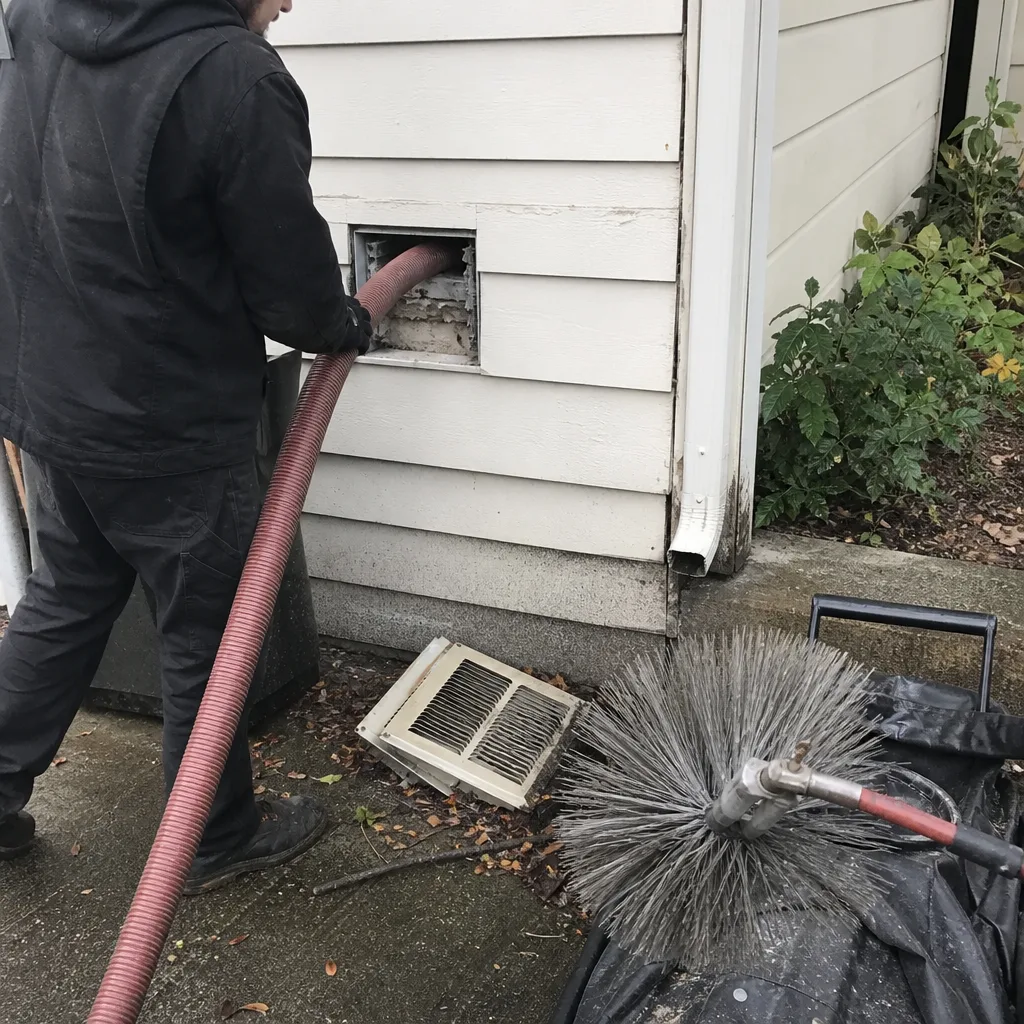 Before
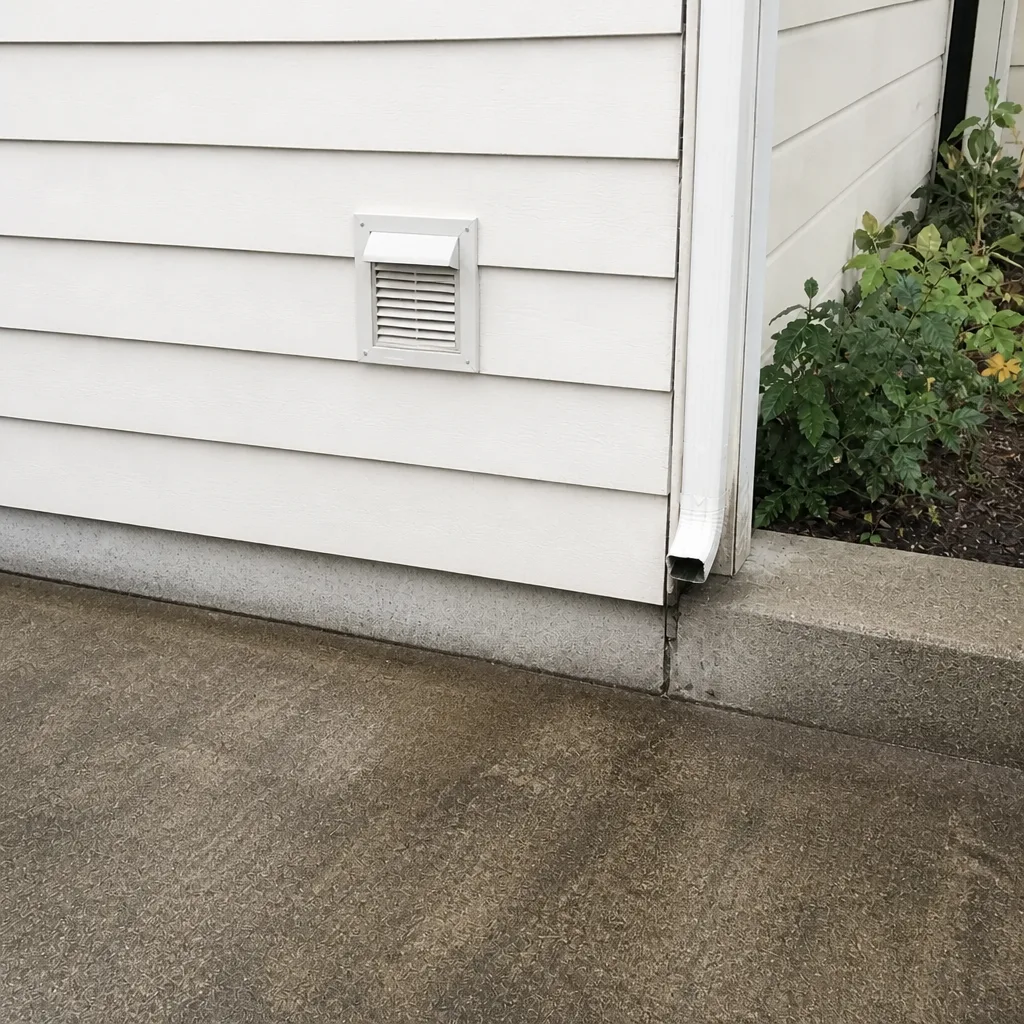 After
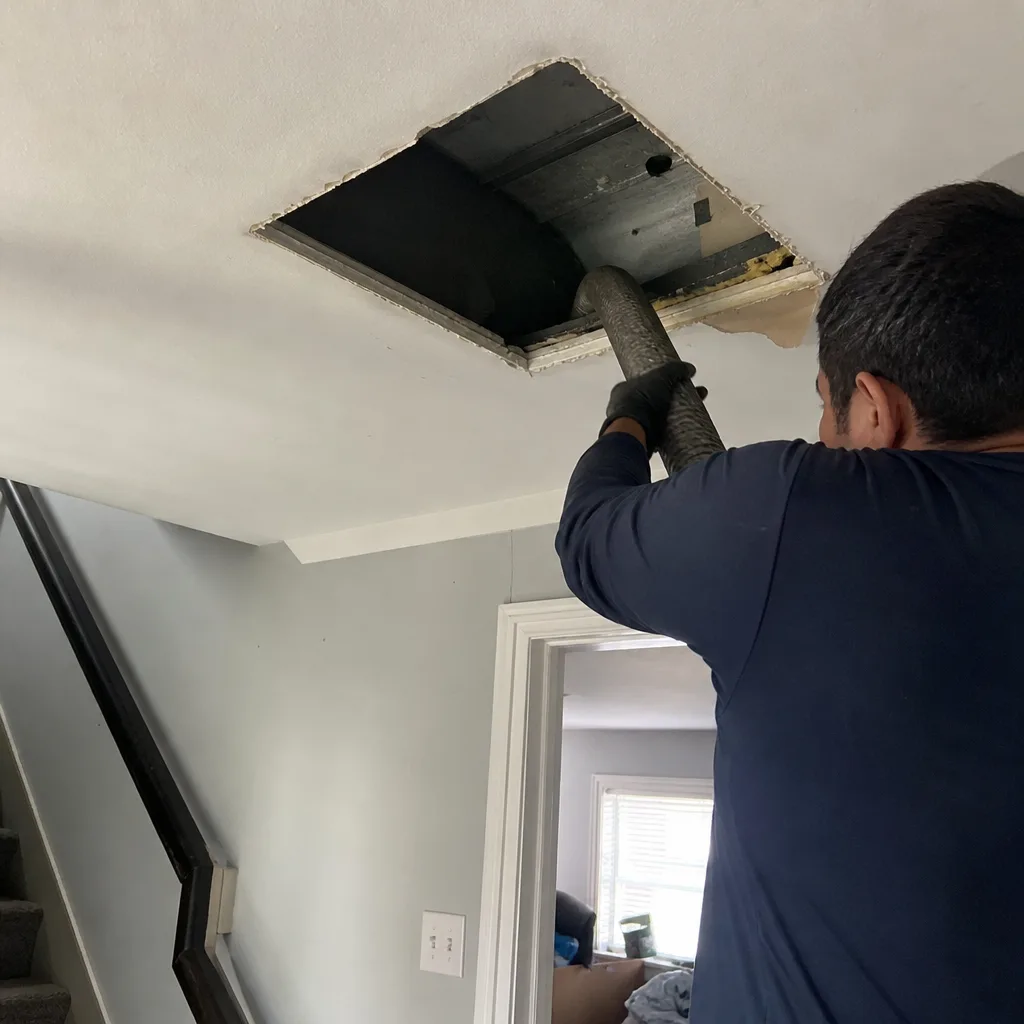 Before
 After
 Before
 After
When to Call a Professional
Call us when the system has been exposed to smoke during a severe regional event and you’re not confident about the filter rating, when water has entered the ductwork or the crawlspace around it, when a renovation has generated heavy drywall dust, or when you notice persistent musty odors, unusual dust accumulation on surfaces, or uneven airflow between rooms. Call when the dryer is running hot, taking longer to dry, or showing lint around the exhaust. Call when an inspection has found disconnected ducts, leaking seams, or visible contamination. Duct Cleaning Kent offers free estimates in Kent: call (866) 761-6504. We answer 24/7. Fast dispatch from 7am to 7pm, Sunday through Friday.
Frequently Asked Questions
You need an inspection if the system ran during a smoke event and the filter rating was low, if you notice a lingering smoky smell indoors after outdoor air has cleared, or if anyone in the home is experiencing irritated eyes or airways that persist. A visual inspection of the duct interior, the filter compartment, and the blower is the only reliable way to know. Call (866) 761-6504 for an exact quote on inspection and cleaning. Estimates are free.
Mold can begin colonizing wet duct surfaces within days of water exposure, depending on material, temperature, and ventilation. Duct board and insulated flex are the most vulnerable. Get the system inspected and dried as soon as flooding has been controlled, and don’t run the HVAC system until you know the ducts are dry. Call (866) 761-6504 for an exact quote. Estimates are free.
Practically speaking, MERV 13 is the highest rating most residential systems can handle without pressure-drop problems. If you’re running a Honeywell or Aprilaire whole-home filtration unit, check the housing capacity before upgrading, because pushing too high a filter can strain the blower motor. A quick conversation with a technician about your specific system is worth the call.
Often, yes, if the duct cleaning is part of a larger covered loss and the documentation supports it. Coverage depends on your specific policy and how the claim is filed. Get photo documentation of the contamination, save the technician report, and include the duct cleaning or repair as a specific line item in your claim. We can work with your insurer on documentation.
Cost depends on the size of the system, the extent of contamination, and whether repair is needed. We set one flat price per system, agreed before work starts, and no per-vent pricing. Be cautious of quotes that seem unusually low. A low number that grows on-site once the technician is already in the house is the classic pattern to watch for. Call (866) 761-6504 for an exact quote. Estimates are free.
The equipment and the scope explain most of the difference. A shop vac and a helper can clean what’s visible at the registers. A rotary brush system paired with high-efficiency collection equipment and on-site air filtration cleans the duct wall and protects the air in the house during the process. Ask about the equipment and ask for before-and-after photos of your own ducts. If the quote doesn’t come with either, ask why.
A dryer vent is an emergency when you smell burning, see scorch marks around the exhaust, or notice lint accumulating around the vent opening. Stop using the dryer immediately and get the vent inspected. Heat and extended drying times are the warning signs that come first. Dryer vents are a fire risk, not a nuisance task.
The Bottom Line
Duct emergencies in Kent tend to follow three patterns: smoke events that leave fine particulate behind in the system, flooding that creates a mold timeline measured in days, and renovation projects that push drywall dust into the supply runs. Each has a specific response: shut down the HVAC first, document second, get the system inspected third, and clean or repair based on what’s actually inside. The equipment matters as much as the protocol. Rotary brush cleaning with proper collection and filtration, plus the ability to repair a duct system that’s broken rather than just dirty, is the difference between a fix and a stopgap. Better air starts inside the system, not just at the filter.
If you’re facing any of these situations, reach out. Call (866) 761-6504 for a free estimate. We answer 24/7. Fast dispatch from 7am to 7pm, Sunday through Friday. Estimates are free, and the price is set per job by the written estimate before any work begins.
Written by the team at Duct Cleaning Kent.